Chelsea Season Derailed by Familiar Discipline Issues After London Derby Defeat to Tottenham Hotspur

London — Discipline once again proved to be the Achilles’ heel for Chelsea Football Club, as a late red card to star playmaker Cole Palmer compounded a dismal performance in a 2-0 defeat to arch-rivals Tottenham Hotspur at Stamford Bridge. The loss not only halted Chelsea’s momentum in the Premier League but also thrust the club’s ongoing disciplinary crisis back into the spotlight. Under the tactical guidance of manager Xabi Alonso, the Blues entered the fixture with high aspirations to cement their place among the league’s elite. Instead, a combination of an impotent attacking display and self-destructive indiscipline left the home supporters frustrated and the coaching staff searching for urgent answers.
The fixture, played on a crisp Saturday evening on October 24, 2026, was billed as one of the marquee matchups of the Premier League weekend. However, the contest failed to live up to the neutral’s expectations of a high-octane tactical chess match, largely due to Chelsea’s inability to impose themselves on the game. From the opening whistle, the hosts looked disjointed and devoid of creative spark, struggling to break through a well-organized Tottenham defensive block. The statistical summary of the first half painted a grim picture for the Stamford Bridge faithful: Chelsea failed to register a single shot on target, a rarity for a side boasting such immense attacking talent.
As the match wore on into the second half, the tension inside the stadium palpable, the game hung delicately in the balance. Both sides fought tooth and nail for dominance in the midfield, but it was Tottenham who gradually began to exploit the mounting gaps in the Chelsea rear-guard. The deadlock was finally broken in the 77th minute through a moment of utter misfortune for the Blues. Goalkeeper Mike Penders, thrust into the high-pressure environment of a London derby, inadvertently turned the ball into his own net following a dangerous cross, handing Tottenham a crucial 1-0 advantage.
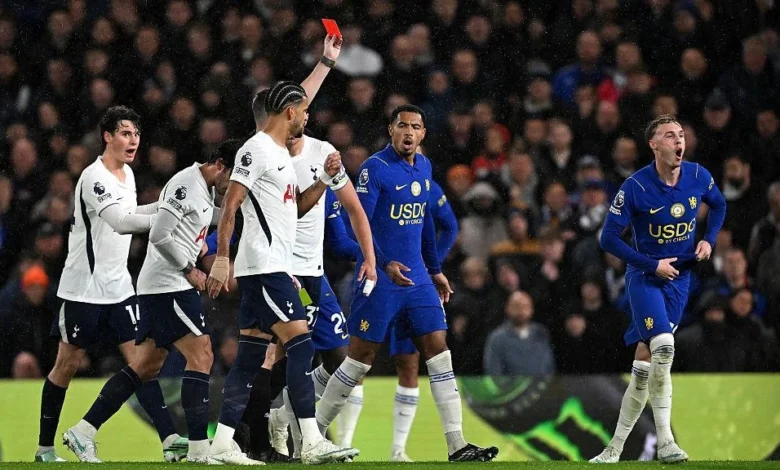
Before Chelsea could recalibrate their tactical setup and mount a response, the match slipped entirely out of their grasp just three minutes later. Cole Palmer, usually the creative heartbeat of the team, misjudged a challenge on former teammate Conor Gallagher. The resulting tackle drew a swift yellow card from the referee. Because Palmer had already been cautioned earlier in the match, the yellow turned red, reducing Chelsea to ten men with roughly ten minutes of regulation time remaining.
With a numerical advantage, Tottenham quickly capitalized on the disjointed and demoralized Chelsea formation. In the 87th minute, French forward Mathys Tel clinically finished off a swift counter-attacking move, slotting the ball past Penders to double Tottenham’s lead and effectively seal the three points. The final whistle confirmed a sobering 2-0 defeat—Chelsea’s third loss of the Premier League campaign. The result leaves the Blues stagnant in fourth place in the league table with 13 points collected from their opening fixtures, losing crucial ground in the early title race.
A Chronic Disciplinary Problem Under the Microscope
The fallout from the match quickly shifted from the tactical shortcomings of the team to an alarming behavioral trend that has plagued the club over the past year and a half. Chelsea’s tendency to self-destruct through disciplinary infractions has transformed from a sporadic issue into a systemic concern. Statistically, the numbers are damning. Since the start of the previous Premier League season, Chelsea has accumulated more red cards than any other club in the English top flight.
With Palmer’s dismissal added to the ledger, Chelsea’s red card tally over this timeframe reaches an astonishing nine sendings-off. This places them four red cards clear of any other team in the division during the same period. For a club with aspirations of challenging for the Premier League title and competing at the highest levels of European football, such a high frequency of disciplinary lapses is unsustainable. It disrupts tactical continuity, forces managers into reactive substitutions, and deprives the squad of key personnel during critical stretches of the season.
The broader implications of this disciplinary crisis stretch far beyond a single afternoon at Stamford Bridge. In a league as fiercely competitive as the Premier League, margins for error are razor-thin. Playing prolonged periods with ten men not only drains the physical energy of the remaining players but also exposes the squad to greater risks of injuries and fatigue. Alonso’s tactical philosophy relies heavily on high-intensity pressing, positional discipline, and fluid transitions. However, these tactical pillars crumble the moment a player loses their composure and leaves their teammates shorthanded.
Managerial and Player Reactions Post-Match
Speaking to the media in the aftermath of the defeat, Xabi Alonso cut a pragmatic yet concerned figure. The Spanish manager addressed the elephants in the room: the toothless attacking display and the recurring nightmare of red cards. Alonso emphasized that while refereeing decisions are part of the game, elite teams must learn to master their emotions, particularly when trailing late in high-stakes matches.
"I haven’t seen the replay of Palmer’s red card yet, but my initial feeling is that the referee’s decision was likely correct," Alonso admitted in his post-match press conference with ESPN. "It is our first red card of the season, and we must ensure we handle these situations with greater maturity. At that moment, we were trailing 1-0 with twenty minutes still on the clock. There was plenty of time to turn the match around. I need to sit down and speak with Cole to understand his reaction on the pitch, but this must serve as a steep learning curve for him and the entire squad moving forward."
Palmer himself acknowledged the gravity of the situation. Though visibly disappointed with his expulsion and the team’s overall performance, the England international took accountability for his actions. The challenge on Gallagher, while perhaps born of frustration rather than malice, proved catastrophic for Chelsea’s hopes of mounting a late comeback.
Football analysts and former players have been quick to weigh in on Chelsea’s persistent disciplinary woes. Many point to the youth and relative inexperience of the squad as a primary contributing factor. While the club has invested heavily in acquiring some of the finest young talents in world football, the rigors of the Premier League demand emotional maturity alongside technical brilliance. High-pressure London derbies often amplify passions, and managing that psychological intensity is a vital skill that young players must acquire to succeed at the highest level.
Looking Ahead: The Road to Redemption
As Chelsea prepares for their upcoming fixtures, the coaching staff faces a rigorous task. Restoring the team’s attacking fluency is only half the battle; instilling strict emotional discipline is equally paramount. Alonso and his backroom staff will likely utilize video sessions and individual counseling to address the root causes of these disciplinary lapses.
The upcoming schedule offers no respite, with domestic cup commitments and tricky league encounters looming large. Whether Chelsea can successfully eradicate this habit and transform from a volatile, unpredictable side into a cold, clinical, and disciplined machine will define the trajectory of their season. For a club with Chelsea’s proud history and lofty ambitions, the time for moral victories and learning curves has passed. The supporters demand stability, maturity, and above all, eleven men finishing the ninety minutes on the pitch.
Related posts: