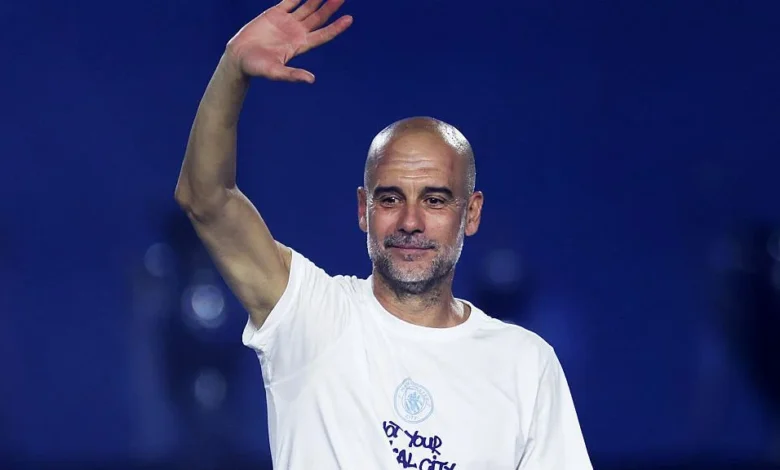
The prospect of Pep Guardiola, one of football’s most decorated managers, taking the helm of the Italian National Team appears increasingly dim, primarily due to a substantial financial disparity between his reported salary expectations and the Italian Football Federation’s (FIGC) capabilities. While initial reports hinted at a serious pursuit by the FIGC, the sheer scale of Guardiola’s alleged demands, coupled with his stated desire for a sabbatical after a decade at Manchester City, presents significant hurdles. This development casts a shadow over Italy’s search for a high-profile manager capable of rejuvenating a squad that has experienced both recent triumph and profound disappointment.
Financial Chasm Halts Progress
According to detailed reports from Italian sports daily La Gazzetta dello Sport, Pep Guardiola has communicated a staggering annual salary requirement of €20 million (approximately IDR 409 billion) should he accept the challenge of leading the Gli Azzurri. This figure represents a monumental sum, setting a new benchmark for national team coaching salaries globally. In stark contrast, the FIGC, navigating its financial realities and existing budgetary constraints, is reportedly only in a position to offer around €10 million (approximately IDR 204.5 billion) per season. This €10 million gap, effectively a twofold difference, underscores the profound financial chasm that currently makes any agreement between Guardiola and the FIGC seem highly improbable. The sheer magnitude of this discrepancy makes it difficult for negotiations to progress meaningfully, forcing the Italian federation to reassess its strategy in securing a manager of Guardiola’s calibre.
FIGC’s Ambitious Pursuit and High-Level Diplomacy
The pursuit of Pep Guardiola by the FIGC has been a testament to their ambition to secure a transformative figure for the national team. Reports from Italian media outlets detailed a significant diplomatic effort, involving key figures within Italian football. Technical Director Paolo Maldini, a legendary figure in Italian football, alongside his advisor Leonardo, reportedly travelled to Barcelona last weekend for a direct meeting with Guardiola. This high-stakes encounter was not merely a preliminary discussion but a concerted effort to present a comprehensive, long-term project for the Italian National Team. The aim was to articulate the vision, the resources, and the strategic importance of the role, hoping to persuade Guardiola to embrace the unique challenge of international management. Such a direct, high-level engagement highlights the FIGC’s genuine desire to land Guardiola, signalling their belief that his tactical genius and proven track record could restore Italy to consistent global prominence. Despite these efforts, Guardiola has yet to provide a definitive answer, leaving the entire negotiation process contingent on his final decision, which appears to be heavily influenced by both financial considerations and his personal career trajectory.
Guardiola’s Career Context and Desire for Sabbatical
Pep Guardiola’s reported salary demand is not entirely out of context when viewed against his unparalleled managerial career and the current landscape of elite football. Having achieved unprecedented success with Barcelona, Bayern Munich, and most recently, Manchester City, Guardiola has cemented his status as one of the most influential and successful coaches of his generation. His ten-year tenure at Manchester City has seen the club dominate English football, securing numerous Premier League titles, domestic cups, and, crucially, the UEFA Champions League, completing a historic treble. Managing a club of City’s financial might and ambition, Guardiola has commanded one of the highest salaries in club football, reportedly earning upwards of £20 million (approximately €23 million) annually.
Beyond the financial aspect, Italian media have also consistently cited Guardiola’s expressed desire for a break from the relentless demands of top-flight club management. After a decade of intense, high-pressure coaching at Manchester City, a period characterized by constant innovation, tactical evolution, and immense scrutiny, the idea of a sabbatical is entirely understandable. The physical and mental toll of managing a global footballing powerhouse for ten consecutive seasons is immense. A break would allow him to recharge, reflect, and potentially prepare for a new challenge with renewed vigour. This personal inclination further complicates the FIGC’s efforts, as even a generous offer might not be enough to override a deep-seated need for rest.
The State of the Italian National Team: A Rollercoaster of Emotions
The Italian National Team finds itself at a pivotal juncture, making the search for a new manager critically important. The Gli Azzurri experienced an incredible high in 2021, triumphing at UEFA Euro 2020 under Roberto Mancini, showcasing a vibrant, attacking style of football that captivated audiences. However, this success was followed by the devastating failure to qualify for the 2022 FIFA World Cup in Qatar, marking the second consecutive World Cup absence for the four-time champions. This stark contrast between continental glory and global disappointment has exposed underlying vulnerabilities and a perceived need for a long-term strategic overhaul.
The current squad possesses a blend of experienced veterans and promising young talent, but a clear identity and consistent performance have been elusive since the Euro 2020 victory. The FIGC’s pursuit of a manager like Guardiola signals their ambition to not just achieve short-term results but to establish a sustainable footballing philosophy that can compete at the highest level consistently. They seek a figure who can instill discipline, tactical sophistication, and a winning mentality, while also fostering the development of the next generation of Italian footballers. A manager of Guardiola’s calibre would undoubtedly bring renewed optimism, a clear tactical blueprint, and a global spotlight to the Italian project.
FIGC’s Financial Realities and Historical Context
The FIGC’s inability to match Guardiola’s salary demands is rooted in the financial realities of national federations compared to the vast wealth of top European clubs. While a national team job carries immense prestige and national pride, it rarely offers the same financial remuneration as a club position, especially for a manager of Guardiola’s stature. Roberto Mancini, the previous coach, reportedly earned around €3 million per year, a significant sum for a national team coach but a fraction of what Guardiola is seeking. Historically, foreign coaches for the Italian national team have been rare, with the role traditionally reserved for Italian tacticians. This makes the pursuit of Guardiola even more significant, highlighting a potential shift in strategy by the FIGC to look beyond national borders for the right leader.
The financial constraints also reflect broader economic challenges within Italian football. While Serie A remains one of Europe’s top leagues, its financial power, particularly compared to the Premier League or La Liga, has seen fluctuations. The federation’s budget is derived from various sources, including sponsorships, broadcast rights, and government funding, all of which have limits. Committing €20 million annually to a single individual would represent an unprecedented allocation of resources, potentially diverting funds from youth development, infrastructure projects, or other vital areas of national football.
Upcoming Discussions and Potential Alternatives
The urgency surrounding the coaching situation is underscored by upcoming events. On Thursday, July 23, 2026, Lega Serie A is scheduled to hold a meeting with its member clubs. During this session, FIGC President Giovanni Malagò, Paolo Maldini, and Leonardo are expected to present the new project for the Italian National Team. While the presentation will outline the strategic vision, it is widely anticipated that no announcement regarding the new head coach will be made at this specific meeting, particularly given the ongoing uncertainty surrounding Guardiola. The federation will likely need more time to finalize negotiations or pivot to alternative candidates if Guardiola ultimately declines.
Should Pep Guardiola indeed reject the Italian offer, the FIGC has reportedly prepared a contingency plan, with several notable names already on their list of alternative candidates. Former Italian National Team coach Roberto Mancini, who led Gli Azzurri to their Euro 2020 triumph, is one prominent name. His previous success and familiarity with the squad make him a logical, albeit perhaps less ‘glamorous’ given the initial Guardiola pursuit, option. Another intriguing candidate mentioned is Andrea Pirlo, the legendary former AC Milan midfielder. While Pirlo’s managerial experience is less extensive, having coached Juventus and Karagümrük, his deep understanding of Italian football and tactical acumen could appeal to the federation. Other names, possibly including Antonio Conte or Luciano Spalletti, might also enter the discussion, depending on their availability and the FIGC’s renewed strategic priorities.
Broader Implications for Italian Football and the Coaching Market
The pursuit of Pep Guardiola, regardless of its outcome, carries significant implications for Italian football and the global coaching market. For Italy, it signals an intent to reclaim its position at the pinnacle of international football, demonstrating a willingness to invest heavily (or at least attempt to) in top-tier managerial talent. Should Guardiola have accepted, his arrival would have undoubtedly revolutionized the tactical approach and global perception of the Gli Azzurri, potentially attracting new talent and revitalizing the domestic league.
However, the current impasse also highlights the financial disparities that exist in modern football, where even national federations struggle to compete with the financial muscle of elite clubs for the very best talent. It underscores the premium placed on proven success and tactical innovation in an increasingly competitive sport. For the coaching market, Guardiola’s reported demand sets a new, exceptionally high bar for national team coaches, potentially influencing future negotiations for other high-profile managers considering international roles. The outcome of this high-stakes negotiation will not only determine the immediate future of the Italian National Team but also offer a glimpse into the evolving dynamics of power, prestige, and finance in global football.
Related posts: