Hari Olahraga Nasional: A Historical Retrospective on Indonesia’s Sporting Identity and National Resilience

Every September 9, Indonesia observes National Sports Day, known locally as Hari Olahraga Nasional (Haornas). This annual commemoration serves as more than just a calendar entry; it acts as a profound reflection of the nation’s post-independence struggle, the evolution of its sporting infrastructure, and a strategic call to action for public health and national character building. As Indonesia marks the 43rd anniversary of the official Haornas proclamation in 2026, the occasion serves as a bridge between the heroic efforts of the 1948 pioneers and the modern ambition of establishing a globally competitive sports culture.
The Genesis: The 1948 Pekan Olahraga Nasional (PON)
The foundation of National Sports Day is deeply rooted in the inaugural Pekan Olahraga Nasional (PON), held in Solo, Central Java, from September 9 to 12, 1948. To understand the significance of this event, one must look at the geopolitical climate of the time. Indonesia, having declared independence only three years prior in 1945, was still navigating the complexities of international recognition and internal sovereignty.
In 1948, the Republic of Indonesia harbored aspirations of competing in the XIV Olympic Games in London. However, the international community, largely influenced by colonial-era dynamics, did not yet fully recognize Indonesia as an independent sovereign state. Consequently, the Indonesian contingent faced insurmountable administrative hurdles that prevented them from participating on the world stage under their own national flag.
Rather than succumbing to isolation, the Indonesian government—under the guidance of visionaries who understood the power of soft power—decided to host a national-level competition. The choice of Solo as the venue was strategic, as it served as a bastion of nationalistic sentiment. The event was not merely about athletics; it was a defiant statement of existence. By organizing PON, the nascent nation proved it could manage complex logistics, foster unity among diverse regions, and celebrate its identity through the medium of sport. The opening date of this inaugural event, September 9, was etched into history, eventually becoming the official date for the annual commemoration.
The Formalization of Haornas: A Presidential Mandate
While the spirit of September 9th had been recognized by the sporting community for decades, it was not until 1983 that the day was formally institutionalized as a national commemoration. The formal declaration occurred during the inauguration of the renovated Sriwedari Stadium in Surakarta, where President Soeharto emphasized the need to systematize sports development.
The legal framework followed shortly after with the issuance of Presidential Decree (Keppres) Number 67 of 1985. This decree solidified September 9 as the official Hari Olahraga Nasional. The move was intended to align sports policy with national development goals, moving away from purely recreational sports toward a model of structured talent development and public health management. This period marked the beginning of modern sports governance in Indonesia, characterized by the establishment of clearer training pathways and the prioritization of sports infrastructure as a pillar of national infrastructure.
Evolution of Sports Policy: From Recreation to Industry
In the decades following the 1985 decree, the interpretation of Haornas has evolved significantly. Initially focused on national pride and the symbolic display of sovereignty, the mandate of the Ministry of Youth and Sports (Kemenpora) has shifted toward a more holistic approach that includes economic impact, health, and social cohesion.
Modern data suggests that the sports sector is no longer just about medals; it is a burgeoning economic engine. In 2026, the government’s focus has pivoted toward "sport tourism" and "sport industry." Projects like the development of Sumba Timur as an etalase (showcase) for sport tourism demonstrate how regions are being incentivized to use local geography to attract international interest, thereby boosting local economies.
Furthermore, the integration of technology and professional management into sports academies is becoming a focal point. Recent discussions by Kemenpora regarding the necessity of a Rp1.5 trillion investment for the construction of centralized, state-of-the-art training academies highlight the government’s commitment to closing the performance gap between Indonesia and regional sporting powerhouses. This investment is viewed as a prerequisite for success in international multi-sport events like the Asian Games and the Olympics.
The Societal Impact and Public Health Mandate
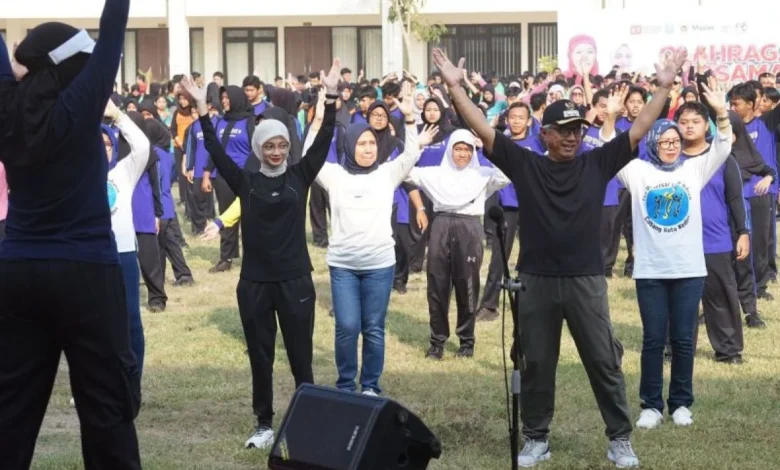
Beyond the elite level, Haornas acts as a catalyst for public health initiatives. Indonesia, like many developing nations, faces a dual burden of health issues, including the rising prevalence of lifestyle-related diseases. The Ministry of Youth and Sports frequently utilizes the Haornas momentum to launch "Sport for All" programs, which encourage citizens to integrate at least 30 minutes of physical activity into their daily routines.
The cultural impact of these efforts is measurable through participation rates in community sports clubs and the growth of urban fitness trends. By emphasizing that sports contribute to discipline, character formation, and mental well-being, the state aims to transform the definition of "being an athlete" from a professional designation to a standard of healthy living for every citizen.
2026: A Milestone Year
As of September 9, 2026, the 43rd edition of the commemoration highlights a mature sporting ecosystem. The event is marked by a diverse range of activities, from national-level honors for veteran athletes and coaches to grassroots sports festivals in remote regencies. The objective remains consistent: to ensure that the flame lit in 1948 continues to burn as a beacon of national progress.
The 2026 celebrations also underscore the importance of inclusivity, with a push toward "Sport for All" that covers people of all ages and abilities. This inclusive approach is essential for fostering a sense of national unity, as sport remains one of the few platforms in Indonesia where regional, religious, and social barriers are transcended in favor of a common goal—whether that is cheering for a national team or participating in a community fun run.
Analytical Perspective: Challenges and Future Outlook
While the history of Haornas is one of progress, it is not without its challenges. The sustainability of sports performance in Indonesia is often hindered by fragmented talent scouting and the need for more robust, long-term funding models. The reliance on government budgets, while significant, is increasingly being supplemented by public-private partnerships (PPP) and corporate sponsorships, as seen in the increasing commercialization of events like the PON Pantai (Beach PON) in Ancol.
Furthermore, the digitalization of the sports sector—through the use of performance analytics, digital health tracking, and global broadcasting—presents both an opportunity and a challenge. To remain relevant on the global stage, Indonesia must continue to upgrade its sporting infrastructure. The current debate over the necessity of high-capacity training facilities reflects an acknowledgment that infrastructure is the bedrock of future athletic success.
The strategic vision for the next decade, as articulated by current sporting authorities, involves transforming Indonesia into a regional hub for sports training and major international events. This ambition requires a shift from viewing sports as a periodic event to viewing it as a continuous cycle of development.
Conclusion: A Legacy of Resilience
The history of Hari Olahraga Nasional is a testament to the resilience of the Indonesian spirit. From the humble, defiant beginnings in the war-torn city of Solo in 1948, to the modern, tech-driven athletic programs of 2026, the journey has been one of constant adaptation.
Each year, as the nation reflects on the legacy of the first PON, it reaffirms its dedication to the values that sport instills: integrity, perseverance, and unity. The annual observance of September 9 is not merely a memorial; it is an annual check-in on the national health and competitive spirit. As the government, private sector, and the public continue to align their efforts, the future of Indonesian sports appears poised to leverage its historical foundations to build a stronger, healthier, and more globally recognized nation.
The mandate is clear: the spirit of 1948 must continue to evolve, ensuring that the legacy of independence remains vibrant, healthy, and competitive in an increasingly globalized world. Whether through the professionalization of elite athletes or the simple act of a citizen choosing to walk or run, the essence of Haornas lives on, serving as a reminder that the strength of a nation is often reflected in the vitality of its people.
Related posts: