Hazardous Air Quality Forces Multiple Indonesian Cities to Reinstate Remote Learning as Forest Fires Intensify

The return of thick, toxic haze across several provinces in Indonesia has prompted local governments to revert to emergency measures, mandating a return to Pembelajaran Jarak Jauh (PJJ), or remote distance learning, effective Monday, September 28, 2026. This policy shift, necessitated by the deteriorating quality of air resulting from widespread forest and land fires (Karhutla), reflects the urgent public health challenges facing the nation as particulate matter levels reach dangerous thresholds. As smoke blankets urban centers, educational authorities have been forced to prioritize student safety over traditional face-to-face instruction, creating a disjointed educational landscape across the archipelago.
The situation is particularly acute in cities such as Jambi, Banjarmasin, and Palangka Raya, where municipal governments have issued formal directives halting in-person classes for students ranging from early childhood education (PAUD/TK) through the junior high school (SMP) level. While the exact duration of these closures remains fluid, the prevailing consensus among regional administrations is that the resumption of in-person learning is strictly contingent upon the stabilization of air quality metrics.
Meteorological Crisis: The Rise of PM 2.5 Levels
The decision to shutter schools was not made in isolation but was driven by real-time environmental data. In Jambi, for instance, the local government’s announcement followed alarming readings from the Indeks Standar Pencemar Udara (ISPU), or the Air Pollution Standard Index. On the evening of Sunday, September 27, 2026, the PM 2.5 concentration—the most dangerous category of fine particulate matter—was recorded at 231.
According to global environmental health standards, an ISPU value exceeding 200 is classified as "Very Unhealthy." Particles smaller than 2.5 micrometers are capable of penetrating deep into the respiratory tract and entering the bloodstream, posing severe risks to children, whose lung development and immune systems are particularly susceptible to the toxic effects of wildfire smoke. The persistence of these pollutants in the air creates an environment where physical exertion, such as walking to school or participating in outdoor physical education, becomes a significant health hazard.
Regional Implementation and Educational Continuity
The response to the crisis has varied significantly across different jurisdictions, highlighting the challenges of managing localized environmental disasters in a decentralized governance system.
1. Jambi: A Total Halt to In-Person Classes
In Jambi, the municipal administration has mandated a full transition to online learning for students from preschool to junior high. The policy requires teachers and educational staff to remain present at their respective school sites to ensure the continuity of virtual lessons. Parents are strictly advised to monitor their children’s activities, emphasizing the need for indoor isolation to minimize exposure to the smog.
2. Banjarmasin and Palangka Raya: The Three-Day Suspension
In Banjarmasin and Palangka Raya, local authorities have adopted a three-day window of remote learning, running from Monday, September 28, to Wednesday, September 30, 2026. This period is intended to serve as a buffer to assess whether meteorological conditions improve. The scope of this mandate covers all public and private institutions, including PAUD, SD (elementary), and SMP (junior high) levels.
3. Palembang: Decentralized Decision-Making
In contrast to the blanket mandates seen in Jambi and Kalimantan, the Palembang municipal government has opted for a decentralized approach. Muhammad Affan Prapanca, Head of the Palembang City Education Office, stated that the decision to either continue or suspend in-person learning lies with individual school principals. Under the framework of Mayor Regulation (Perwali) Number 63 of 2026, principals are empowered to assess the ISPU data specific to their school’s immediate vicinity. This allows for a more localized response, acknowledging that air quality can fluctuate significantly even within the same urban area due to wind patterns and proximity to fire hotspots.
The Contrast: Pontianak’s Cautious Reopening
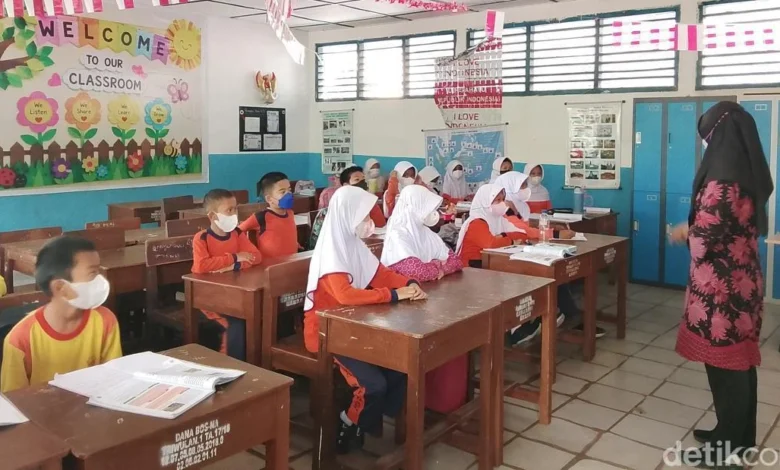
While several cities have retreated to remote learning, Pontianak in West Kalimantan has taken a different path, allowing schools to resume in-person instruction (PTM) as of Monday, September 28. However, this reopening is far from a return to normalcy. The local Education and Culture Office has issued a strict set of protocols, requiring schools to monitor ISPU levels at least twice daily—before the start of classes and during the midday session.
Hermawan Eko Wibowo, Acting Head of the Pontianak Education and Culture Office, emphasized that the decision to resume classes must be balanced with the individual school’s readiness and the specific risk profile of its student body. Schools are mandated to provide masks for students and are encouraged to ensure that students bring their own food to reduce the need for outside activity. Furthermore, schools have been granted the authority to pivot back to remote learning if air quality deteriorates during the day, ensuring that student health remains the primary consideration.
Socio-Economic and Public Health Implications
The frequent disruption of the academic calendar due to forest fires represents a systemic challenge for Indonesia’s educational system. Since the 2015 and 2019 severe haze events, the "haze season" has become a predictable, if unwanted, annual occurrence that threatens to erode learning gains.
The health implications are twofold: immediate acute respiratory infections (ARI) and long-term developmental risks. Hospitals in affected regions often report a 20% to 40% surge in pediatric patients suffering from asthma, bronchitis, and eye irritation during peak haze periods. By enforcing PJJ, the government aims to mitigate these surges, yet this policy imposes a heavy burden on working parents who must juggle their professional responsibilities while providing childcare and supervision for children engaged in online schooling.
Furthermore, the "digital divide" remains a critical concern. While urban centers have transitioned to virtual platforms, the efficacy of remote learning is frequently hampered by disparities in internet access and the availability of digital devices. When schools close due to environmental crises, students from lower-income backgrounds are disproportionately affected, often losing critical hours of direct instruction.
The Root Cause: A Recurring Environmental Challenge
The underlying cause of these school closures—forest and land fires—remains a complex issue rooted in land-clearing practices, particularly for the palm oil and pulp and paper industries. Despite government efforts to enforce strict laws against the use of fire for land preparation, the interplay of climate phenomena like El Niño and traditional agricultural habits continues to facilitate the spread of fires during the dry season.
The government’s reliance on PJJ as an emergency response highlights the lack of long-term infrastructure to handle such environmental disasters. While temporary school closures provide a necessary safeguard for children, the cycle of smog and subsequent school disruptions suggests that current fire-prevention and peatland-management strategies have yet to achieve their intended goal of year-round air quality safety.
Future Outlook and Policy Recommendations
As the 2026 haze season persists, the focus for regional governments must shift from reactive school closures to proactive mitigation. This includes:
- Standardized Monitoring: Establishing a uniform, city-wide standard for when schools must close, rather than relying on a patchwork of local regulations that can lead to confusion.
- Infrastructure Upgrades: Investing in air purification systems for classrooms, which would allow schools to remain open even during moderate haze conditions, thereby reducing the need for total PJJ.
- Communication Transparency: Providing parents with clearer, more frequent updates on air quality index projections to help them plan for the immediate week ahead.
- Health Surveillance: Enhancing the capacity of school-based health clinics to screen for early signs of respiratory distress in children before symptoms become severe.
Ultimately, the reopening of schools in Pontianak and the closure of those in Jambi demonstrate that Indonesia is still grappling with the trade-off between economic and social continuity and the urgent necessity of protecting the nation’s youth from the harmful effects of a changing climate. As long as the fires continue to burn, the classroom will remain a secondary casualty to the environmental crisis, leaving administrators, educators, and families in a state of constant, weather-dependent vigilance. The educational stability of millions of Indonesian children now rests not only in the hands of their teachers but also in the efficacy of national and regional efforts to contain the flames that threaten their health and their future.