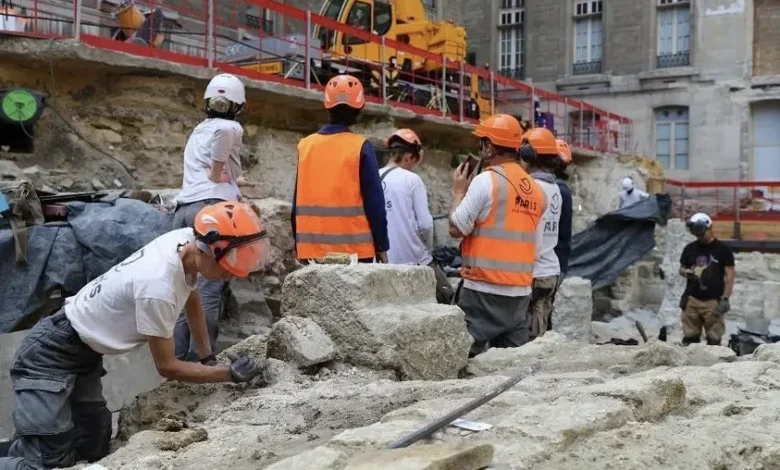
The discovery of a prehistoric Celtic fortification beneath the courtyard of the Hôtel-Dieu hospital in Paris marks a watershed moment in European archaeology, providing the first tangible evidence of the Lutetia described by Julius Caesar in his seminal work, Commentarii de Bello Gallico (Commentaries on the Gallic War). This significant find, confirmed by the French Ministry of Culture and the Regional Archaeology Service (DRAC Île-de-France) in late September 2026, bridges the gap between historical literature and physical reality, shedding light on the elusive origins of Paris.
A Historic Unearthing in the Heart of Paris
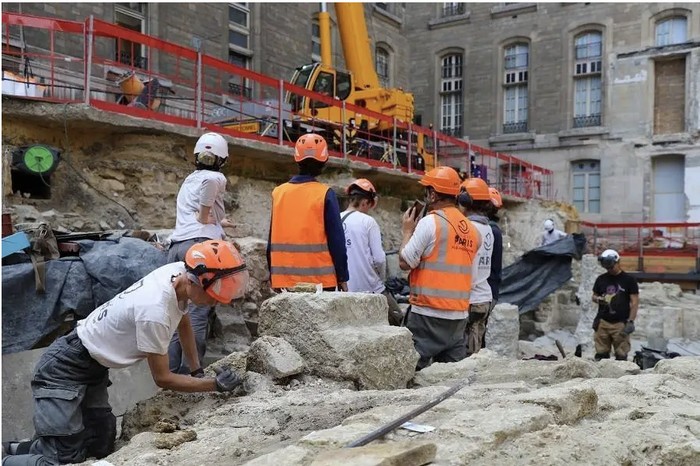
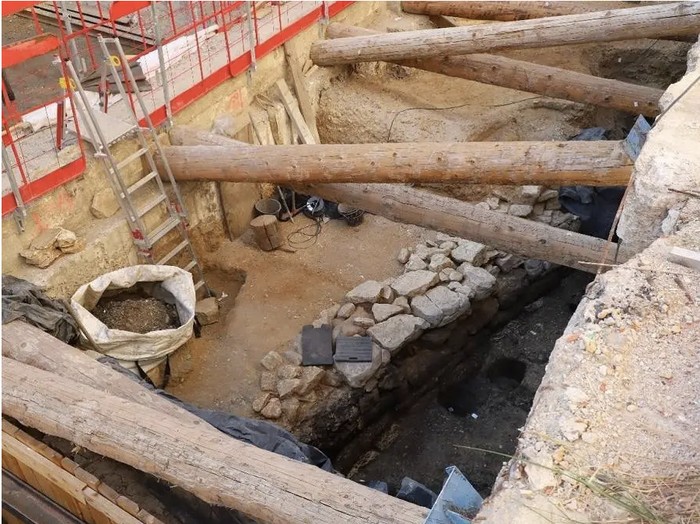
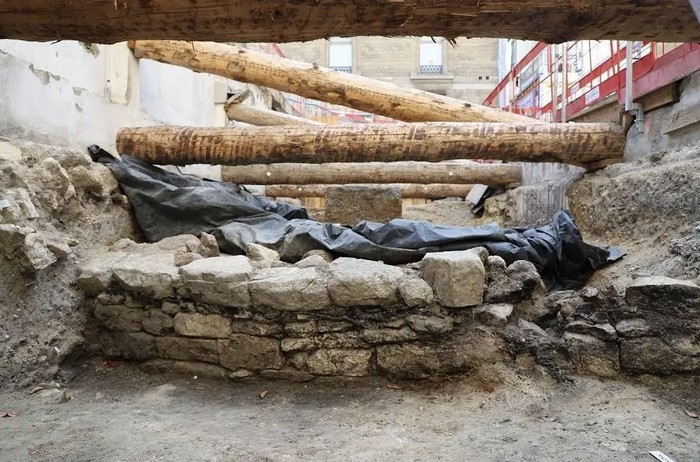
The archaeological excavation, conducted in the Île de la Cité district, revealed a 20-meter section of a fortification wall that dates back to the pre-Roman era. For centuries, historians have debated the precise location and nature of the Gallic settlement of Lutetia, which served as the capital of the Parisii tribe. While Caesar’s writings alluded to its strategic importance during the Roman conquest of Gaul, physical proof remained frustratingly sparse until this excavation.
The structural integrity of the site suggests a sophisticated level of defensive engineering typical of the late Iron Age. The wall features a distinct architectural style characterized by large stone blocks integrated with an intricate system of timber beams, a technique known as "murus gallicus" or Gallic wall. Dorothée Chaoui-Derieux, a heritage curator and territorial manager for Paris at the Regional Archaeology Service, noted that the specific interlocking beam construction is a hallmark of the Celtic tradition, effectively silencing previous skepticism regarding the site’s origins.
Chronology and Physical Evidence
The site provides a grim testament to the violence of the Gallic Wars. Archaeological analysis of the 20-meter stretch reveals clear signs of a catastrophic fire. Excavators unearthed charred timber remains and carbonized grains, suggesting that the fortification was likely destroyed during an intense conflict—possibly during the Roman suppression of the Gallic uprisings.
In addition to the wall itself, the team discovered a massive platform at the rear of the structure, measuring approximately two meters in thickness and composed of compacted sand and gravel. This reinforced foundation indicates that the site was not merely a boundary marker, but a primary defensive bulwark designed to withstand heavy siege warfare. The chronology of the materials—analyzed via stratigraphic methods and carbon dating—aligns with the mid-1st century BCE, the precise period when Caesar’s legions were systematically dismantling Gallic autonomy.
Contextualizing Lutetia
To understand the magnitude of this discovery, one must consider the historical vacuum that previously existed regarding Paris’s earliest days. Before the Romanization of the city, which led to the construction of grand monuments like the Arènes de Lutèce, the area was dominated by the Parisii. These Celtic people utilized the Seine River and the relative safety of the islands to establish trade routes and defensive positions.
Julius Caesar’s "Commentarii de Bello Gallico" serves as the primary literary window into this era. However, for centuries, the "Lutetia" mentioned by Caesar was treated by many as an idealized or vaguely defined location. The discovery at Hôtel-Dieu shifts the paradigm from theoretical geography to concrete history. It confirms that the settlement was a thriving, well-defended urban center long before the arrival of Roman urban planning, which typically emphasized grid layouts and public baths.
Official Responses and Preservation Efforts
The significance of the find prompted an immediate site visit by high-ranking officials, including Minister of Culture Catherine Pégard and Deputy Mayor of Paris Emmanuel Grégoire. Their presence underscores the importance the French state places on cultural heritage, even when it intersects with modern urban development projects.
The Ministry of Culture has stated that the discovery will necessitate a revised management plan for the ongoing construction at the Hôtel-Dieu. While urban development is essential for the city’s functionality, the preservation of such a foundational archaeological site takes precedence under French law. "This is not just a wall; it is the birth certificate of Paris," a spokesperson for the Ministry remarked. Plans are currently being drafted to integrate the ruins into the future infrastructure of the hospital area, likely through protective covering or public viewing galleries, ensuring that the legacy of the Parisii remains visible to the public.
Technical Analysis: The Architecture of Defense
The construction techniques observed at the Hôtel-Dieu site provide a masterclass in ancient engineering. The "murus gallicus" style was designed specifically to be earthquake-resistant and nearly fireproof—though, as this site shows, not entirely impenetrable. The combination of horizontal timber beams, secured with iron nails (a rare and expensive commodity at the time), and external stone facing created a flexible, resilient structure.
The presence of burning at the site provides a forensic layer to the historical narrative. If the site was indeed burned, it may indicate a scorched-earth policy, either by the defending Gauls to deny the Romans resources or by the Roman legions themselves to ensure the site could never be reoccupied. Future chemical analysis of the soil and burnt timber will likely reveal more about the intensity of the heat and the specific timeline of the destruction.
Broader Implications for European History
The identification of the Gallic wall in Paris has broader implications for our understanding of the Iron Age in Western Europe. It reinforces the notion that Celtic societies were not merely scattered, agrarian tribes, but were capable of complex urban organization and large-scale military engineering.
Furthermore, this discovery provides a benchmark for future archaeological work in Paris. With one major piece of the puzzle in place, researchers can now triangulate the potential locations of other structures described in Roman texts, such as residential districts, sacred groves, or river-port facilities. The success of the Hôtel-Dieu dig has effectively reinvigorated the field of French archaeology, prompting calls for expanded funding and new, non-invasive sensing technologies to map the remaining layers of ancient Paris buried beneath the modern metropolis.
The Future of the Site
As the investigation continues, the focus will shift from simple excavation to rigorous documentation and conservation. The logistical challenges of preserving a 2,000-year-old timber and stone structure in the middle of a bustling, modern city are significant. Humidity control, structural stabilization, and the prevention of chemical degradation from the surrounding soil will be the primary concerns for conservators.
Beyond the physical preservation, the discovery presents an educational opportunity. The Ministry of Culture is considering the establishment of a permanent exhibition space, potentially transforming part of the site into an interpretive center. This would allow the public to engage with the reality of the Gallic Wars, moving past the romanticized depictions often found in popular media and toward a nuanced understanding of the bloody, complex process of European unification under the Roman Empire.
Conclusion
The finding at the Hôtel-Dieu hospital is more than a triumph for the field of archaeology; it is a profound reclamation of history. By unearthing the physical foundations of Lutetia, researchers have provided the modern inhabitants of Paris with a clearer vision of their city’s deepest roots. As the data from the site is processed and published in academic journals, the story of the Parisii will be rewritten, moving from the periphery of Caesar’s military logs to the center of French national identity. This discovery serves as a powerful reminder that history is not merely found in books, but is buried just beneath our feet, waiting for the right moment to be unearthed and understood.
Related posts: