A Comprehensive Guide on How to Report Misdirected Social Assistance and Utilize the Official Cek Bansos Application

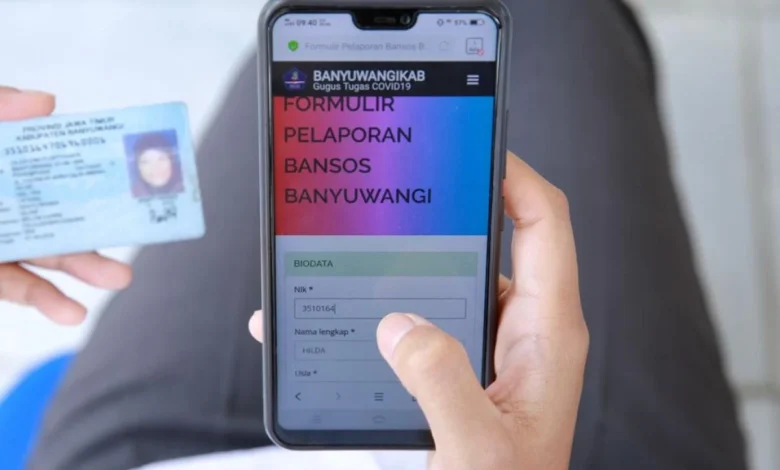
The distribution of government social assistance programs, commonly known as bansos, remains a cornerstone of Indonesia’s national strategy to alleviate poverty, protect vulnerable populations, and cushion lower-income households from economic shocks. Administered primarily through the Ministry of Social Affairs, these multifaceted programs—ranging from the Family Hope Program (PKH) to basic food assistance—are systematically targeted at specific demographic and economic segments of the population. However, ensuring that these financial lifelines reach strictly qualified beneficiaries has historically presented administrative challenges. Discrepancies between official registry data and ground-level socioeconomic realities often result in two primary systemic hurdles: inclusion errors, where affluent or ineligible individuals inadvertently receive support, and exclusion errors, where genuinely destitute citizens are omitted from active rolls.
To combat these discrepancies and foster a more transparent, accountable distribution architecture, the Ministry of Social Affairs has increasingly decentralized data verification by empowering citizens. Through digital innovations such as the official Cek Bansos mobile application and alternative reporting channels, everyday citizens now possess a direct mechanism to participate in data updating and auditing. This participatory approach aims to refine the National Single Social and Economic Data System (DTSEN), ensuring that state funds are allocated with maximum precision. Navigating these digital tools requires an understanding of official protocols, eligibility thresholds, and the precise steps necessary to submit constructive feedback or formal grievances without violating privacy laws or disseminating misinformation.
Understanding the Mechanics of Inclusion and Exclusion Errors in Social Assistance
The integrity of national social protection programs relies heavily on the accuracy of underlying databases. In an archipelagic nation as vast and populous as Indonesia, demographic shifts, changes in employment status, geographic migration, and fluctuations in household income occur continuously. When registry data fails to keep pace with these dynamic socioeconomic conditions, systemic misallocations inevitably arise.
Inclusion errors occur when individuals who have experienced upward economic mobility—such as securing stable employment, growing a small business, or experiencing a change in household dependency—continue to draw government assistance intended for lower deciles. Conversely, exclusion errors manifest when families living in extreme poverty fail to register or drop off the radar during periodic data collection cycles, leaving them without critical safety nets. To bridge this gap, the Ministry of Social Affairs introduced the "Sanggah" (Rebuttal) feature within the Cek Bansos application. This tool acts as a crowdsourced verification layer, allowing local communities to flag anomalous allocations.
Nevertheless, policymakers and social welfare experts emphasize that community reports are intended to serve purely as diagnostic triggers rather than definitive judgments. A citizen’s external observation—such as noticing a neighbor’s vehicle or home renovation—is insufficient on its own to prove economic status. True socioeconomic standing involves a complex matrix of debt, health expenditures, permanent versus precarious employment, and asset liquidity. Therefore, every citizen-submitted report undergoes rigorous administrative screening and physical verification by local governance structures, including village administrators (kelurahan/desa) and local Social Services (Dinas Sosial) offices, before any official status alteration is enacted.
Step-by-Step Guide to Utilizing the Cek Bansos Application for Reporting
For citizens who identify verifiable instances of misdirected assistance within their neighborhoods, the Ministry of Social Affairs provides a streamlined, secure digital process. To prevent fraudulent submissions and safeguard personal data, users must ensure they download the authorized application. The legitimate platform, developed specifically by the Ministry of Social Affairs of the Republic of Indonesia, can be accessed through official mobile marketplaces such as Google Play.
The reporting procedure involves several methodical steps:
- Application Acquisition and Installation: Users must download the official "Cek Bansos" application developed by the Ministry of Social Affairs from verified application stores.
- Account Creation and Authentication: New users are required to register by inputting valid identity details, including National Identity Number (NIK) and demographic data, followed by a verification process. Existing users can simply log in with their registered credentials.
- Accessing the Rebuttal Menu: Upon successful login, users navigate to the dedicated "Sanggahan" (Rebuttal) feature located on the main dashboard.
- Initiating a New Report: Select the option to add a new rebuttal or objection regarding a listed beneficiary whose current status appears questionable.
- Geographic Localization: Provide precise administrative details of the target area, filtering sequentially from province, regency or city, sub-district (kecamatan), down to the specific village or neighborhood level (desa/kelurahan).
- Beneficiary Identification: Review the generated list of local recipients carefully to pinpoint the exact individual or household intended for review, ensuring no mistaken identities occur.
- Articulating the Justification: Enter a clear, factual, and objective explanation detailing why the recipient is believed to no longer meet the program criteria, focusing on verifiable shifts in economic standing.
- Attaching Supporting Evidence: Where applicable and permitted by the system, upload relevant photographic or documentary evidence that substantiates the claim without compromising third-party privacy.
- Final Review and Submission: Double-check all entered information, confirm the mandatory truthfulness declaration statement, and transmit the report securely through the application interface.
Because mobile application interfaces undergo routine updates to enhance security and user experience, menu layouts may occasionally shift. Citizens are advised to follow the real-time prompts provided within the latest version of the official software.
Alternative Channels for Grievance Redressals and Data Updates
Recognizing that digital literacy, smartphone access, or technical connectivity issues may prevent certain segments of the population from utilizing the mobile application, the Ministry of Social Affairs maintains multiple auxiliary communication pathways. These channels ensure that public oversight remains accessible across diverse socioeconomic groups and geographic regions.
Alternative reporting mechanisms include:
- Dedicated Messaging Services: The official WhatsApp Lapor Kemensos channel at 0887-7171-171 allows citizens to transmit text-based inquiries and formal reports.
- Centralized Call Centers: The Ministry’s Command Center can be reached directly via the shortcode 021-171 for direct assistance and grievance logging.
- Grassroots Administrative Offices: Local government units, including village (desa) and sub-district (kelurahan) offices, serve as frontline collection points for community complaints, which are then formally integrated into periodic data updating cycles.
- Regional Social Services (Dinas Sosial): Municipal and district-level social offices possess the statutory authority to investigate claims, conduct field assessments, and execute localized database corrections.
Before transmitting personal documentation or sensitive details through any messaging platform, citizens must independently verify that they are engaging with official, verified contact numbers published directly by the Ministry of Social Affairs to guard against fraudulent phishing schemes.
Verification Protocols and the Role of the National Single Social and Economic Data System
A critical aspect of the social assistance ecosystem is understanding that the submission of a report or rebuttal does not trigger an immediate, automated termination of benefits, nor does it guarantee automatic inclusion for prospective applicants. The governance of social protection demands due process to protect vulnerable citizens from malicious, vexatious, or politically motivated neighborhood disputes.
Once a report is successfully logged into the system, it enters a verification pipeline. Local welfare officers, municipal authorities, and regional social offices collaborate to cross-reference the flagged data against field realities. This data feeds into the broader framework of the National Single Social and Economic Data System (DTSEN), which categorizes households using a decile-based welfare ranking system.
Within the DTSEN architecture, households are grouped into ten distinct deciles based on comprehensive socioeconomic indicators. Decile 1 represents the poorest 10 percent of the population, while Decile 10 represents the wealthiest tier. Historically, overarching programs such as the Family Hope Program (PKH) and basic food assistance primarily focus their coverage thresholds around the lower brackets, frequently encompassing Deciles 1 through 4. However, positioning within these lower deciles serves strictly as an eligibility filter rather than an absolute guarantee of funding; final disbursements depend heavily on fiscal quotas, program-specific parameters, and up-to-date verification statuses.
Ethical Considerations and the Broader Socioeconomic Implications of Public Oversight
The implementation of crowdsourced accountability mechanisms carries profound implications for community cohesion and administrative efficiency. While active public participation significantly accelerates the identification of structural leaks and deadwood within beneficiary databases, it simultaneously introduces ethical responsibilities.
Social welfare experts and ministry officials continuously urge the public to exercise restraint, empathy, and strict objectivity. A family’s visible standard of living cannot always be accurately judged by superficial markers such as mobile phone ownership, motorcycle acquisition, or housing repairs, which may have been financed through precarious debt or remittances from migrant workers rather than sustained upward mobility. Furthermore, shooting covert photographs, doxxing individuals, or broadcasting unverified personal details on public social media platforms is strictly discouraged. Such behavior not only violates digital privacy laws and data protection standards but also inflicts unnecessary social stigma on fellow citizens.
Ultimately, constructive community reporting functions best as a collaborative partnership between the populace and the state. By channeling observations through secure, authorized channels like the Cek Bansos application or established government hotlines, citizens play an instrumental role in safeguarding public finances. This cooperative vigilance ensures that taxpayer-funded safety nets are preserved for those who need them most, driving structural fairness and integrity across Indonesia’s national social protection framework.