Singapore Implements Strict Fines Up to SGD 500 for Disruptive Bus Passengers Under New Transit Regulations

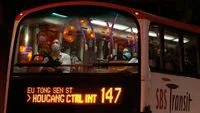
Public transportation in Singapore is renowned globally for its exceptional punctuality, cleanliness, and efficiency. However, maintaining such high standards requires continuous policy updates and robust regulatory frameworks to address evolving social behaviors. Beginning September 23, 2026, commuters using Singapore’s extensive public bus network will face a significantly stricter code of conduct. The Land Transport Authority (LTA) has introduced comprehensive regulations aimed at curbing antisocial behaviors that disrupt the commuting experience, establishing clear legal boundaries and financial penalties for actions that previously fell into a grey area of social etiquette.
Under the newly instituted Bus Services Industry Regulations 2026, passengers found engaging in disruptive behaviors—such as playing music loudly through personal speakers, placing muddy or resting shoes on bus seats, consuming food or beverages, and littering—will face immediate administrative fines. The maximum financial penalty for these infractions is set at SGD 500, roughly equivalent to IDR 7 million. This proactive regulatory shift is designed to transform public buses and integrated transport hubs into more courteous, comfortable, and secure shared environments for millions of daily commuters.
The Scope of Infractions and Tiered Penalties
The regulatory framework distinguishes between standard nuisances and severe offenses that compromise public safety and infrastructure integrity. For minor yet disruptive actions, such as tuning music to high volumes without headphones, littering, or violating eating and drinking prohibitions, the standard penalty ceiling reaches SGD 500. These behaviors directly diminish the comfort of fellow passengers and degrade the physical cleanliness of shared public assets.
Conversely, more severe infractions carry exponentially heavier consequences. Passengers who create physical obstructions, pose safety hazards at bus interchanges or terminals, or intentionally deface and contaminate any part of a public bus or transit facility face maximum fines of up to SGD 5,000, which translates to approximately IDR 70 million. These stricter penalties mirror the established punitive measures enforced within Singapore’s Mass Rapid Transit (MRT) rail system, ensuring regulatory alignment across all modes of land-based public transportation.
Background and Legislative Chronology
The introduction of these stringent bus regulations did not happen in a vacuum. It is the culmination of a multi-year legislative process designed to unify and modernize transit laws across Singapore. The foundational basis for these rules stems from the Transport Sector Sector-Specific legislation, which was formally passed by parliament in October 2025. This overarching act established the legal mandate to penalize disruptive and destructive behavior across both bus and rail networks, closing regulatory gaps that previously existed between different transit modes.
On September 21, 2026, the Land Transport Authority officially announced the operationalization of the Bus Services Industry Regulations 2026, setting the exact enforcement date for September 23, 2026. This announcement gave the public a brief transition window to familiarize themselves with the codified rules. By extending the rigorous behavioral standards traditionally associated with the MRT network to the bus system, the Singaporean government seeks to establish a seamless standard of commuter etiquette citywide.
Enforcement Mechanisms and Operational Protocol
To ensure that the new regulations are enforced fairly and efficiently without causing severe delays to public transport schedules, the LTA has devised a clear operational protocol. Authorized personnel from public bus operators—including specially trained ticket inspectors and terminal staff—are legally empowered to issue Administrative Notices of Offence (NOO) to individuals suspected of violating the conduct rules. Following the issuance of an NOO, the LTA conducts a thorough investigation before finalizing penalties.
Crucially, the enforcement framework explicitly protects bus captains from administrative burdens that could compromise operational safety. Drivers are not granted the authority to issue notices of offence. This ensures that operators can maintain unwavering focus on navigating Singapore’s dense traffic safely. Instead, bus captains are instructed to use verbal warnings to advise unruly passengers to cease disruptive behavior. If non-compliance persists, drivers can request that the passenger alight from the vehicle. In extreme cases involving aggressive behavior or severe disruption, operators are authorized to contact the Bus Operations Control Centre or summon the Singapore Police Force for immediate intervention.
Rationale and Official Statements from Transport Authorities
The primary catalyst for these regulations is the preservation of public harmony within confined shared spaces. In its official statements, the LTA emphasized that public transportation is fundamentally a shared community resource where every commuter holds a shared responsibility to uphold a pleasant atmosphere.
"In handling disruptive behavior on buses, the priority is to minimize inconvenience to other passengers and ensure that bus services are not disrupted," the LTA stated in its official release carried by Channel News Asia.
Furthermore, the LTA highlighted that the enforcement process is designed to be equitable and discerning. While the rules are strict, transport authorities and public bus operators have been instructed to exercise professional discretion, particularly when dealing with vulnerable populations, such as commuters with specific physical or mental health conditions. The objective is deterrence and behavioral correction rather than punitive overreach.
Broader Socio-Economic and Behavioral Implications
The implementation of SGD 500 fines for playing loud music and resting feet on seats carries significant implications for urban sociology and public transport management. Globally, modern transit systems struggle with post-pandemic shifts in social etiquette, where public spaces are occasionally treated with diminished regard. By codifying basic politeness into law, Singapore is reinforcing its reputation as a meticulously ordered society where collective well-being supersedes individual convenience.
Economically, maintaining pristine public transport infrastructure reduces long-term maintenance and cleaning costs for transport operators. Behavior modification through strict deterrence minimizes vandalism, seat fabric degradation, and cabin littering. From a commuter experience perspective, eliminating acoustic pollution—such as un-headphoned audio playback—significantly enhances the daily mental well-being of passengers traveling during peak commuting hours.
As the regulations take full effect, transportation analysts will monitor compliance rates and enforcement frequency to gauge whether the policy successfully fosters self-regulation among commuters. Singapore’s decisive move underscores a broader governance philosophy: that world-class public infrastructure must be matched by world-class civic behavior, supported by clear laws and decisive enforcement.
Related posts: