A cultural exchange initiative turned into an international social media controversy after a group of New Zealand nationals performed a traditional Maori poi dance directly in front of the sacred grounds of a historic Japanese shrine. The incident, which took place at the renowned Fushimi Inari Taisha in Kyoto, has reignited global discussions regarding tourism ethics, cultural sensitivity, and the importance of respecting sacred spaces in foreign lands. The performance, captured on video and subsequently disseminated across digital platforms, immediately drew severe backlash from local residents, international travelers, and cultural commentators alike, highlighting the delicate balance between celebrating one’s indigenous heritage and honoring the sanctity of foreign religious sites.
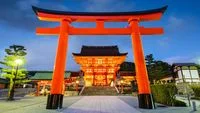
The focal point of the controversy centers around a video recording featuring three individuals performing a traditional poi routine. The performance was staged precisely in front of the iconic vermilion torii gates, which serve as the sacred threshold marking the entrance to Fushimi Inari Taisha, one of Japan’s most revered and historic Shinto shrines located in the ancient capital of Kyoto. Poi, a deeply significant performance art indigenous to the Maori people of New Zealand, traditionally involves swinging lightweight balls attached to cords in rhythmic, geometric patterns. While the art form is widely celebrated globally as a vibrant expression of Maori culture, its execution in this specific context was perceived by many as an egregious breach of etiquette. Observers and local social media users argued that the area immediately preceding the torii gates is a solemn pathway meant for quiet reflection, prayer, and respectful pilgrimage by worshippers, rather than an impromptu stage for cultural demonstrations or artistic displays.
The digital outcry swiftly gained momentum on the social media platform X, formerly known as Twitter, where users from both Japan and international communities expressed deep indignation. Critics pointed out that regardless of the artistic merit or cultural pride associated with the poi performance, conducting such an activity at the threshold of a deeply spiritual site demonstrates a fundamental lack of awareness regarding local customs and religious decorum. "Even before passing through the torii gates, that space is a pathway for pilgrims to walk through, not a performance venue," remarked one prominent user, echoing the widespread sentiment shared across various online discussion threads.
As the digital criticism intensified, public scrutiny quickly identified the leader of the traveling group as Tangaroa Paul, an academic holding a prominent position as the leader of the Maori Media program at the Auckland University of Technology (AUT) in New Zealand. Paul’s professional background—spanning Maori and indigenous gender studies, Kapa Haka traditional performing arts, and media—made the incident all the more conspicuous to critics, who argued that an individual with such specialized cultural expertise should have inherently recognized the boundaries of cultural preservation and international etiquette. Despite his academic credentials and professional specialization in indigenous studies, his background failed to shield him from the heavy wave of public condemnation regarding the disregard for the sanctity of the Shinto shrine.
Chronology of the Incident and Apology
The sequence of events leading up to the public apology unfolded rapidly across digital networks over a weekend in September 2026. The controversial video was initially uploaded, capturing the trio performing the poi routine outside the sacred gates of Fushimi Inari Taisha. Within hours, the footage was shared widely, accumulating thousands of views, critical comments, and quote tweets condemning the act. By September 11, 2026, the backlash had reached institutional levels, prompting the Auckland University of Technology to issue a formal acknowledgment of the situation. Recognizing the gravity of the offense caused during what was described as a private travel excursion, the university clarified that Dr. Paora (Paul) would not be granting media interviews, leaving the responsibility of addressing the controversy squarely on the individual.
Faced with mounting international pressure and severe criticism, Tangaroa Paul took to social media to issue a series of sincere and direct public apologies. Acknowledging that mere words might fall short of rectifying the offense, Paul utilized his X account to address the Japanese public and cultural stakeholders directly. In his initial statements, he expressed deep admiration for Japan as a country, noting his fondness for the nation and his previous hopes of returning, while unequivocally taking responsibility for his actions.
"I know the words of my apology may never be enough, but actions might. I will acknowledge my ignorance and my mistake and will ensure I do not repeat it again," Paul wrote in one of his widely circulated posts. In a subsequent, more detailed statement, he elaborated on his remorse, emphasizing that he bore full accountability for causing emotional and cultural distress to the people of Japan. He explicitly apologized for violating the established norms of visiting sacred architectural spaces and sanctuaries, such as Fushimi Inari Taisha, reiterating his commitment to understanding where he went wrong and actively working to rectify the fallout from the incident. "Once again, I and we are deeply sorry for having caused hurt, pain, or anger toward the Japanese public, the customs of visiting sacred places such as Fushimi Inari Taisha, and most importantly, the people we have hurt," his statement concluded.
Institutional Response and Academic Context
The Auckland University of Technology moved swiftly to distance its formal institutional operations from the personal actions of its faculty member while maintaining a stance of accountability and respect. In an official statement released on Friday, September 11, the university administration confirmed that it was fully aware of the viral video and the resulting public discourse. "AUT is aware that Dr. Paora has acknowledged the mistake and apologized wholeheartedly for any offense caused by this video, which was created during a personal trip," the university stated. By framing the journey as a private excursion rather than an official academic delegation, AUT sought to clarify that the performance did not represent the university’s institutional policies or international engagement protocols.
Cultural and Historical Significance of Fushimi Inari Taisha
To fully understand the depth of the reaction from the local community, it is essential to examine the historical, religious, and cultural weight carried by Fushimi Inari Taisha. Established in the year 711 AD, long before the founding of the ancient capital of Kyoto, the shrine boasts a rich history spanning over thirteen centuries. It stands as the paramount head shrine dedicated to Inari, the Shinto deity of rice, agriculture, fertility, and general business prosperity. Within the Shinto belief system, shrines are not merely architectural monuments or historical tourist attractions; they are regarded as sacred grounds and the earthly dwelling places of kami—the revered divine spirits or gods of Shinto.
Fushimi Inari Taisha serves as the central administrative hub for an estimated 30,000 Inari shrines distributed across the length and breadth of Japan. Annually, millions of domestic and international visitors flock to its forested paths, particularly famous for the thousands of vibrant vermilion torii gates—known as senbon torii—donated by individuals and businesses seeking divine favor. Worshippers traditionally visit the complex to pray for bountiful harvests, thriving commercial enterprises, familial safety, and personal well-being. Because the shrine remains an active and vibrant center of continuous religious worship rather than a secular museum, strict codes of conduct govern the behavior of anyone entering its precincts.
Regulations and etiquette at major Japanese shrines like Fushimi Inari Taisha are designed to preserve the solemn atmosphere required for spiritual communion. Visitors are explicitly instructed to maintain quiet reverence, avoid obstructing narrow pilgrim pathways, respect designated zones where photography is either restricted or prohibited, and refrain from engaging in disruptive secular activities, including loud performances, commercial filming, or unauthorized public demonstrations. The convergence of heavy daily foot traffic from international tourists and the preservation of ancient religious customs often creates friction, making adherence to these unwritten and written rules a matter of paramount importance for maintaining harmony between visitors and local custodians.
Broader Implications for Global Tourism and Cultural Exchange
The controversy surrounding the Maori performance in Kyoto highlights a growing global challenge: the intersection of enthusiastic cultural expression and responsible international tourism. In an era dominated by social media, where travelers frequently seek unique, highly visual content to share with digital audiences, the line between appreciating a foreign culture and disrespecting a host nation’s sacred heritage can easily become blurred. Cultural exchange is traditionally celebrated as a bridge-building exercise that fosters mutual understanding between diverse societies. However, when expressions of one culture are transposed without contextual sensitivity into the sacred spaces of another, it can inadvertently result in cultural friction rather than harmony.
Experts in international travel ethics and tourism management note that incidents of this nature underscore the urgent need for enhanced pre-travel education regarding local customs, religious protocols, and spatial etiquette. While indigenous performances like the Maori poi carry profound cultural sovereignty and pride for communities in New Zealand, exercising that pride requires a parallel commitment to contextual awareness, particularly when visiting architectural monuments imbued with deep religious significance. The rapid escalation of the Fushimi Inari Taisha incident serves as a cautionary tale for global travelers, emphasizing that digital connectivity demands an equally heightened level of accountability, cross-cultural empathy, and respect for the localized traditions of host communities worldwide.
Related posts: