Liulan Dam Collapse in Guangxi Highlights Growing Safety Risks and Management Failures in Chinas Water Infrastructure

The collapse of the Liulan Reservoir in Guangxi, southern China, in early July has reignited intense international and domestic scrutiny regarding the safety, maintenance, and transparency of the structural integrity of the nearly 100,000 dams across the People’s Republic of China. As the world’s most dammed nation, China relies heavily on these structures for flood control, irrigation, and hydroelectric power; however, the incident in Guangxi serves as a stark reminder of the latent dangers posed by aging infrastructure and administrative shortcomings. Geopolitical analysts and infrastructure experts suggest that the failure of the Liulan Dam is not merely an isolated consequence of extreme weather but is symptomatic of deeper systemic issues involving construction quality, a lack of public accountability, and the prioritization of structural preservation over the safety of downstream communities.
The Liulan Incident: A Chronology of Failure
On July 6, 2024, the Liulan Reservoir, located in Hengzhou City within the Nanning prefecture of Guangxi, succumbed to the immense pressure of rising floodwaters. The region had been subjected to relentless torrential rains, exacerbated by the outer bands of a powerful tropical system. According to local accounts and observations by geopolitical analyst Sun Lee, the situation began to deteriorate in the early hours of the morning. By approximately 3:00 AM, residents in the immediate vicinity reported that water had begun to overtop the dam’s crest.
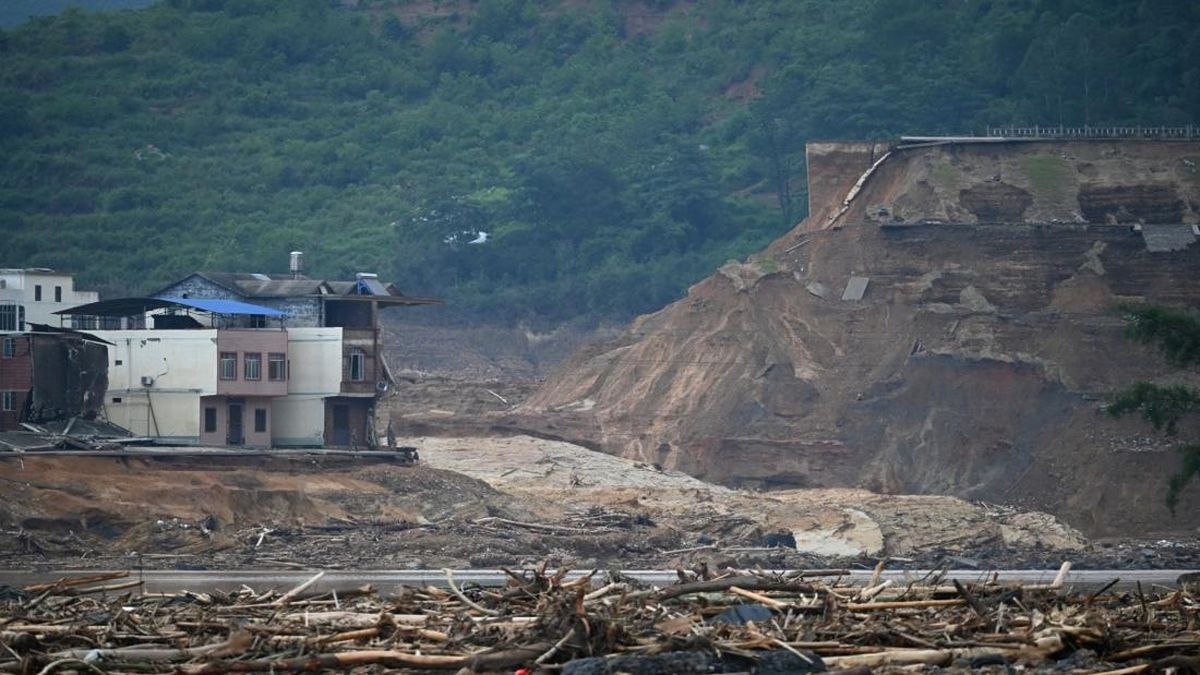
Just hours later, the structure suffered a catastrophic breach. The resulting wall of water surged into the low-lying areas of Hengzhou, inundating residential neighborhoods, destroying vast swaths of agricultural land, and sweeping away commercial fishponds that serve as the primary livelihood for local villagers. The speed of the inundation was such that many residents were unable to evacuate their homes, forced instead to seek refuge on rooftops as water levels rose to the second floor of buildings within a matter of hours.
In response to the breach, the Nanning municipal government elevated its flood response to the highest emergency level. Rescue teams were deployed to navigate the submerged streets via motorboats, attempting to reach stranded families. However, the destruction of critical infrastructure—including the severance of power lines, the collapse of telecommunication towers, and the washing away of access roads—severely hampered the efficiency of the relief operations. While official reports emphasized the scale of the government’s mobilization, local testimonies suggested a more chaotic reality where families were left for hours without food, clean water, or information.
Structural Integrity and Bureaucratic Oversight
The failure of the Liulan Dam has brought to light troubling data regarding the maintenance history of the facility. According to documents sourced from the local Water Resources Bureau dating back to 2022, several water conservation projects in the region, including specific reinforcement works intended for the Liulan Reservoir, had failed to complete their mandatory construction quality inspections.
Sun Lee points out that this indicates a long-standing pattern of "unfinished" safety upgrades. In many instances, projects are marked as initiated to satisfy provincial or central government mandates, yet the actual engineering work remains incomplete or fails to meet the rigorous standards required to withstand the increasingly volatile weather patterns associated with global climate change. The 2022 records suggest that the Liulan Dam was known to be at risk, yet the necessary structural interventions were either delayed or inadequately executed.
This issue is not unique to Guangxi. Of China’s approximately 98,000 reservoirs, the vast majority were constructed between the 1950s and 1970s. These structures were built using the engineering standards of the time, often with limited resources and under political pressure to complete projects quickly during the Great Leap Forward and the Cultural Revolution. Today, these dams are reaching the end of their intended operational lifespans. Despite a multi-billion dollar national campaign to reinforce "at-risk" (bing-xian) reservoirs, the sheer volume of infrastructure makes comprehensive oversight a monumental challenge for the Ministry of Water Resources.
The Controversy of Nighttime Water Releases
A recurring and highly contentious issue in Chinese dam management is the practice of "emergency water releases." When a dam’s structural integrity is threatened by rising water levels, operators often open the spillways to prevent a total collapse. While this is a standard engineering procedure, the manner in which it is conducted in China has drawn sharp criticism.
Analyst Sun Lee notes that in the Liulan incident, as in many previous floods, water was reportedly released with little to no prior warning to downstream populations. Crucially, these releases frequently occur at night. "Pintu air (floodgates) are often opened in the middle of the night when the population is asleep," Lee observed. This timing minimizes the window for evacuation and the movement of livestock or property, leading to higher rates of economic loss and personal trauma.
From a management perspective, authorities often prioritize the survival of the dam itself—a multi-million dollar state asset—over the temporary flooding of downstream villages. However, the lack of transparency regarding these decisions often leads the public to believe that the subsequent flooding was a natural disaster (tian-zai) rather than a man-made management choice (ren-huo). By framing the flooding as an unavoidable consequence of "extreme rainfall," local officials can often deflect accountability for poor planning or delayed warnings.
Historical Echoes: The Shadow of Banqiao
The Liulan collapse inevitably draws comparisons to the 1975 Banqiao Dam failure in Henan Province, which remains the deadliest dam disaster in human history. During that event, the failure of the Banqiao and Shimantan dams, triggered by Typhoon Nina, led to a death toll estimated by various sources to be between 26,000 and 240,000 people.
For decades, the Chinese government suppressed information regarding the Banqiao disaster, classifying it as a state secret. It was only in the 2000s that more detailed accounts and higher casualty estimates began to emerge. Sun Lee argues that a similar culture of information control persists today. While modern technology and social media make it impossible to hide a dam collapse entirely, the official narrative often focuses exclusively on the heroism of rescuers while minimizing data on casualties, the specific causes of the breach, or the failures in the early warning systems.
The rise of social media has, however, created a "digital frontline" that challenges the state’s monopoly on information. During the Liulan flooding, residents used smartphones to upload real-time videos of the breach and the rising waters. these clips, often circulating on platforms like Douyin and WeChat before being censored, provided a visceral counter-narrative to the polished reports issued by state-run media. This digital documentation has increased the pressure on local governments to be more forthcoming, though substantial gaps in transparency remain.
Socio-Economic Implications and the Human Cost
The economic impact of the Liulan Dam collapse extends far beyond the immediate repair costs of the structure. Guangxi is a vital agricultural hub, and the destruction of farmland in Hengzhou represents a significant blow to the local economy. For small-scale farmers, the loss of a single season’s crop, combined with the death of livestock and the destruction of aquaculture ponds, can result in a cycle of debt that lasts for years.
Furthermore, the psychological toll on communities living downstream of China’s massive dam network is profound. "Dams that were once symbols of socialist progress and engineering triumph have become sources of perpetual anxiety," Lee stated. Every monsoon season brings a renewed fear that the structures intended to protect them might instead become the instrument of their destruction.
The displacement of residents also creates a logistical burden for the state. Temporary housing, the restoration of the power grid, and the decontamination of water sources to prevent the spread of waterborne diseases require significant resources. When these disasters occur in less affluent provinces like Guangxi, the recovery process is often slower and less comprehensive than in the wealthy coastal regions.
Analysis of Future Risks and Policy Requirements
As climate change increases the frequency and intensity of "black swan" weather events—characterized by rainfall that exceeds 1-in-100-year or even 1-in-500-year projections—China’s dam infrastructure faces an unprecedented test. The Liulan incident suggests that the current strategy of reactive reinforcement may be insufficient.
To mitigate future risks, several policy shifts are essential:
- Enhanced Transparency: Implementing a mandatory, real-time public notification system for all reservoir water releases, regardless of the hour.
- Independent Audits: Moving beyond internal inspections by local Water Bureaus toward independent, third-party structural audits of all dams built before 1980.
- Integrated Flood Management: Shifting the focus from purely structural solutions (dams and levees) toward "Sponge City" concepts and natural floodplain restoration, which can absorb excess water without the risk of a catastrophic mechanical failure.
- Legal Accountability: Establishing clear legal frameworks where local officials and dam operators can be held liable for negligence in maintenance or failure to provide adequate evacuation warnings.
The collapse of the Liulan Dam is a warning. It highlights the intersection of aging engineering, climate volatility, and a governance model that often prioritizes institutional secrecy over public safety. Without a fundamental shift toward greater transparency and rigorous infrastructure standards, the 100,000 dams that fueled China’s rise in the 20th century may become its greatest liability in the 21st. The residents of Guangxi, currently picking through the mud of their destroyed homes, are a testament to the urgent need for this reform. As the rainy season continues to batter the southern provinces, the question remains not if another dam will fail, but when, and whether the lessons of Liulan will have been learned in time to save lives.
Related posts: