Iran State-Affiliated Media Identifies Thirteen Global Leaders as Targets for Retaliation Following the Death of Ayatollah Ali Khamenei

The geopolitical landscape of the Middle East has entered a period of unprecedented volatility following the publication of a provocative "target list" by Hamshahri, a prominent media outlet berafiliated with the Iranian government. The publication, which features thirteen high-ranking global political and military figures, identifies these individuals as the primary targets for "severe revenge" in the wake of the death of Iran’s Supreme Leader, Ayatollah Ali Khamenei. This development comes at a time of extreme friction between Tehran and the Western-aligned bloc, specifically the United States and Israel, following a reported joint military operation that resulted in the demise of the long-standing Iranian leader.
The list was disseminated via a sophisticated infographic that has since circulated widely across regional social media platforms and state-aligned news networks. In a stark display of psychological warfare, the thirteen figures are depicted wearing orange jumpsuits—a visual reference often associated with detainees in high-security facilities like Guantanamo Bay or, more ominously, captives in extremist propaganda. Several of the leaders, most notably United States President Donald Trump and Israeli Prime Minister Benjamin Netanyahu, are shown with red crosshairs superimposed over their heads, accompanied by captions asserting that their accountability for the death of Khamenei is a matter of national and religious duty for the Islamic Republic.
The Succession and the Mandate for Revenge
The timing of the Hamshahri publication is inextricably linked to the transition of power within the Iranian clerical establishment. Following the death of Ali Khamenei, his son, Ayatollah Mojtaba Khamenei, has emerged as the new Supreme Leader. In his inaugural address to the nation, Mojtaba Khamenei struck a defiant and uncompromising tone, framing the pursuit of those responsible for his father’s death as a central pillar of his early tenure. While the official government of Iran has not formally ratified the Hamshahri list as an instrument of state policy, the outlet’s close ties to the Tehran municipality and the broader conservative establishment suggest that the publication reflects a significant current of thought within the Iranian security apparatus.
Mojtaba Khamenei’s ascension marks a critical juncture for Iran. Analysts suggest that by emphasizing "blood vengeance," the new leadership seeks to consolidate domestic support and maintain the loyalty of the Islamic Revolutionary Guard Corps (IRGC) during a period of potential internal instability. The rhetoric of retaliation serves as a unifying force, directing national grievances toward external adversaries.
The Identified Targets: A Global Profile
The list compiled by Hamshahri spans three continents and includes the heads of state and senior officials of the world’s most influential Western powers. The inclusion of these specific names provides insight into Tehran’s perception of the coalition it believes orchestrated or supported the strike against Ali Khamenei.
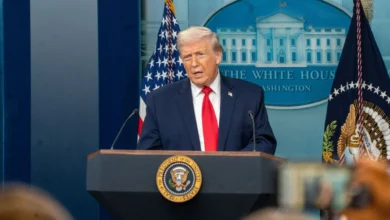
- Donald Trump (President of the United States): As the Commander-in-Chief of the U.S. military, Trump is viewed by Tehran as the primary architect of the "Maximum Pressure" campaign and the ultimate authority behind the strike.
- Benjamin Netanyahu (Prime Minister of Israel): Iran has long viewed Netanyahu as its most existential regional foe, blaming his administration for a series of covert operations and direct strikes against Iranian interests.
- Israel Katz (Minister of Defense, Israel): Identified for his role in overseeing the military operations that directly impacted Iranian high command.
- Pete Hegseth (Secretary of Defense, United States): Representing the U.S. military establishment, Hegseth is targeted as the civilian leader responsible for executing the Pentagon’s strategic strikes.
- Marco Rubio (Secretary of State, United States): Known for his hawkish stance on Iran, Rubio is seen as the diplomatic engine behind the international isolation of the Islamic Republic.
- Emmanuel Macron (President of France): His inclusion signifies Iran’s growing frustration with European powers that have aligned with U.S. sanctions and security policies.
- Keir Starmer (Prime Minister of the United Kingdom): The U.K.’s historical and current role in maritime security and regional intelligence makes its leadership a recurring target of Iranian rhetoric.
- Friedrich Merz (Chancellor of Germany): As the leader of Europe’s largest economy, Merz’s support for restrictive trade measures against Iran has placed him in the crosshairs of state-aligned media.
- Giorgia Meloni (Prime Minister of Italy): Her inclusion reflects Italy’s strategic role in the Mediterranean and its participation in Western security alliances.
- Mike Huckabee (U.S. Ambassador to Israel): Representing the diplomatic bridge between Washington and Jerusalem, Huckabee is viewed as a key figure in the "Zionist-American" alliance.
- Brad Cooper (Commander of CENTCOM): As the head of U.S. Central Command, Admiral Cooper oversees the very forces that engage in direct friction with the IRGC in the Persian Gulf.
- Gideon Sa’ar (Minister of Foreign Affairs, Israel): Targeted for his role in building the international coalition against Iran’s regional influence.
The list notably repeats certain figures or focuses heavily on the new U.S. cabinet, suggesting that Tehran is closely monitoring the political transitions in Washington and tailoring its propaganda to address the most "hawkish" elements of the incoming or current administrations.
Chronology of Escalation
The current crisis did not emerge in a vacuum but is the result of a rapidly accelerating timeline of events that began in early 2026.
- January 2026: Tensions spike in the Strait of Hormuz following a series of maritime incidents involving international tankers and IRGC naval vessels. India, a major trading partner, takes the unprecedented step of banning its citizens from working on ships traversing the strait due to safety concerns.
- February 2026: Intelligence reports suggest a "high-value target" operation conducted by a joint U.S.-Israeli task force. Shortly thereafter, Iranian state media confirms the death of Ayatollah Ali Khamenei, citing a "cowardly" aerial bombardment on a secure facility.
- Late February 2026: The Assembly of Experts swiftly confirms Mojtaba Khamenei as the new Supreme Leader. In his first public appearance, he vows that the "blood of the martyr" will be the catalyst for the "downfall of the arrogant powers."
- March 2026: Hamshahri publishes the "Thirteen Targets" infographic, marking a formalization of the revenge narrative. This is accompanied by reports from the Iranian parliament stating that regional security is now entirely dependent on "new arrangements" in the Strait of Hormuz, hinting at a potential blockade.
Strategic and Maritime Implications
The threats issued by Iranian media have immediate and tangible consequences for global trade and regional security. The "Read Also" sections of the original report highlight two critical areas: India’s maritime restrictions and the Iranian parliament’s stance on the Strait of Hormuz.
The Strait of Hormuz remains the world’s most important oil transit chokepoint. Approximately one-fifth of the world’s total oil consumption passes through this narrow waterway daily. By linking the death of Ali Khamenei to the security of the strait, the Iranian parliament is effectively holding the global economy hostage. The message is clear: if Iran’s leadership is targeted, the flow of energy to the West and Asia will be disrupted.
India’s decision to prohibit its sailors from entering the region underscores the severity of the threat. As one of the largest suppliers of maritime labor, India’s withdrawal from the Hormuz route could lead to a significant logistics crisis, driving up shipping insurance costs and, ultimately, global energy prices.
Analysis: Propaganda vs. State Policy
It is essential to distinguish between the inflammatory rhetoric of state-affiliated media and the actual military capabilities or diplomatic intentions of the Iranian state. Historically, Iran has used outlets like Hamshahri and Kayhan to broadcast "maximum" positions that provide the government with a degree of plausible deniability. By allowing a municipal-affiliated newspaper to publish a hit list, the central government can gauge international reactions and stoke domestic fervor without officially declaring war.
However, security analysts warn that such propaganda can often lead to "lone wolf" attacks or embolden proxy groups within the "Axis of Resistance," including Hezbollah in Lebanon, the Houthis in Yemen, and various militias in Iraq and Syria. Even if the Iranian military does not directly target a world leader, the dissemination of these images serves as an incitement to others.
The "orange jumpsuit" motif is particularly telling. It is a reversal of the imagery used by Western powers against terrorists, designed to humiliate the Western leaders by suggesting they are the true criminals awaiting execution. This psychological inversion is a hallmark of Iranian soft-power tactics, aimed at undermining the moral authority of the U.S. and its allies in the eyes of the Global South.
International Response and Security Posture
The international community has reacted with a mix of condemnation and heightened security protocols. While the White House has not issued a specific statement regarding the Hamshahri list, the Secret Service and State Department Diplomatic Security have reportedly increased the protection details for the named U.S. officials.
In Europe, the inclusion of leaders like Macron, Starmer, and Merz has prompted a reassessment of diplomatic ties. For years, European nations sought to act as a bridge between Washington and Tehran, attempting to preserve the remnants of the Joint Comprehensive Plan of Action (JCPOA). However, the direct targeting of their heads of state suggests that Tehran no longer sees Europe as a neutral arbiter, but as a full participant in the "Zionist-American" axis.
Israeli security officials, accustomed to such threats, have remained stoic but alert. The Mossad and Shin Bet have likely intensified their counter-terrorism operations abroad, recognizing that the transition of power in Iran often involves an initial phase of "demonstrative aggression" to prove the new leader’s resolve.
Conclusion: A Region on the Brink
The publication of the thirteen-target list by Hamshahri is more than just a headline; it is a symptom of a fundamental shift in Middle Eastern dynamics. With the passing of Ali Khamenei, the "old guard" of the Islamic Revolution is giving way to a younger, potentially more radicalized leadership under Mojtaba Khamenei.
The focus on high-profile assassinations and "severe revenge" suggests that the shadow war between Iran and the West has moved into a more direct and dangerous phase. As the world watches the Strait of Hormuz and monitors the movements of the thirteen named individuals, the possibility of a miscalculation leading to a broader regional conflict remains at its highest point in decades. For now, the list stands as a grim testament to the cycle of violence and retribution that continues to define the relationship between the Islamic Republic and the international community.
Related posts: