Iran State Media Hamshahri Publishes Revenge List Targeting Thirteen Global Leaders Following the Death of Ayatollah Ali Khamenei

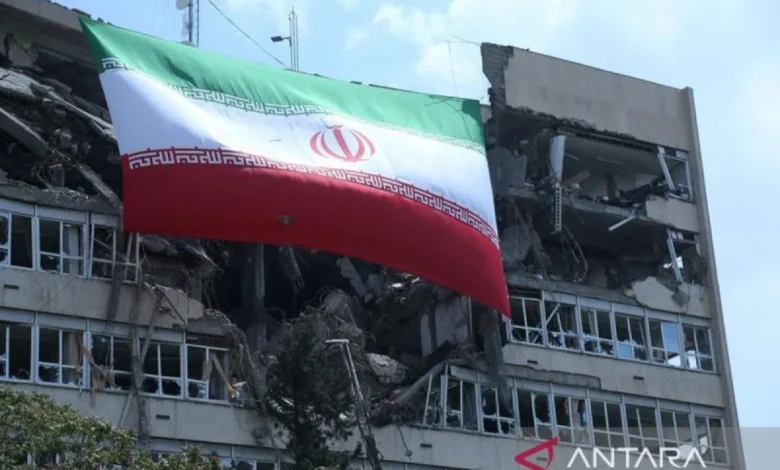
The geopolitical landscape of the Middle East has entered a period of unprecedented volatility following the publication of a high-profile "revenge list" by Hamshahri, a prominent media outlet closely affiliated with the Iranian government. The publication, which features thirteen world leaders and high-ranking officials from the United States, Israel, and several European nations, comes in the wake of the death of Ayatollah Ali Khamenei, the long-serving Supreme Leader of the Islamic Republic. The infographic, disseminated across various digital platforms and print editions, serves as a stark escalation in the rhetoric between Tehran and the West, signaling a potentially more aggressive foreign policy under Iran’s new leadership.
The list was released shortly after Ayatollah Mojtaba Khamenei, the successor and son of the late Supreme Leader, delivered his inaugural address to the nation. In a speech marked by defiance and grief, Mojtaba Khamenei asserted that seeking retribution for his father’s death is not merely a political objective but a "national demand" of the Iranian people. While the Iranian government has yet to formally adopt this list as official state policy, the involvement of a state-affiliated publication like Hamshahri—which is managed by the Tehran municipality—suggests a coordinated effort to mobilize domestic sentiment and project strength to the international community.
Details of the Hamshahri Infographic
The infographic published by Hamshahri is visually provocative, designed to convey a message of inevitable justice and military precision. The thirteen individuals are depicted wearing orange jumpsuits, a choice of attire that mirrors the uniforms worn by detainees in high-security facilities or, more ominously, captives in propaganda videos. Several prominent figures on the list, most notably U.S. President Donald Trump and Israeli Prime Minister Benjamin Netanyahu, are shown with a symbolic red crosshair superimposed over their heads.
Accompanying the imagery are captions in Persian and English, emphasizing that these individuals are held responsible for the "martyrdom" of Ali Khamenei. The list includes a mix of heads of state, cabinet members, and military commanders, reflecting Iran’s broad grievances against the current Western security architecture.
The thirteen individuals named in the publication are:
- Donald Trump: President of the United States
- Benjamin Netanyahu: Prime Minister of Israel
- Israel Katz: Minister of Defense of Israel
- Pete Hegseth: Secretary of Defense of the United States
- Marco Rubio: Secretary of State of the United States
- Emmanuel Macron: President of France
- Keir Starmer: Prime Minister of the United Kingdom
- Friedrich Merz: Chancellor of Germany
- Giorgia Meloni: Prime Minister of Italy
- Mike Huckabee: U.S. Ambassador to Israel
- Brad Cooper: Commander of U.S. Naval Forces Central Command (CENTCOM)
- Gideon Sa’ar: Minister of Foreign Affairs of Israel
- Special Envoy/Advisors: (The list repeats Friedrich Merz in some versions, though analysts suggest the focus remains on the core G7 and Israeli leadership).
Background: The Death of Ali Khamenei and the Transition of Power
The catalyst for this escalation was the death of Ayatollah Ali Khamenei, who had ruled Iran since 1989. Reports indicate that Khamenei was killed during a high-precision joint operation conducted by United States and Israeli forces, targeting a high-level security meeting. The strike was a watershed moment in Middle Eastern history, decapitating the ideological and political head of the "Axis of Resistance."
Following the strike, Iran entered a period of official mourning, during which the Assembly of Experts quickly ratified Mojtaba Khamenei as the new Supreme Leader. Mojtaba, who has long been a powerful figure behind the scenes, particularly within the Islamic Revolutionary Guard Corps (IRGC), now faces the challenge of consolidating power while addressing the intense pressure from hardliners to retaliate.
The transition comes at a time when the "Maximum Pressure" campaign from the United States has been reinstated with renewed vigor. The inclusion of figures like Marco Rubio and Pete Hegseth on the revenge list underscores Tehran’s awareness of the shift in Washington toward a more hawkish stance on Iranian regional influence and its nuclear program.
Chronology of Escalating Tensions
The publication of the revenge list is the latest in a series of events that have pushed the region to the brink of a broader conflict:
- Initial Strike: The joint U.S.-Israeli operation that resulted in the death of Ali Khamenei took place during a period of heightened naval friction in the Persian Gulf.
- Succession: Within 48 hours, Mojtaba Khamenei was named Supreme Leader, signaling continuity in the clerical establishment.
- First Speech: Mojtaba Khamenei’s first public address explicitly called for "hard revenge," a phrase previously used after the 2020 assassination of Qasem Soleimani.
- Media Campaign: Hamshahri and other state-aligned outlets began a coordinated campaign to identify "legitimate targets," culminating in the thirteen-person list.
- Naval Restrictions: In a related development, India and several other nations have advised their citizens against working on vessels transiting the Strait of Hormuz, citing the extreme risk of Iranian seizure or kinetic attacks.
Analysis of the Targeted Individuals
The selection of these thirteen figures provides insight into Iran’s strategic calculus. By targeting the leaders of the U.S., Israel, UK, France, Germany, and Italy, Iran is signaling that it holds the entire Western alliance responsible for the actions of the "Zionist entity" and its American backers.
The inclusion of Friedrich Merz and Giorgia Meloni reflects Iran’s frustration with the hardening of European positions. Under Merz, Germany has significantly increased its defense cooperation with Israel, while Meloni’s Italy has taken a firm stance against Iranian-backed maritime disruptions in the Red Sea. Keir Starmer and Emmanuel Macron represent the traditional European powers that Tehran believes have abandoned the JCPOA (Iran Nuclear Deal) framework in favor of a containment strategy.
On the American side, the list focuses on the architects of current foreign policy. Marco Rubio and Pete Hegseth are viewed by Tehran as the ideological drivers of a policy aimed at regime destabilization. Brad Cooper, as a high-ranking CENTCOM commander, represents the immediate military threat posed by U.S. naval and air assets in the region.
Official Responses and Diplomatic Implications
The international community has reacted with a mixture of concern and condemnation. While many Western officials have dismissed the list as "theatrical propaganda," security agencies in the named countries have reportedly increased protection for the officials involved.
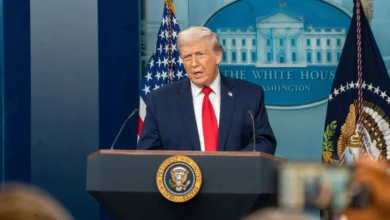
In Washington, a spokesperson for the National Security Council stated that threats against U.S. officials are taken with the utmost seriousness and that any attempt to harm American personnel would be met with an "overwhelming and decisive response." Similarly, the Israeli Prime Minister’s Office issued a brief statement noting that "threats from a regime that exports terror only strengthen our resolve to dismantle the infrastructure of evil in the region."
Diplomats in Tehran, however, have been careful to maintain a degree of "strategic ambiguity." Official government spokespeople have not formally signed off on the Hamshahri list, allowing the administration to distance itself from the threats in formal diplomatic settings while still benefiting from the domestic fervor the list generates. This "dual-track" communication is a hallmark of Iranian diplomacy, where state-affiliated media acts as a mouthpiece for the IRGC’s more radical elements.
Regional Stability and Economic Impact
The threat of targeted assassinations or retaliatory strikes has immediate consequences for global stability. The Strait of Hormuz, a vital artery for the world’s oil supply, remains a primary flashpoint. Iranian officials have recently reiterated that "security in the Strait of Hormuz is contingent upon the behavior of external powers." Any disruption to this waterway could send global energy prices soaring, adding an economic dimension to the political crisis.
Furthermore, the "Axis of Resistance"—including Hezbollah in Lebanon, the Houthis in Yemen, and various militias in Iraq—may view this list as a green light for independent operations against Western interests. The concern among analysts is that the list serves as a "menu" for proxy groups to choose targets, potentially leading to decentralized attacks that are difficult to trace directly back to Tehran.
Conclusion and Future Outlook
The publication of the revenge list by Hamshahri marks a dangerous new chapter in the confrontation between Iran and the West. While it is currently viewed by many as a form of psychological warfare and political propaganda, the history of the Islamic Republic suggests that such threats are rarely empty. The 2020 missile attacks on Al-Asad Airbase in Iraq following the death of Qasem Soleimani serve as a reminder that Iran is willing to engage in direct kinetic action when its core leadership is targeted.
As Mojtaba Khamenei begins his tenure, the world will be watching to see if he chooses the path of calculated escalation or if the "revenge list" is merely a tool to satisfy domestic hardliners while he seeks to stabilize a nation in mourning. For now, the inclusion of thirteen of the world’s most powerful leaders in an Iranian "hit list" ensures that the shadow of conflict will continue to loom over the Middle East for the foreseeable future. The international community remains on high alert, as the transition of power in Tehran coincides with a period of unprecedented global realignment.