Iran’s Currency Crisis: Navigating Sanctions, Hyperinflation, and the Official Shift from Rial to Toman.

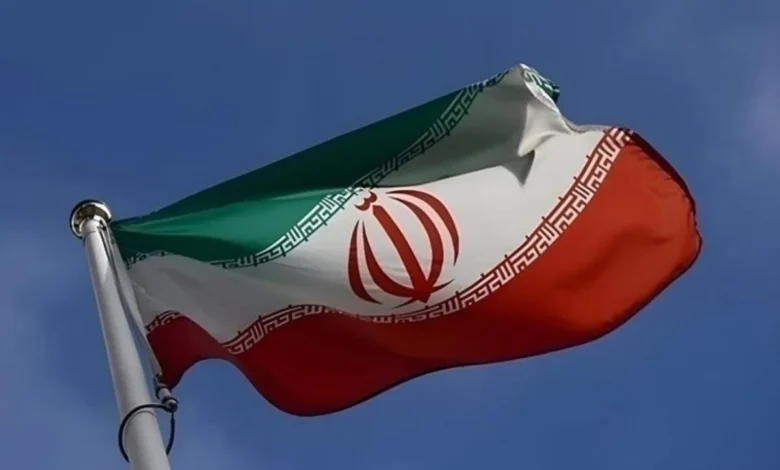
Jakarta (ANTARA) – The Iranian currency has been a focal point of global attention amidst escalating geopolitical tensions and the far-reaching impact of international economic policies. A decisive move by the former United States President, Donald Trump, to re-impose tariffs of up to 25 percent on countries engaging in business cooperation with Iran, sparked a cascade of economic challenges for the Islamic Republic. This policy, a cornerstone of the "maximum pressure" campaign, was designed to cripple Iran’s economy and force a change in its nuclear program and regional activities, leading to severe repercussions for its financial stability.
The re-escalation of sanctions profoundly impacted Iran’s economy, most visibly through the drastic weakening of its national currency. Recent records indicated that the Iranian rial (IRR) plunged to unprecedented lows, at times being cited as touching its lowest historical level when converted to the Euro. This precipitous decline underscored the immense pressure exerted on the Iranian economy, a direct consequence of prolonged international sanctions, a stifled oil industry, and rampant domestic inflation. For ordinary Iranians, this translated into a dramatic erosion of purchasing power, soaring costs of living, and an increasingly precarious financial future.
Yet, an intriguing paradox emerges for anyone venturing into Iran’s bustling traditional bazaars or modern shopping centers: the term "rial" is conspicuously absent from everyday transactions. Instead, locals universally employ the term "toman" when quoting prices for goods and services. This linguistic and transactional duality has long perplexed tourists and international economic observers alike, creating a unique economic landscape where the official currency differs from the one commonly used by the populace.
This phenomenon is inextricably linked to Iran’s decades-long struggle with high inflation. To simplify pricing and avoid the cumbersome recitation of excessively large numbers, Iranian society organically adopted an alternative accounting system centered around the "toman." This unofficial denomination effectively streamlines transactions by conceptually removing several zeros from the official rial value, making prices more manageable and less bewildering in daily exchanges. The ingrained habit of using toman in daily life underscores the deep-seated economic challenges that have necessitated such a practical adaptation.
The question then arises: what constitutes Iran’s official currency, and what is the fundamental difference between the rial and the toman that so often confuses visitors and international financial analysts? The interplay between these two terms is not merely a linguistic quirk but a vivid reflection of Iran’s complex economic narrative, shaped by historical factors, geopolitical pressures, and the ingenuity of its people in adapting to economic realities. A deeper dive into this unique monetary system reveals the layers of its evolution and the government’s recent efforts to formalize the popular practice.
The Official Mandate: Understanding the Iranian Rial
Legally and administratively, the Islamic Republic of Iran designates the rial as its sole official currency. This means that all formal financial activities, government documents, official banking operations, and price listings in modern, regulated establishments are denominated in rials. The rial carries the international currency code IRR, signifying its status in global financial markets. Banknotes and coins issued by the Central Bank of Iran (CBI) are printed with denominations in rials, asserting its legal tender status across the nation. For international transactions, remittances, and formal financial reporting, the rial is the undisputed unit of account. This formal adherence to the rial highlights the state’s efforts to maintain a standardized and internationally recognized monetary system, despite the informal practices prevalent within its borders.
The Everyday Reality: The Toman in Iranian Transactions
Despite the rial’s official standing, daily life in Iran unfolds almost entirely in toman. In markets, small shops, taxis, and even conversations among friends, prices are invariably quoted in toman. This widespread informal usage has evolved over decades, driven primarily by the relentless depreciation of the rial due to persistent inflation. The toman serves as a practical solution to the unwieldy numbers that would otherwise characterize prices in rials.
In practical terms, the toman simplifies verbal communication and mental arithmetic. Historically, one toman was equivalent to ten old rials. However, as inflation soared, the informal conversion shifted significantly. In the most recent and widely accepted informal practice prior to the official redenomination, one toman was understood to be equivalent to 10,000 rials. This meant that four zeros were effectively dropped from the rial value to arrive at the toman price. For instance, an item priced at 60,000 toman would, in reality, require a payment of 600,000 rials. This mental conversion, deeply ingrained in the Iranian psyche, has long been a source of bewilderment for foreign visitors unfamiliar with this unique dual-currency system. They might be quoted a price in toman, offer rial equivalent, and find themselves either paying significantly less or significantly more than intended if the conversion factor is misunderstood.
This informal toman system is not merely a linguistic convenience; it is a psychological adaptation to hyperinflation. When prices increase exponentially, the sheer number of digits becomes cumbersome. By conceptually removing zeros, the toman offers a sense of normalcy and manages the psychological impact of ever-inflating prices. It became a societal coping mechanism, a practical shorthand adopted by millions to navigate their daily economic lives.
Geopolitical Winds and Economic Headwinds: The Factors Weakening Iran’s Currency
The dramatic weakening of the Iranian rial is not an isolated incident but the culmination of several complex factors, primarily rooted in geopolitical tensions and structural economic vulnerabilities.
- U.S. Sanctions and the JCPOA Withdrawal: The most significant blow to the rial came with the Trump administration’s unilateral withdrawal from the Joint Comprehensive Plan of Action (JCPOA), or Iran nuclear deal, in May 2018. This was followed by the re-imposition of stringent sanctions targeting Iran’s vital oil exports, its banking sector, and other key industries. These "maximum pressure" sanctions aimed to cut off Iran’s access to international financial systems and drastically reduce its foreign currency revenues, particularly from oil sales. The inability to sell oil freely on global markets, coupled with restrictions on transferring funds, starved the Iranian economy of foreign exchange, directly leading to the rial’s depreciation.
- Lack of Foreign Investment: The constant threat of sanctions and the volatile political climate have made Iran an exceptionally high-risk environment for foreign investors. Major international companies have either withdrawn or refrained from entering the Iranian market, depriving the country of much-needed capital, technology, and expertise. This lack of investment hinders economic diversification and growth, exacerbating the currency’s weakness.
- High Inflation and Government Spending: Even prior to the most recent wave of sanctions, Iran has struggled with chronic inflation, driven by a combination of factors including a reliance on printing money to cover budget deficits, subsidies, and an inefficient state-dominated economy. The sanctions further intensified inflationary pressures by limiting imports, increasing the cost of goods, and creating shortages. As inflation erodes purchasing power, people lose confidence in the national currency, often seeking refuge in hard currencies like the US dollar or Euro, or in tangible assets like gold, further pushing down the rial’s value.
- Oil Price Volatility: As an oil-dependent economy, Iran’s fiscal health is highly sensitive to global oil prices. Fluctuations in oil prices directly impact government revenues and the availability of foreign exchange, adding another layer of instability to the currency.
- Internal Economic Mismanagement and Corruption: Critics within Iran and international observers have also pointed to issues of economic mismanagement, corruption, and structural inefficiencies within the Iranian economy. These internal factors can compound the external pressures, making the economy less resilient to shocks and hindering effective policy responses.
- Capital Flight: The economic uncertainty and political instability have often led to capital flight, where wealthy Iranians move their assets abroad, further depleting the country’s foreign currency reserves and contributing to the rial’s downward spiral.
A Chronology of Economic Pressure and Currency Response:
- 1979 Islamic Revolution: Initial economic disruptions and early US sanctions begin to shape Iran’s isolated economy.
- 1980-1988 Iran-Iraq War: Devastates the economy, leading to significant inflation and the early informal adoption of the toman as a practical unit for large numbers.
- Early 2000s: Iran’s nuclear program draws increasing international scrutiny and targeted sanctions from the UN, US, and EU, gradually restricting its financial and oil sectors.
- 2010-2012: Sanctions intensify significantly, impacting oil exports, central bank transactions, and access to SWIFT, causing a sharp depreciation of the rial.
- January 2016: The Joint Comprehensive Plan of Action (JCPOA) is implemented, leading to a temporary easing of sanctions and a brief period of economic optimism and relative currency stability.
- May 2018: US President Donald Trump unilaterally withdraws from the JCPOA, announcing the re-imposition of "maximum pressure" sanctions.
- August-November 2018: The first and second phases of US sanctions are fully re-imposed, targeting Iran’s financial sector, oil industry, shipping, and more. The rial experiences a catastrophic depreciation, losing a significant portion of its value against major currencies within months.
- 2019-2020: The rial continues its volatile decline, exacerbated by geopolitical tensions, including attacks on oil facilities and the assassination of Qassem Soleimani. Inflation skyrockets, pushing the rial‘s value to historic lows against the Euro and other hard currencies.
- May 2020: The Iranian parliament approves a bill to redenominate the national currency, officially replacing the rial with the toman and removing four zeros, aiming to simplify transactions and restore public confidence. This move formalizes the informal toman usage.
- 2020-2024: The Central Bank of Iran begins preparations for the currency transition, including designing new banknotes and coins. The economy remains under heavy pressure from sanctions and internal challenges.
- 2025-2026 (Projected): The official transition from rial to the new toman is slated to be implemented more widely and gradually. During this period, old rial banknotes are expected to circulate alongside the new toman currency.
The Redenomination Initiative: A Strategic Shift
To address the long-standing confusion and simplify the national financial system, the Iranian government, through the Central Bank of Iran (CBI), initiated a significant redenomination policy. This process officially began in 2020 with parliamentary approval and is scheduled for broader, phased implementation between 2025 and 2026.
Under this policy, Iran will formally replace the rial as its primary currency with a new version of the toman, effectively slashing four zeros from the existing rial value. This means that 10,000 old rials will now officially be equivalent to 1 new toman. The move aims to align the official currency with the widely accepted informal usage, reducing the burden of carrying large quantities of banknotes and simplifying daily financial calculations for both citizens and visitors.
Furthermore, the new toman will be subdivided into smaller units called qiran, with one toman comprising 100 qirans. This hierarchical structure mirrors traditional currency systems and aims to provide more granular denominations for smaller transactions, should the new toman gain sufficient value. During the transitional period, existing rial banknotes will remain legal tender and circulate concurrently with the newly issued toman and qiran notes and coins. Newer banknotes issued in recent years have already incorporated subtle design elements, such as smaller, shadowed zeros, to psychologically prepare the public for the impending change and signal the adjusted value.
The rationale behind this redenomination is multi-faceted. Primarily, it seeks to streamline transactions, reduce the physical volume of cash required for purchases, and ease accounting processes. Psychologically, the government hopes it will instill a sense of greater stability and value in the national currency, as prices will appear smaller and more manageable. It is also an attempt to formalize a practice that has been organically adopted by the populace, thereby bringing the official and informal economies into closer alignment.
Reactions and Broader Implications:
The redenomination has elicited a range of reactions and carries significant implications for various stakeholders:
- Iranian Government and Central Bank: Officials portray the move as a necessary step to modernize the financial system, combat inflation’s effects, and simplify economic life. They likely hope it will boost confidence in the national currency and improve economic efficiency. However, they also acknowledge that redenomination alone cannot solve the root causes of inflation, such as sanctions and structural economic issues, which require broader policy reforms.
- United States Administration: While the redenomination is an internal Iranian matter, it operates within the shadow of US sanctions. The US position generally remains focused on maintaining pressure on Iran to alter its nuclear and regional policies, viewing any Iranian economic adjustments through that lens.
- International Economists and Observers: Many economists view redenomination as primarily a cosmetic fix. While it can simplify transactions and offer a psychological boost, it rarely addresses the underlying macroeconomic problems—such as high inflation, budget deficits, and external pressures—that necessitate the removal of zeros in the first place. Without fundamental reforms and an easing of sanctions, the new toman could face similar inflationary pressures over time. They also note the practical challenges during the transition, including potential confusion and the cost of replacing all existing currency.
- Iranian Citizens: For ordinary Iranians, the transition will require an adjustment period. While they are already accustomed to using toman in daily speech, adapting to the new official toman with its specific value and qiran subdivisions will take time. The true impact on their purchasing power will depend on whether the redenomination is accompanied by successful efforts to control inflation and stabilize the economy. If inflation persists, the psychological benefits of the new currency might be short-lived, and the toman could eventually face its own devaluation pressures.
- Foreign Tourists and Businesses: The formalization of the toman system is expected to reduce confusion for foreigners. However, during the transitional phase, understanding which currency (old rial, new toman, or qiran) is being used and the correct conversion rates will remain crucial. For foreign businesses considering investment, the redenomination is a minor factor compared to the overarching impact of sanctions and geopolitical risks.
A Nation’s Economic Resilience and the Path Forward:
The ongoing saga of Iran’s currency reflects a nation grappling with profound economic challenges, largely stemming from a complex interplay of international sanctions, internal economic pressures, and geopolitical tensions. The shift from rial to toman, while primarily a technical and psychological adjustment, symbolizes Iran’s continuous efforts to adapt and maintain some semblance of economic normalcy amidst adversity.
While the redenomination aims to streamline the financial system and alleviate daily transactional complexities, its long-term success hinges on broader economic stability. The fundamental drivers of inflation and currency depreciation—namely, the crippling impact of US sanctions on oil exports and banking, coupled with internal economic inefficiencies—must be addressed for the new toman to hold its value and genuinely restore confidence. Without a significant easing of external pressures or comprehensive domestic economic reforms, the redenomination might offer only temporary relief, leaving the Iranian economy to continue its struggle on a path marked by resilience and uncertainty. The future value of the toman will ultimately serve as a barometer for Iran’s ability to navigate its intricate economic and political landscape.
Related posts: