Indonesia Secures Asia-Pacific Endorsement for 2026 UN Human Rights Council Presidency as Nation Reinforces Global Leadership Role

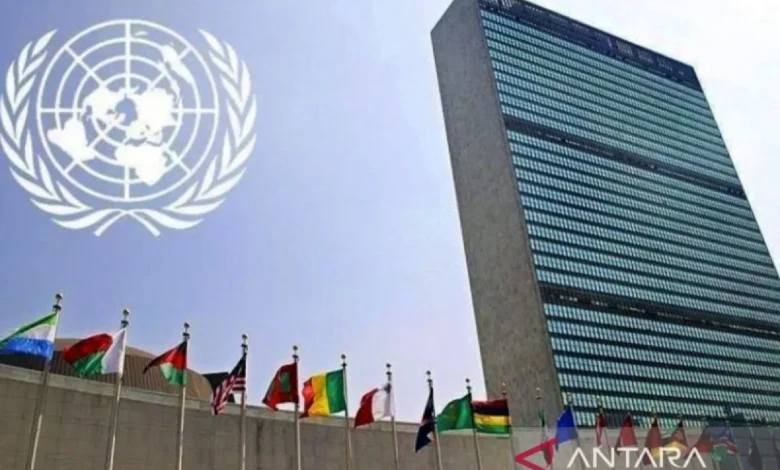
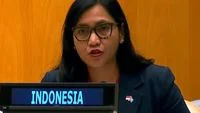
Indonesia has been officially designated as the candidate for the Presidency of the United Nations Human Rights Council (UNHRC) for the 2026 term, following a landmark consensus and support from the member states of the Asia-Pacific Group. According to a formal written statement released by the Indonesian Ministry of Foreign Affairs on Wednesday, December 24, 2024, this nomination marks a significant milestone in Indonesia’s diplomatic history. The position is slated to be officially ratified during a high-level meeting of the UN Human Rights Council scheduled for January 8, 2026. This development is seen as a powerful testament to the international community’s trust in Indonesia’s capacity to navigate the complexities of global human rights advocacy and its commitment to fostering a constructive multilateral dialogue.
The Ministry of Foreign Affairs emphasized that the endorsement reflects the deep-seated confidence of countries within the Asia-Pacific region toward Indonesia’s leadership and its consistent efforts in advancing human rights agendas on the world stage. As a nation that has often positioned itself as a "bridge-builder" between the Global North and the Global South, Indonesia has pledged to lead the council’s sessions and internal mechanisms with a focus on objectivity, inclusivity, and balance. This commitment comes at a time when the UNHRC faces increasing scrutiny and pressure to address escalating humanitarian crises and systemic rights violations across the globe.
Understanding the UN Human Rights Council: History and Framework
To appreciate the gravity of Indonesia’s upcoming presidency, it is essential to understand the architecture of the United Nations Human Rights Council. The UNHRC is the primary intergovernmental body within the United Nations system responsible for the promotion and protection of all human rights around the globe. Based in Geneva, Switzerland, it serves as a multilateral forum where states can discuss thematic human rights issues and address specific situations that require the international community’s attention.
The Council was established by the UN General Assembly on March 15, 2006, through resolution 60/251, replacing the former United Nations Commission on Human Rights. The transition was intended to address criticisms that the previous commission had become overly politicized and ineffective. Today, the Council is composed of 47 Member States, which are elected by the majority of members of the General Assembly via a secret ballot. These seats are distributed geographically to ensure equitable representation: 13 seats for Africa, 13 for Asia-Pacific, 8 for Latin America and the Caribbean, 7 for Western Europe and other States, and 6 for Eastern Europe.
Indonesia is currently serving as a member of the Council for the 2024–2026 term. Its election to the Council in October 2023 was particularly noteworthy, as Indonesia received 186 votes out of 192—the highest number of votes ever received by the country in its history of seeking a seat on the body. This strong mandate laid the groundwork for its current bid for the presidency.
A Chronology of Indonesia’s Path to the Presidency
Indonesia’s journey toward the 2026 Presidency has been a calculated and strategic diplomatic effort. The timeline of this progression highlights the nation’s growing influence in the multilateral sphere:
- October 2023: Indonesia is elected to the UN Human Rights Council for the 2024–2026 term with a record-breaking 186 votes, signaling strong international support.
- January 2024: Indonesia officially begins its three-year term as a member, focusing on themes such as the right to development, poverty alleviation, and the protection of vulnerable groups.
- Mid-2024: The Indonesian government, through its Permanent Mission in Geneva, begins informal consultations with members of the Asia-Pacific Group (APG) regarding its interest in the 2026 Presidency.
- September 2024: High-level discussions take place during the UN General Assembly in New York, where Indonesia’s foreign policy priorities are aligned with the Council’s objectives.
- December 2024: The Asia-Pacific Group officially endorses Indonesia as its sole candidate for the 2026 term, ensuring a unified regional front.
- January 2025: Switzerland’s Jürg Lauber takes over the Presidency for the 2025 term, while Indonesia begins a "preparatory year" to shadow the leadership and finalize its administrative and diplomatic strategy.
- January 2026: Indonesia is expected to be formally inaugurated as the President of the UNHRC.
Core Functions and Mechanisms of the Council
As Indonesia prepares to take the helm, it will be responsible for overseeing the Council’s diverse and rigorous set of mechanisms. These tools are designed to hold states accountable and provide a roadmap for human rights improvements:
1. The Universal Periodic Review (UPR): This is perhaps the most significant mechanism of the Council. Every 4.5 years, the human rights record of all 193 UN Member States is reviewed. The UPR is a state-driven process which provides the opportunity for each state to declare what actions they have taken to improve the human rights situations in their countries. Indonesia has been a vocal participant in this process, often using its own experience of democratic transition to provide peer recommendations.
2. Special Procedures: The Council appoints independent human rights experts—known as Special Rapporteurs, Independent Experts, or Working Groups—to report and advise on human rights from a thematic or country-specific perspective. These individuals act as the "eyes and ears" of the Council, often conducting fact-finding missions to areas of concern.
3. Special Sessions: In response to urgent human rights crises, the Council can convene special sessions. To date, over 36 such sessions have been held to address situations in countries like Sudan, Ukraine, and the Occupied Palestinian Territories. The President plays a critical role in managing the political sensitivities of these emergency meetings.
4. Advisory Committee and Complaint Procedure: The Council is supported by a "think tank" of 18 experts who provide expertise on thematic issues. Furthermore, a confidential complaint procedure allows individuals and organizations to bring human rights violations to the attention of the Council.
The Role and Responsibilities of the UNHRC President
The Presidency of the Human Rights Council is a position of immense prestige but also significant procedural burden. The President is elected for a one-year term from among the five regional groups on a rotating basis. For 2026, it is the Asia-Pacific region’s turn to provide leadership.
The President’s duties include:
- Chairing Sessions: Presiding over the three regular sessions held annually (usually in March, June, and September), as well as any special sessions.
- Organizational Management: Overseeing the "Bureau" of the Council, which consists of the President and four Vice-Presidents, representing each of the five regional groups.
- Diplomatic Mediation: Serving as a neutral arbiter during heated debates. The President does not vote and must remain impartial, setting aside their own national interests to ensure the Council functions effectively.
- Appointing Mandate Holders: The President is responsible for the final selection of candidates for Special Procedures, a task that requires balancing professional qualifications with geographical and gender diversity.
Currently, the 2025 Presidency is held by Jürg Lauber, the Permanent Representative of Switzerland to the UN in Geneva. Indonesia will work closely with the Swiss mission throughout 2025 to ensure a seamless transition of responsibilities.
Strategic Implications for Indonesia and the Global Community
Indonesia’s presidency in 2026 carries profound implications both domestically and internationally. For the Indonesian government, this role provides an opportunity to showcase its "Pancasila" philosophy—the five foundational principles of the state—as a model for harmonizing religious values, democracy, and human rights.
Global South Leadership: Indonesia’s leadership is expected to give a stronger voice to the concerns of developing nations. This includes prioritizing the "Right to Development" and addressing the human rights impacts of climate change and global economic inequality. By leading the Council, Indonesia can ensure that the human rights discourse is not solely dominated by Western perspectives, but is instead a truly global conversation.
Regional Stability: Within the Southeast Asian context, Indonesia’s presidency will likely influence the discourse on regional human rights issues, including the ongoing crisis in Myanmar. As a leading member of ASEAN, Indonesia’s dual role as a regional leader and a global human rights arbiter could provide new avenues for diplomatic pressure and humanitarian solutions.
Domestic Reforms: Observers note that holding the UNHRC Presidency will place Indonesia’s own domestic human rights record under a brighter spotlight. This could serve as a catalyst for internal reforms, encouraging the government to address long-standing issues such as land disputes, freedom of expression, and rights in restive regions like Papua. The "leadership by example" principle will be paramount; to be an effective President, Indonesia must demonstrate a commitment to the very standards it will be overseeing.
International Support and Diplomatic Outlook
The path to the 2026 Presidency has been bolstered by significant bilateral support. Notably, China has expressed its formal support for Indonesia’s candidacy, a move that underscores Indonesia’s ability to maintain balanced relations with major global powers. Such endorsements are critical in a forum often characterized by geopolitical rivalries between the United States, China, and Russia.
Indonesia’s vision for 2026 is one of "synergy and cooperation." The Ministry of Foreign Affairs has indicated that it will focus on strengthening the capacity of the OHCHR (Office of the High Commissioner for Human Rights) to provide technical assistance to states, rather than focusing solely on punitive measures. This "promotional" approach to human rights is designed to encourage states to improve their records through cooperation rather than confrontation.
As the international community looks toward 2026, Indonesia stands at a pivotal juncture. The challenges facing the Human Rights Council are formidable—ranging from the rise of authoritarianism and the impact of artificial intelligence on privacy to the humanitarian catastrophes of modern warfare. However, with its history of "free and active" foreign policy and its recent successes in multilateral diplomacy, Indonesia is uniquely positioned to steer the Council toward a more effective and balanced future. The official appointment on January 8, 2026, will not just be a formality; it will be the start of a year where Indonesia takes center stage in the global struggle for human dignity and justice.
Related posts: