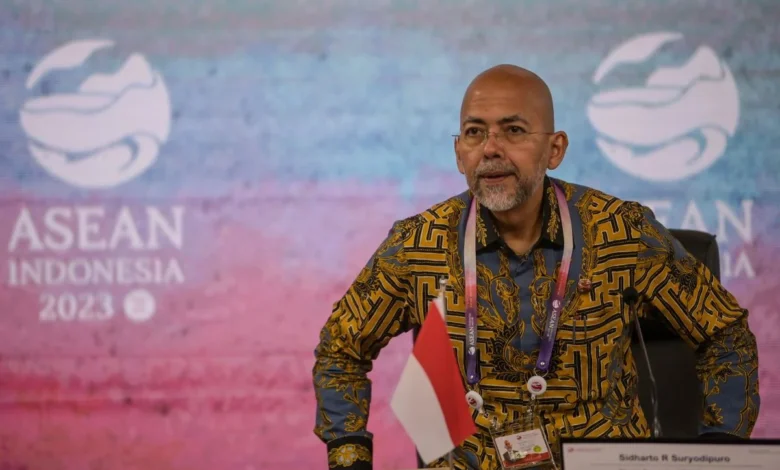
The international community has once again signaled its profound confidence in the Republic of Indonesia’s diplomatic capabilities following the official election of senior diplomat Sidharto Reza Suryodipuro as the President of the United Nations Human Rights Council (UNHRC) for the 2026 term. This appointment, finalized in Geneva on January 8, 2026, marks a watershed moment for Indonesian foreign policy, representing the first time an Indonesian representative will lead the world’s premier human rights body. The selection of Suryodipuro is not merely a personal achievement for the veteran diplomat but serves as a strategic affirmation of Indonesia’s active and independent foreign policy, particularly its "Bebas-Aktif" (Free and Active) principle, which seeks to bridge the gap between diverse global interests in the pursuit of universal justice and human dignity.
The UN Human Rights Council, an inter-governmental body within the United Nations system made up of 47 states, is responsible for the promotion and protection of all human rights around the globe. The presidency of the council is a position of immense influence, rotating annually among the five regional groups. For the 2026 cycle, the Asia-Pacific Group was tasked with nominating a leader, and Indonesia’s candidacy, embodied by Suryodipuro, received overwhelming support from member states. This consensus reflects a global recognition of Indonesia’s consistent efforts to champion human rights through a constructive, non-politicized, and inclusive approach.
A Legacy of Public Service: The Profile of Sidharto Reza Suryodipuro
Sidharto Reza Suryodipuro was born on September 29, 1966, in Cologne, Germany, a birthplace that perhaps foreshadowed a life spent traversing the globe in the service of his country. He hails from a distinguished lineage deeply rooted in the history of the Indonesian state. His family belongs to the nobility of the Mangkunegaran Royal House, a background that carries a traditional weight of leadership and responsibility. More significantly, he is the grandson of Suyoto Suryodipuro, a pioneering figure in the Indonesian struggle for independence and a co-founder of both the Ministry of Foreign Affairs and Radio Republik Indonesia (RRI). This heritage of public service and nation-building has clearly influenced Sidharto’s trajectory within the Indonesian diplomatic corps.
Suryodipuro’s academic foundation is as robust as his family history. He is a prominent alumnus of the International Relations department at Parahyangan Catholic University (UNPAR), class of 1986. His time at UNPAR, a renowned breeding ground for Indonesian diplomats, provided him with the theoretical framework necessary for a career in the Ministry of Foreign Affairs (Kemlu), which he joined shortly after graduation. Seeking to further refine his expertise in global security and strategy, he later attended the Naval Postgraduate School in Monterey, California. As a Fulbright scholar, he excelled in his studies, earning a Master of Arts in National Security Affairs in 2003 with the distinction of "With Honors." This specialized education gave him a unique perspective on the intersection of traditional security and human rights, a balance that would become a hallmark of his later career.
A Chronology of Diplomatic Excellence
The career of Sidharto Reza Suryodipuro spans over three decades, characterized by a steady ascent through the ranks of the Indonesian Ministry of Foreign Affairs and a series of high-stakes international assignments. His journey began in 1992, and his early years were spent mastering the complexities of multilateralism.
The New York and Canberra Years (1992–2009)
Suryodipuro’s first major international exposure came at the Permanent Mission of the Republic of Indonesia to the United Nations in New York. During this period, he served as a delegate to the Special Committee on Peacekeeping Operations under the UN General Assembly. This role was pivotal, as Indonesia has historically been one of the largest contributors to UN peacekeeping missions.
Following a stint in Canberra from 2004 to 2006, where he focused on the vital bilateral relationship between Indonesia and Australia—specifically targeting trade, investment, and education—he returned to the UN in New York. From 2006 to 2009, he served as a key member of the Indonesian delegation to the UN Security Council. This was a period of intense diplomatic activity, where he managed sensitive portfolios related to humanitarian affairs and peace-building in Africa. His ability to navigate the high-pressure environment of the Security Council earned him a reputation as a pragmatic and skilled negotiator.
Strengthening Regional and Bilateral Ties (2009–2020)
Between 2009 and 2014, Suryodipuro held senior positions within the Ministry in Jakarta, focusing on Asia-Pacific and African cooperation. He played a central role in the preparations for Indonesia’s chairmanship of APEC in 2013, demonstrating his capacity for large-scale organizational leadership.
In 2014, he was appointed as the Deputy Chief of Mission (DCM) at the Indonesian Embassy in Washington, D.C. In the United States, he worked to deepen the Comprehensive Partnership between Jakarta and Washington, focusing on counter-terrorism, interfaith dialogue, and economic expansion. His success in D.C. led to his appointment in 2017 as the Indonesian Ambassador to India, with concurrent accreditation to Bhutan. Notably, he was the first Indonesian ambassador to be formally accredited to Bhutan, a milestone in expanding Indonesia’s diplomatic reach.
In 2020, his contributions were recognized with the prestigious Hassan Wirajuda Award, an honor bestowed by the Ministry of Foreign Affairs for excellence in the protection of Indonesian citizens abroad. This award highlighted his commitment to the "human" element of diplomacy, a trait that aligns closely with his new role at the UNHRC.
The Path to the UNHRC Presidency (2020–2026)
Upon returning from India in late 2020, Suryodipuro was appointed Director General for ASEAN Cooperation. In this capacity, he led Indonesia’s efforts within the regional bloc during a period of significant turmoil, including the COVID-19 pandemic and the crisis in Myanmar. His leadership during the Senior Officials’ Meetings (SOM) was instrumental in maintaining ASEAN centrality.
In 2025, he was transitioned to Geneva to serve as the Permanent Representative of Indonesia to the United Nations and other international organizations. This move was widely viewed by analysts as a strategic placement by the Indonesian government, positioning one of its most capable diplomats to lead the country’s bid for the UNHRC Presidency.
Strategic Implications of Indonesia’s Presidency
The election of Sidharto Reza Suryodipuro comes at a time when the global human rights landscape is increasingly fractured. Observers note that Indonesia’s leadership could provide a much-needed "middle-way" approach to human rights advocacy. Unlike the often-confrontational dynamics between Western nations and the Global South, Indonesia has consistently advocated for "dialogue and cooperation" over "naming and shaming."
Bridging the North-South Divide
Indonesia’s presidency is expected to prioritize the Universal Periodic Review (UPR) process, which subjects all UN member states to a human rights assessment. Suryodipuro has signaled that his tenure will focus on technical assistance and capacity building, ensuring that developing nations have the resources they need to meet international human rights standards. By emphasizing cooperation, Indonesia aims to reduce the politicization of the Council.
Inclusivity and Engagement
A core tenet of Suryodipuro’s platform is inclusivity. Upon his election, he reiterated Indonesia’s commitment to working closely not just with member states, but also with observer states, non-governmental organizations (NGOs), and national human rights institutions. The Indonesian delegation has stressed that the voices of civil society are vital to the "global human rights architecture." This approach is seen as an effort to democratize the Council’s proceedings and ensure that grassroots perspectives are heard in Geneva.
Addressing Contemporary Challenges
Under Suryodipuro’s leadership, the UNHRC is expected to tackle several pressing issues:
- Climate Change and Human Rights: As an archipelagic nation, Indonesia is acutely aware of the human rights implications of environmental degradation. The presidency will likely push for stronger links between climate action and the right to a healthy environment.
- Digital Rights and AI: With the rapid advancement of technology, the Council will need to address issues of privacy, surveillance, and the digital divide.
- Conflict Zones: The Council will continue to face the challenges of documenting and addressing human rights violations in conflict-affected areas such as Palestine, Ukraine, and Myanmar. Indonesia’s stance on these issues is expected to remain firm on the principles of international law and humanitarian access.
Reactions and Global Reception
The reaction to Suryodipuro’s election has been overwhelmingly positive across the diplomatic spectrum. Within Indonesia, the Ministry of Foreign Affairs hailed the victory as a testament to the country’s "moral leadership." Foreign policy experts in Jakarta suggest that this presidency will enhance Indonesia’s soft power, showcasing the nation as a democratic model in the Muslim-majority world.
International human rights organizations have expressed cautious optimism. While some groups have called for Indonesia to be more vocal regarding domestic human rights issues, most recognize that Suryodipuro’s extensive experience makes him a uniquely qualified mediator. A spokesperson for a prominent Geneva-based NGO noted, "Ambassador Suryodipuro understands the machinery of the UN better than most. His challenge will be to maintain the Council’s integrity while navigating the intense geopolitical rivalries that often paralyze international institutions."
Conclusion: A New Chapter for Global Human Rights
As Sidharto Reza Suryodipuro prepares to take the gavel in 2026, the expectations are high. His journey—from the royal halls of Mangkunegaran to the halls of the United Nations in New York, Washington, and New Delhi—has prepared him for this ultimate diplomatic test.
Indonesia’s presidency of the UN Human Rights Council is more than just a prestigious title; it is an opportunity for the world’s third-largest democracy to shape the global discourse on human dignity. By championing a culture of empathy, dialogue, and mutual respect, Suryodipuro aims to leave a legacy where human rights are seen not as a tool for political leverage, but as a universal bridge connecting all of humanity. The year 2026 will undoubtedly be a defining period for both Indonesian diplomacy and the future of the international human rights movement.
Related posts: