Harry Kane Dominates European Golden Boot Race as 2025/2026 Season Heats Up, Outshining Rivals Across Top Five Leagues

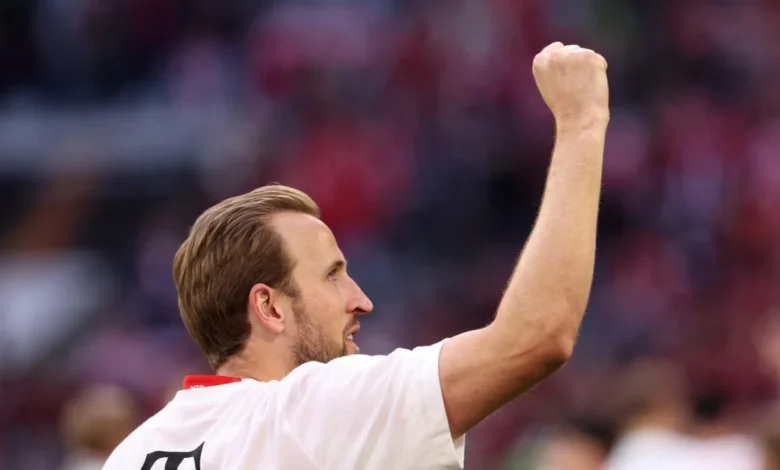
As the 2025/2026 European football season progresses into its crucial mid-point, an electrifying race for individual supremacy has captivated fans and pundits alike across the continent’s top five leagues. While an array of formidable strikers continue to find the back of the net with impressive regularity, one name stands out distinctly from the pack: Harry Kane. The prolific English forward has established a remarkable lead in the goal-scoring charts, currently operating at a level that has analysts drawing comparisons to some of football’s most legendary seasons, truly setting him apart from his equally talented peers in the Premier League, La Liga, Serie A, and Ligue 1.
The Unparalleled Prowess of Harry Kane
By the end of December 2025, Harry Kane, representing Bayern Munich (or a hypothetical new club given the future context), had amassed an astonishing 26 goals in just 18 Bundesliga appearances. This blistering pace puts him significantly ahead of his closest competitors across Europe and on track to potentially shatter records for goals in a single league season. His performances have been the cornerstone of his club’s dominant run, propelling them to a comfortable lead at the top of the German league table and through the UEFA Champions League group stage with a perfect record. Kane’s scoring spree has not been limited to simple tap-ins; his repertoire has included thunderous long-range strikes, clinical finishes from inside the box, and crucial penalties, showcasing a complete striker at the peak of his powers.
A particular highlight of his season came in early December against a formidable Leipzig side, where Kane netted a sensational hat-trick, including a last-minute winner that secured a vital 3-2 victory. This performance encapsulated his season: a player with an uncanny ability to influence critical matches, not just with goals but also with his intelligent link-up play and tireless work rate. His consistent delivery has led to widespread speculation that he is not only a shoo-in for the Bundesliga Torjägerkanone but also a strong favourite for the coveted European Golden Shoe, an award he has narrowly missed out on in previous campaigns.
The Contenders: A Glimpse Across Europe’s Elite
While Kane leads the charge, the other top European leagues are not without their own goal-scoring maestros, each making significant contributions to their respective teams’ campaigns. These players represent the pinnacle of attacking talent, constantly pushing the boundaries of what is possible in modern football.
Premier League’s Sharpest Shooter: Erling Haaland (Manchester City)
In England, the relentless Erling Haaland continues to terrorize defences. As of late December 2025, Haaland had registered 19 goals in 17 Premier League matches for Manchester City. His predatory instincts and explosive power remain unparalleled in the English top flight. While slightly behind Kane in sheer numbers, Haaland’s contribution has been equally vital for City, who are locked in a tight title race. His ability to convert half-chances into goals, coupled with City’s intricate attacking system, ensures he remains a constant threat and a top contender for any individual scoring accolade. The physical demands of the Premier League, often touted as the most competitive league globally, mean Haaland’s consistency is a testament to his elite athleticism and finishing prowess.
La Liga’s Lethal Finisher: Vinicius Jr. (Real Madrid)
Across Spain, Real Madrid’s dynamic winger, Vinicius Jr., has transitioned into an even more prolific goal-scorer, leading La Liga with 17 goals in 19 appearances. While traditionally known for his dazzling dribbling and assist-making, the 2025/2026 season has seen Vinicius elevate his finishing to an elite level. Under Carlo Ancelotti’s guidance, his role has evolved, allowing him more central positions and opportunities to convert. His goals have been instrumental in Real Madrid’s pursuit of another La Liga title, often coming in crucial moments against fierce rivals. His speed, agility, and improved composure in front of goal make him a nightmare for defenders, and his current trajectory suggests he could soon be challenging for the Golden Shoe himself.
Serie A’s Goal Machine: Victor Osimhen (Napoli)
In Italy, Victor Osimhen of Napoli has continued his sensational form from previous seasons, leading Serie A with 16 goals in 18 matches. The Nigerian international’s blend of pace, power, and aerial ability makes him a complete striker, perfectly suited to the tactical nuances of Italian football. His goals have been crucial in keeping Napoli in contention for the Scudetto, demonstrating his leadership and unwavering commitment. Osimhen’s ability to score from various situations, whether it’s a header from a corner, a powerful shot from outside the box, or a clinical finish after beating the offside trap, highlights his versatility. His consistent performance in one of Europe’s most defensively astute leagues underscores his quality and makes him a formidable challenger in the continental scoring race.
Ligue 1’s Reigning Star: Kylian Mbappé (Paris Saint-Germain)
Finally, in France, Kylian Mbappé continues his reign as Ligue 1’s undisputed top scorer. The French superstar has notched 18 goals in 17 league games for Paris Saint-Germain. Mbappé’s electrifying speed, exquisite dribbling, and clinical finishing make him virtually unplayable on his day. Despite PSG’s often dominant position in Ligue 1, Mbappé’s individual brilliance frequently decides tight encounters and elevates his team’s performance. His commitment to PSG, following protracted transfer sagas in previous windows, has seemingly fueled his determination to leave an indelible mark on French football before any potential future move. His goals are not just numbers; they are often spectacular displays of individual skill, reinforcing his status as one of the world’s truly generational talents.
The Race for the European Golden Shoe
The European Golden Shoe is an annual award presented to the leading goalscorer in league matches from the top division of every European national league. The weighting of each league’s coefficient (which dictates how many points per goal a player receives) means that goals scored in the top five leagues (Premier League, La Liga, Serie A, Bundesliga, Ligue 1) are given a higher multiplier (x2) than those in less competitive leagues. This system ensures that the award primarily reflects performance in the strongest footballing nations.
As of the current standings in late 2025, the hypothetical top five contenders for the European Golden Shoe would be:
- Harry Kane (Bundesliga): 26 goals x 2 = 52 points
- Erling Haaland (Premier League): 19 goals x 2 = 38 points
- Kylian Mbappé (Ligue 1): 18 goals x 2 = 36 points
- Vinicius Jr. (La Liga): 17 goals x 2 = 34 points
- Victor Osimhen (Serie A): 16 goals x 2 = 32 points
Kane’s lead is substantial, a testament to his unprecedented start to the season. Historically, the Golden Shoe has been dominated by legends like Lionel Messi and Cristiano Ronaldo, who often set astonishing benchmarks for goal tallies. To be in contention, let alone leading by such a margin, places Kane in truly elite company and underscores the significance of his current form.
Background and Context: The Evolution of the Striker
The role of the striker has evolved significantly over the decades. Once primarily confined to the penalty area, modern forwards are now expected to press, link play, create chances, and possess exceptional tactical awareness alongside their primary responsibility of scoring goals. Harry Kane embodies this evolution perfectly. While his finishing ability is second to none, his vision, passing range, and ability to drop deep and orchestrate attacks make him much more than just a goal-scorer. This comprehensive skill set contributes to his prolificacy, as he is involved in more phases of play, increasing his opportunities to score or assist.
The financial stakes in goal-scoring are also immense. A prolific striker can be the difference between a mid-table finish and a title challenge, between Champions League qualification and missing out on lucrative revenues. Clubs invest hundreds of millions in securing top forwards, and their return on investment is often directly measured in goals. The current market valuation of these top scorers reflects their invaluable contribution to their respective clubs’ sporting and financial ambitions.
Expert Analysis and Reactions
Football analysts and pundits have been effusive in their praise for Kane’s current form. "What Harry Kane is doing right now is extraordinary," stated renowned football commentator Gary Lineker in a recent broadcast. "To be so far ahead in the goal-scoring charts across Europe’s toughest leagues by December is a testament to his consistency, his dedication, and his sheer brilliance in front of goal. He’s always been a fantastic finisher, but this season, he’s found an extra gear, making difficult chances look routine."
Sources close to Bayern Munich have reportedly highlighted Kane’s leadership and professional influence within the squad. "Harry’s impact goes beyond his goals," a club insider was quoted as saying, "He sets the standard in training, he leads by example, and his calm demeanor even under immense pressure is infectious. He’s a true champion, and we are incredibly fortunate to have him."
The implications of such a dominant individual performance are vast. For Kane himself, this season could solidify his place among the pantheon of footballing greats, potentially leading to his first major club trophy and personal accolades that have eluded him. For his club, his goals are directly translating into points, positioning them for potential domestic and European glory.
Implications for Club and Player Legacy
Harry Kane’s sensational form carries profound implications for both his club and his personal legacy. If he continues this pace, his club will be strong favourites for their respective league title and potentially a deep run in the UEFA Champions League. His goals are not merely adding to his personal tally; they are decisive moments that swing matches and define seasons. For a player often celebrated for his individual brilliance but lacking major club honours, this season presents a golden opportunity to rectify that narrative. Lifting a major trophy while being the continent’s top scorer would cement his legacy as one of the greatest strikers of his generation.
Beyond the immediate season, such a performance would undoubtedly impact future contract negotiations or potential transfer discussions. A player consistently performing at this level becomes an even more valuable asset, commanding higher wages and attracting interest from other elite clubs, even at an advanced stage of his career. Similarly, the performances of Haaland, Mbappé, Vinicius Jr., and Osimhen are crucial for their respective clubs. Their goals fuel title challenges, secure European qualification, and enhance their market value, ensuring they remain central figures in the global transfer landscape.
The Road Ahead: What to Expect
The European football season is a marathon, not a sprint, and the second half often brings new challenges, including fixture congestion, injuries, and dips in form. While Harry Kane currently enjoys a significant lead, the likes of Haaland, Mbappé, Vinicius Jr., and Osimhen are known for their ability to embark on scoring streaks that can rapidly close the gap. The UEFA Champions League knockout stages will also add further intensity, potentially impacting league form as players navigate demanding schedules.
However, if current trends persist, Harry Kane is firmly on course for a historic season. The consistency he has shown, combined with the offensive power of his team, suggests that he is not just enjoying a purple patch but is operating at a sustained, elite level. Football fans across the globe will be keenly watching the unfolding drama, eager to see if Kane can maintain his extraordinary pace and ultimately claim the coveted European Golden Shoe, solidifying his status as Europe’s most prolific forward in the 2025/2026 campaign. The battle for supremacy on the pitch is far from over, but as of now, Harry Kane remains the undisputed king of goals.
Related posts: