Indonesia Sets January 16 as National Holiday for Isra Mi’raj 2026 Commemorating the Miraculous Journey of Prophet Muhammad SAW

The Government of the Republic of Indonesia has officially designated Friday, January 16, 2026, as a national holiday to commemorate the Isra Mi’raj of Prophet Muhammad SAW. This decision, rooted in the official Hijri calendar calculations and formal state decrees, marks the first major Islamic religious observance of the 2026 Gregorian year. Falling on the 27th of the Islamic month of Rajab 1447 Hijriah, the event holds profound spiritual significance for the nation’s Muslim majority and serves as a cornerstone of the country’s annual religious calendar.
The scheduling of this holiday is formalized through the Joint Decree (SKB) of the Three Ministers, which includes the Minister of Religious Affairs, the Minister of Manpower, and the Minister of State Apparatus Empowerment and Bureaucratic Reform (PANRB). Specifically, the holiday is codified under Decree No. 1497 of 2025, No. 2 of 2025, and No. 5 of 2025. By placing the holiday on a Friday, the government has effectively created a "long weekend" for the Indonesian public, as the religious observance will be immediately followed by the Saturday and Sunday weekend. This alignment is expected to have significant implications for domestic tourism, transportation logistics, and public worship activities across the archipelago.
Historical and Theological Context: The Year of Sorrow
To understand the depth of Isra Mi’raj, it is essential to examine the historical period in which it occurred. Islamic tradition places this miracle in the 10th or 11th year of Prophet Muhammad’s prophethood, a period famously known as Amul Huzni or the "Year of Sorrow." During this time, the Prophet experienced profound personal loss following the deaths of his beloved wife, Siti Khadijah, who was his primary emotional and financial supporter, and his uncle, Abu Thalib, who provided him with essential political protection against the hostility of the Quraysh tribe in Mecca.
The Isra Mi’raj is viewed by theologians as a divine gesture of solace and a "gift" from Allah SWT to strengthen the Prophet’s resolve during his most difficult trials. It was a journey that transcended the physical laws of time and space, serving as a testament to the omnipotence of the Creator. For the Muslim community, the event is not merely a historical anecdote but a foundational miracle that validated the Prophet’s mission and established the core pillar of Islamic worship: the five daily prayers.
A Chronological Breakdown of the Miraculous Journey
The event is traditionally divided into two distinct phases: the Isra (the horizontal journey) and the Mi’raj (the vertical ascent). According to Islamic texts and the Quranic revelation in Surah Al-Isra, Verse 1, the journey took place in a single night, a feat that was physically impossible by the standards of 7th-century travel.
Phase One: The Isra
The journey began at the Masjidil Haram in Mecca. Before the departure, tradition holds that the Prophet’s heart was purified. Archangel Jibril (Gabriel) performed a spiritual cleansing, washing the Prophet’s heart with Zam-zam water to prepare him for the divine encounter. The vehicle for this journey was the Burraq, a celestial creature described as being white, smaller than a mule but larger than a donkey, capable of moving at the speed of light—its name itself derived from the Arabic word for lightning (barq).
Accompanied by Jibril, the Prophet traveled from Mecca to the Masjidil Aqsa in Jerusalem (Baitul Maqdis). During this leg of the journey, the Prophet made five significant stops to perform prayers, including at Madinah (the future site of his migration) and Baitul Lahm (Bethlehem), the birthplace of Prophet Isa AS (Jesus). Upon arriving at Masjidil Aqsa, Prophet Muhammad SAW led all the previous prophets in a congregational prayer, symbolizing his role as the "Seal of the Prophets."
Phase Two: The Mi’raj
The second phase involved the ascent from the earthly realm of Jerusalem through the seven layers of heaven. At each level, the Prophet was greeted by previous messengers of God, reinforcing the continuity of the monotheistic message:
- First Heaven: Met Prophet Adam AS, the father of humanity.
- Second Heaven: Met Prophet Isa AS (Jesus) and Prophet Yahya AS (John the Baptist).
- Third Heaven: Met Prophet Yusuf AS (Joseph), renowned for his beauty and patience.
- Fourth Heaven: Met Prophet Idris AS (Enoch).
- Fifth Heaven: Met Prophet Harun AS (Aaron).
- Sixth Heaven: Met Prophet Musa AS (Moses).
- Seventh Heaven: Met Prophet Ibrahim AS (Abraham), the patriarch of the faith, leaning against the Baitul Makmur, a celestial house of worship visited daily by 70,000 angels.
The journey culminated at the Sidratul Muntaha, the Lote Tree of the Utmost Boundary, beyond which no created being—not even Archangel Jibril—could pass. It was here that Prophet Muhammad SAW received the direct command from Allah SWT regarding the daily prayers.
The Mandate of the Five Daily Prayers
The most significant legislative outcome of the Isra Mi’raj was the establishment of the Salah (obligatory prayer). Initially, the divine command prescribed fifty prayers per day. However, following the advice of Prophet Musa AS, who noted that such a burden would be too heavy for the Ummah (community), Prophet Muhammad SAW returned to petition for a reduction several times.
Ultimately, the number was set at five daily prayers, though Allah SWT decreed that the reward for these five would remain equivalent to fifty. This "gift" of prayer is often referred to as the Mi’raj of the believer—a spiritual ladder that allows every Muslim to connect directly with the Divine five times a day. This element of the story is central to the sermons delivered in Indonesian mosques during the anniversary celebrations, emphasizing the importance of discipline and spiritual hygiene.
Societal and Economic Implications for Indonesia in 2026
The designation of January 16, 2026, as a public holiday is expected to trigger a surge in domestic activity. Historically, religious holidays in Indonesia serve as catalysts for "mudik" (homecoming) or short-term family vacations. With the holiday falling on a Friday, the hospitality and transportation sectors are bracing for a high volume of travelers.
State-owned enterprises such as PT Kereta Api Indonesia (KAI) and various airline operators typically increase fleet capacity during these windows. For instance, data from previous Isra Mi’raj observances shows that regional transport hubs, such as Palembang and Batam’s Hang Nadim Airport, often serve tens of thousands of additional passengers during the long weekend. In 2026, the mid-January timing may also coincide with the tail end of the New Year travel season, further straining infrastructure but boosting the local economy in pilgrimage destinations and tourist hotspots like Yogyakarta and Bali.
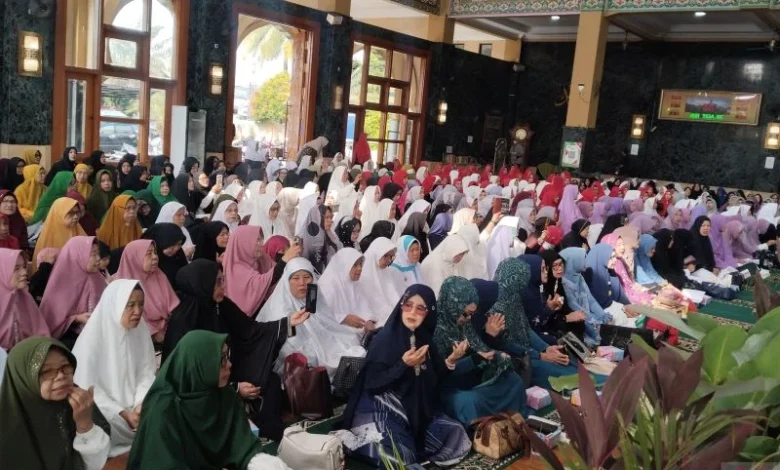
Furthermore, the Ministry of Religious Affairs (Kemenag) often uses this occasion to hold Tabligh Akbar (grand religious gatherings) and national-level seminars. These events aim to disseminate the values of the Isra Mi’raj—such as integrity, resilience in the face of hardship, and the importance of the Al-Aqsa Mosque—to the younger generation.
The Status of Masjidil Aqsa and Geopolitical Awareness
The commemoration of Isra Mi’raj also serves as a reminder of the sacred status of the Al-Aqsa Mosque. As the third holiest site in Islam and the first Qibla (direction of prayer), its mention in the Quranic account of the Isra links the spiritual identity of Indonesian Muslims to the heritage of Palestine.
In a professional journalistic context, it is observed that these religious holidays often correlate with increased public discourse regarding the preservation of Islamic heritage sites. The Indonesian government and various non-governmental organizations frequently use the momentum of the 27th of Rajab to reaffirm diplomatic and humanitarian support for the sanctity of the Al-Aqsa compound, viewing it as an inseparable part of the Isra Mi’raj narrative.
Conclusion: A Moment for Spiritual Renewal
As January 16, 2026, approaches, the Indonesian public is encouraged to look beyond the convenience of a long weekend and reflect on the deeper spiritual lessons of the Prophet’s journey. The miracle of Isra Mi’raj offers a blueprint for navigating modern challenges: the necessity of maintaining a "clean heart," the importance of persistence (as shown in the negotiation for the number of prayers), and the belief that divine ease follows every period of sorrow.
By formalizing this holiday through the SKB 3 Menteri, the Indonesian state recognizes the vital role that religious history plays in the national identity. Whether through congregational prayers, family gatherings, or quiet reflection, the 2026 Isra Mi’raj will once again stand as a bridge between ancient miraculous tradition and the contemporary life of the world’s most populous Muslim nation.