Diesel Fuel Prices Skyrocket, Burdening Owners of High-End SUVs Like Pajero Sport and Fortuner

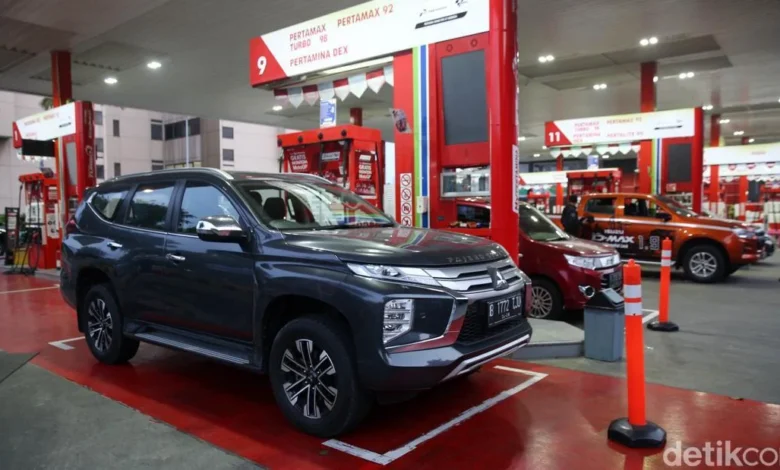
The cost of non-subsidized diesel fuel in Indonesia has seen a dramatic surge, with some variants now exceeding Rp 25,000 per liter. This significant price hike is directly impacting owners of popular diesel-powered SUVs, such as the Mitsubishi Pajero Sport and Toyota Fortuner, forcing them to allocate substantially more funds for refueling their vehicles. The current economic climate, marked by inflationary pressures and global energy market volatility, has placed a considerable strain on consumers, particularly those reliant on diesel for their transportation needs.
The recent adjustments by both state-owned energy giant PT Pertamina (Persero) and international oil company BP have led to a sharp increase in the prices of premium diesel fuels. According to data available on the official mypertamina.id website, Dexlite, a widely used diesel variant, has seen its price jump to Rp 23,600 per liter. This represents an increase of Rp 9,400 per liter compared to its previous pricing. Furthermore, Pertamina Dex, another premium diesel offering, is now retailing at Rp 23,900 per liter, a substantial leap from its prior price of Rp 14,500 per liter.
BP has also implemented price revisions for its diesel fuel offerings. The BP Ultimate Diesel, a high-performance diesel fuel, is now being sold at Rp 25,560 per liter. This is a significant escalation from its previous price point of Rp 14,620 per liter. These consecutive price hikes have created a ripple effect across the automotive sector, particularly affecting segments that utilize diesel engines for their power and efficiency.
The Financial Impact on SUV Owners
The substantial increase in diesel fuel prices directly translates to increased operational costs for owners of diesel-powered vehicles, including the highly sought-after Mitsubishi Pajero Sport and Toyota Fortuner. These SUVs, known for their robust performance and off-road capabilities, are often favored for their diesel engines, which typically offer better fuel efficiency and torque compared to their gasoline counterparts. However, the current pricing structure is significantly altering the cost-benefit analysis for many owners.
The financial burden is amplified by the considerable fuel tank capacities of these vehicles. A full refueling for either the Pajero Sport or the Fortuner requires a significant volume of diesel, meaning the per-liter price increase has a proportionally larger impact on the total cost of filling the tank.
Fuel Tank Capacities and Refueling Costs:
- Toyota Fortuner: This SUV boasts a larger fuel tank capacity, capable of holding up to 80 liters of diesel.
- Mitsubishi Pajero Sport: The Pajero Sport has a fuel tank capacity of 68 liters.
Given these capacities, filling the tanks from near-empty with the newly priced diesel fuels represents a considerable expenditure.
Analyzing the Cost of a Full Tank
To illustrate the financial implications, let’s examine the cost of filling the tanks of a Toyota Fortuner and a Mitsubishi Pajero Sport with premium diesel fuels, adhering to the recommended specifications for these vehicles.
Toyota Fortuner:
According to the owner’s manual for the Euro4 model of the Toyota Fortuner, it is recommended to use diesel fuel with a sulfur content of 50 ppm or less. Both Pertamina Dex and BP Ultimate Diesel meet these specifications.
- Using Pertamina Dex: If a Fortuner’s tank is completely empty and refueled with Pertamina Dex at Rp 23,900 per liter, the total cost for a full 80-liter tank would be Rp 1,912,000.
- Using BP Ultimate Diesel: Similarly, a full 80-liter tank of BP Ultimate Diesel at Rp 25,560 per liter would cost Rp 2,044,800.
The scenario becomes even more pertinent when considering a partial refueling. If a Fortuner’s tank has approximately 5 liters of fuel remaining, the amount needed to fill it up to 80 liters would be 75 liters.
- Refueling with Pertamina Dex (75 liters): The cost would be 75 liters * Rp 23,900/liter = Rp 1,792,500.
- Refueling with BP Ultimate Diesel (75 liters): The cost would be 75 liters * Rp 25,560/liter = Rp 1,917,000.
Mitsubishi Pajero Sport:
The Mitsubishi Pajero Sport also recommends diesel fuel with a sulfur content of less than 50 ppm.
- Using Pertamina Dex: For a completely empty 68-liter tank filled with Pertamina Dex at Rp 23,900 per liter, the total cost would be 68 liters * Rp 23,900/liter = Rp 1,625,200.
- Using BP Ultimate Diesel: Filling a 68-liter tank with BP Ultimate Diesel at Rp 25,560 per liter would cost 68 liters * Rp 25,560/liter = Rp 1,738,080.
Considering a scenario where the Pajero Sport’s tank has 5 liters of fuel remaining, requiring 63 liters to be filled:
- Refueling with Pertamina Dex (63 liters): The cost would be 63 liters * Rp 23,900/liter = Rp 1,505,700.
- Refueling with BP Ultimate Diesel (63 liters): The cost would be 63 liters * Rp 25,560/liter = Rp 1,610,280.
These figures highlight the substantial increase in refueling expenses for owners of these popular diesel SUVs, potentially impacting their monthly budgets and discretionary spending.
Background and Context of the Price Surge
The recent surge in diesel fuel prices is not an isolated event but rather a confluence of several global and national factors.
Global Energy Market Dynamics:
The international oil market has been experiencing significant volatility. Geopolitical tensions, particularly the ongoing conflict in Ukraine and subsequent sanctions on major energy-producing nations, have disrupted global supply chains and led to increased crude oil prices. As diesel fuel is derived from crude oil, fluctuations in the global oil market have a direct impact on its retail price. Furthermore, the global demand for energy, especially as economies recover from the COVID-19 pandemic, has also contributed to upward price pressures.
Indonesia’s Energy Policy and Subsidies:
Indonesia has historically provided subsidies for certain fuel types, including diesel, to cushion the impact on consumers and maintain economic stability. However, the government has been gradually adjusting subsidy policies to manage the national budget and encourage a shift towards more efficient and environmentally friendly energy sources. The recent price adjustments are part of a broader strategy to rationalize energy subsidies and reflect more accurately the market prices of these commodities.
Inflationary Pressures:
The rising cost of energy, including fuel, is a significant contributor to overall inflation. As fuel is a critical input for transportation and logistics, its increased price can lead to higher costs for goods and services across various sectors of the economy. This creates a cycle where rising fuel prices contribute to broader inflationary pressures, which in turn can lead to further demands for wage increases and potentially more subsidy adjustments.
Timeline of Recent Price Adjustments:
While the article focuses on the most recent drastic increases, it’s important to note that fuel prices in Indonesia have seen gradual adjustments over the past year. These adjustments are typically announced by Pertamina and BP based on global market trends and government directives. The current significant jump can be seen as an acceleration of these ongoing trends, driven by heightened global energy market instability. For instance, previous price adjustments for Dexlite and Pertamina Dex may have occurred incrementally over several months, culminating in the substantial leap observed recently.
Vehicle Specifications: Pajero Sport and Fortuner
Understanding the engine specifications of these popular SUVs further contextualizes the importance of fuel choices and their impact on performance and running costs.
Mitsubishi Pajero Sport
The Mitsubishi Pajero Sport is offered with two distinct engine options, both focusing on diesel power:
- 2.5L Diesel Engine: This engine delivers a maximum power output of 136 PS at 4,000 rpm and a peak torque of 324 Nm at 2,000 rpm. It’s known for its reliability and strong low-end torque.
- 2.4L Diesel Engine: A more potent option, this engine produces 181 PS at 3,500 rpm and a robust 430 Nm of torque at 2,500 rpm. This option generally offers a balance of power and efficiency.
Both engine variants are designed to run on high-quality diesel fuel with low sulfur content to ensure optimal performance, engine longevity, and compliance with emission standards.
Toyota Fortuner
The Toyota Fortuner provides a wider array of engine choices, catering to different performance and fuel preferences:
- 2.7L Gasoline Engine: This engine is designed for drivers who prefer gasoline power, offering 163 PS at 3,400 rpm and 24.7 kgm of torque at 4,000 rpm.
- 2.8L Diesel Engine: This is the top-tier diesel engine, delivering a powerful 203.9 PS between 3,000-4,000 rpm and a substantial 50.9 kgm of torque from 1,600-2,800 rpm. It is built for high performance and heavy-duty applications.
- 2.4L Diesel Engine: A more fuel-efficient diesel option, this engine provides 149.6 PS at 3,400 rpm and 40.8 kgm of torque at 1,600-2,000 rpm.
Similar to the Pajero Sport, the diesel variants of the Fortuner are optimized for low-sulfur diesel fuels, making Pertamina Dex and BP Ultimate Diesel suitable choices that align with their technical requirements.
Broader Implications and Potential Consumer Reactions
The significant increase in diesel fuel prices has several broader implications for the Indonesian automotive market and consumer behavior.
Shift in Consumer Preferences:
This price hike could potentially lead to a shift in consumer preferences away from diesel-powered vehicles, particularly for those who primarily use their SUVs for daily commuting or urban driving. Buyers might reconsider their choices and opt for more fuel-efficient gasoline variants or explore hybrid and electric vehicle (EV) options, despite the higher initial purchase price of these alternatives. The long-term running cost advantage of diesel might be diminishing.
Impact on Logistics and Transportation:
While the article focuses on passenger SUVs, the impact on commercial vehicles that rely heavily on diesel fuel is also substantial. Businesses in the logistics and transportation sectors will face increased operational costs, which could be passed on to consumers in the form of higher prices for goods and services. This could further exacerbate inflationary pressures across the economy.
Government Response and Policy Considerations:
The government is likely monitoring the situation closely. Potential responses could include:
- Targeted Subsidies: Reintroducing or adjusting targeted subsidies for essential sectors or low-income households that are disproportionately affected by rising fuel costs.
- Promoting Fuel Efficiency: Intensifying efforts to promote fuel-efficient vehicles and alternative energy sources.
- Market Monitoring: Ensuring fair pricing practices by fuel retailers and preventing price gouging.
Consumer Reactions:
Owners of Pajero Sport and Fortuner, accustomed to the performance and relative affordability of diesel, are likely to express concern and frustration. Some may explore options to reduce their fuel consumption, such as optimizing driving habits, reducing non-essential travel, or even considering selling their current vehicles for more economical alternatives. The higher cost of refueling will undoubtedly become a significant factor in their ongoing vehicle ownership experience.
The current price surge in non-subsidized diesel fuel underscores the dynamic nature of the energy market and its direct impact on consumers. As global energy prices continue to fluctuate, the affordability of transportation, especially for owners of fuel-intensive vehicles, remains a critical economic and social issue in Indonesia. The long-term implications will depend on a combination of global market stabilization, government policy responses, and evolving consumer choices.