Sepak Takraw: The Acrobatic Fusion of Agility and Tradition Defining Southeast Asian Sporting Heritage

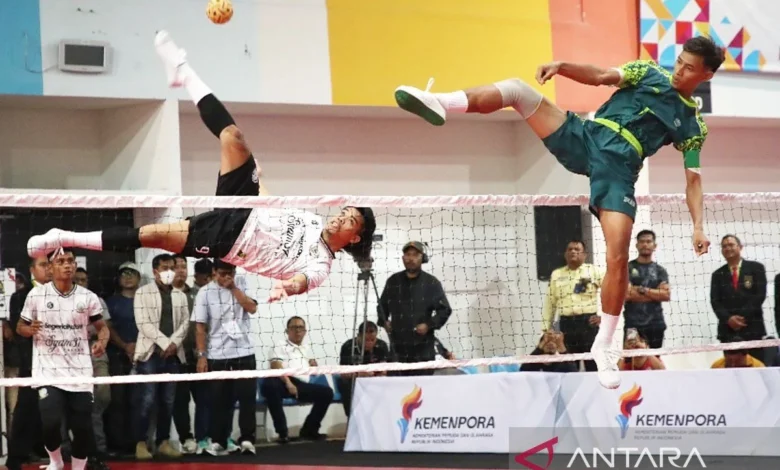
Sepak Takraw stands as a breathtaking testament to the athletic ingenuity of Southeast Asia, blending the tactical precision of volleyball with the explosive, gravity-defying acrobatics of football. Often described as "kick volleyball," this high-octane sport demands an extraordinary level of flexibility, core strength, and coordination. By prohibiting the use of hands, the game forces athletes to rely on their feet, knees, chests, and heads to navigate a woven rattan ball across a net, creating a visual spectacle that has captivated regional audiences for centuries and continues to gain traction on the global stage.
Etymology and Historical Foundations
The nomenclature of the sport is deeply rooted in its regional identity. The term "Sepak Takraw" is a linguistic marriage of two distinct languages: "Sepak," derived from the Malay word for "kick," and "Takraw," the Thai term for the woven rattan ball used in play. While the modern competitive version was formalized in the mid-20th century, the roots of the game extend back approximately 500 years.
Historical accounts suggest that the game flourished within the royal courts of the 15th-century Malay Sultanate. Over time, the sport migrated across the archipelago, adapting to local cultures and acquiring various monikers. In Indonesia, Malaysia, Singapore, and Brunei, it is traditionally known as Sepak Raga. Myanmar refers to it as Chinlone, while the Philippines calls it Sipa. These variations, while sharing the same fundamental spirit, reflect the deep-seated cultural integration of the sport within the diverse societies of Southeast Asia.
Beyond the regional narrative, some sports historians posit a broader ancestral connection to ancient China. There is a compelling theory that the sport evolved from "Cuju," a military exercise dating back to the Han Dynasty. FIFA has historically recognized Cuju as the earliest known form of football, where soldiers practiced keeping a leather ball airborne for as long as possible. Whether through indigenous development or historical cross-pollination via trade routes, the sport’s evolution represents a shared heritage that now serves as a pillar of Southeast Asian cultural diplomacy.
The Formalization of a Modern Sport
The transition from a recreational pastime to a standardized international competition began in the 1940s. A pivotal moment occurred in 1945 in Penang, Malaysia, when Hamid Mydin introduced the "net" to the game, differentiating it from the traditional, non-netted Sepak Raga. This version, dubbed "Sepak Raga Jaring," laid the groundwork for the modern game.
The official codification took place in 1960, following a historic exhibition match between Malaysia and Thailand in Kuala Lumpur. This event catalyzed the creation of the Football Association of Malaysia’s Sepak Takraw division, which eventually saw the sport included in the 1965 Southeast Asian Peninsular (SEAP) Games. By 1988, the formation of the International Sepaktakraw Federation (ISTAF) provided the necessary global governance structure, ensuring that rules, equipment, and tournament standards were consistent across borders.
Rules of Engagement: The Anatomy of a Match
At the competitive level, a Sepak Takraw match is played on a court roughly the size of a badminton court. The game involves teams—typically consisting of three players known as the "Regu"—who must work in perfect synchronization. The three core positions are:
- The Tekong: Positioned at the back, this player is responsible for the serve. The serve is arguably the most critical aspect of the game, as the Tekong must use incredible precision to land the ball in the opponent’s court while generating enough speed to make it difficult to return.
- The Feeder: Located at the front, the Feeder is the tactical architect of the team. Their primary role is to control the ball with soft, precise touches, setting it up for the "Killer" to execute an attack.
- The Killer (or Striker): The primary offensive player. The Killer utilizes acrobatic spikes—often involving full-extension bicycle kicks—to drive the ball into the opponent’s territory with immense velocity.
The game is played in sets, with the first team to reach 21 points winning the set. If the match goes to a third set, a tie-break is played to 21 points, with a two-point margin required to clinch victory. The prohibition of hands remains the defining rule, forcing players to develop superhuman control over their lower extremities.
Resolving Governance and Promoting Growth
The sport has recently navigated a period of institutional transition. In Indonesia, for example, the resolution of a long-standing dualism in the national Sepak Takraw management—involving the Indonesian National Sports Committee (KONI) and the Indonesian Olympic Committee (KOI)—has been hailed as a significant milestone. ISTAF has expressed strong support for these developments, noting that stable governance is essential for the sport’s professionalization and its continued inclusion in major events like the Asian Games and the SEA Games.
The Indonesian Ministry of Youth and Sports (Kemenpora) has emphasized that resolving these administrative conflicts is vital to the development of national athletes. By consolidating leadership, the sport can now focus on grassroots talent identification, infrastructure improvement, and international representation. This stability is expected to improve the performance of national teams on the regional circuit, where Thailand currently holds a dominant position in the medal tables.
Broader Impact and Global Aspirations
The significance of Sepak Takraw extends beyond the court. It is a symbol of regional identity that fosters community and physical excellence. However, the sport’s ambitions are now global. Through the efforts of ISTAF, the game has been introduced to North America and Europe, where it is often featured in circus performances, stunt shows, and increasingly, as an amateur competitive sport.
The implications of this expansion are twofold. First, it offers a new market for sports equipment manufacturers and professional training academies. Second, it promotes the "Southeast Asian way of sport"—a style that values agility and technical finesse over raw physical size. As the sport moves toward potential future inclusion in broader global sporting events, its historical reliance on the "rattan ball" has even shifted toward high-tech synthetic polymers, ensuring the game remains durable and accessible in diverse climates.
Analysis of Future Trends
Looking ahead, the evolution of Sepak Takraw will likely be driven by three factors: digital analytics, injury prevention, and institutional stability. Modern training regimens now incorporate biomechanical analysis to help "Killers" refine their spiking techniques while minimizing the impact on their joints—a necessary advancement given the high-stress nature of aerial maneuvers.
Furthermore, the integration of professional leagues—similar to the models seen in professional volleyball or football—could transform Sepak Takraw into a lucrative career path for young athletes. The ability to attract sponsorships and media rights will be the ultimate test of the sport’s transition into a modern, globalized entertainment product.
In conclusion, Sepak Takraw is far more than a traditional game; it is a complex, tactical, and highly disciplined sport that mirrors the cultural evolution of Southeast Asia. From its humble origins in 15th-century royal courts to the high-stakes, televised championships of the 21st century, the sport has retained its core essence while successfully adapting to the demands of international competition. As governance issues are resolved and the sport continues to modernize, it stands poised to capture the imagination of a wider global audience, proving that when feet and aerial ambition meet, the possibilities for athletic spectacle are boundless.