Trump Asserts Cuba Cannot Survive Without Venezuelan Oil Following Major US Military Operation and Maduro Arrest

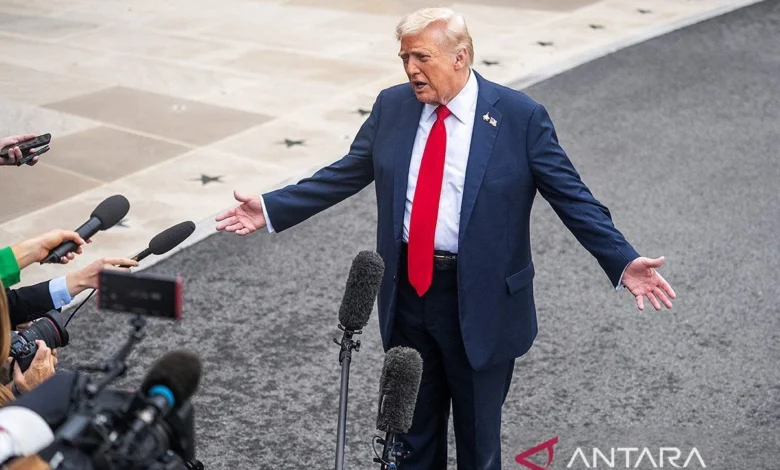
In a series of high-profile statements that have sent shockwaves through the geopolitical landscape of the Western Hemisphere, United States President Donald Trump has declared that the Cuban government is nearing a point of total collapse due to its absolute reliance on Venezuelan resources. Speaking in an exclusive interview with Fox News on Friday, the President emphasized that the long-standing symbiotic relationship between Havana and Caracas has been effectively severed following a massive U.S. military and law enforcement operation in Venezuela. According to the President, the ideological and economic axis that has defined Caribbean politics for over two decades is now at an end, leaving Cuba in a position of extreme vulnerability.
The President’s remarks come in the wake of an unprecedented escalation in U.S. foreign policy. On January 3, the United States launched a large-scale operation that resulted in the apprehension of Venezuelan President Nicolas Maduro and his wife, Cilia Flores. The couple was subsequently transported to New York to face trial on charges of "narco-terrorism," a move that the Trump administration justifies as a necessary action to eliminate a persistent threat to U.S. national security and regional stability.
The Dependency Doctrine: Oil for Protection
Central to President Trump’s argument is the intricate "oil-for-security" arrangement that has bolstered both the Cuban and Venezuelan regimes since the era of Hugo Chávez and Fidel Castro. "In total, Cuba depends on Venezuela, both for money and for oil," Trump stated during the interview. "Cuba provides protection to Venezuela, and Venezuela provides money to Cuba through oil."
This relationship, often referred to as the "Bolivarian Alliance," has seen Cuba deploy thousands of medical professionals, teachers, and, more critically, intelligence and security advisors to Venezuela. In exchange, Venezuela has historically shipped tens of thousands of barrels of crude oil daily to the island nation at heavily subsidized rates. President Trump asserted that without this constant flow of energy and financial support, the Cuban administration lacks the domestic infrastructure and capital to maintain its current political system.
When asked specifically whether Cuba could survive the loss of Venezuelan supplies, the President was unequivocal: "No, Cuba is completely dependent on Venezuela, both financially and in terms of oil." He added that the bilateral ties between the two nations have effectively "ended" because the mechanism of exchange has been dismantled by the recent U.S. intervention.
The Economic Reshaping of Venezuela
The President also used the interview to outline an ambitious vision for the future of the Venezuelan oil industry, which possesses the world’s largest proven crude reserves. He claimed that the United States is currently positioned to receive Venezuelan oil valued at approximately $4 billion in a single day, a figure he expects to grow as the industry is modernized under new management.
"The oil we are taking is worth $4 billion in one day, and that number will increase," Trump said. He invited major global oil corporations to return to the country, promising a lucrative environment for investment that would simultaneously benefit the Venezuelan people. "We will rebuild it; all the big oil companies will come in, they will make a lot of profit, and Venezuela will get a portion of that money."
This strategy involves the immediate transfer of 30 to 50 million barrels of oil from Caracas to the United States. President Trump promised that these assets would be sold at market prices, with the proceeds earmarked for the benefit of both the American and Venezuelan populaces. This move is seen by analysts as an attempt to stabilize the global energy market while ensuring that the "interim authorities" in Caracas have the liquidity necessary to begin a transition of power.
Chronology of the Intervention and Political Transition
The current crisis reached a boiling point in early January, marking a definitive shift in U.S. policy toward the Maduro administration. The timeline of events provided by official sources depicts a rapid and coordinated effort to decapitate the existing leadership in Caracas:
- January 3: The United States military and federal agencies conduct a sweeping operation in Venezuela. Nicolas Maduro and Cilia Flores are taken into custody and moved to New York. The U.S. Justice Department prepares an indictment centered on "narco-terrorism," alleging that the Maduro administration functioned as a criminal enterprise.
- January 4: The Venezuelan government in Caracas, still reeling from the operation, issues a formal request for an emergency meeting of the United Nations Security Council. They condemn the U.S. action as a violation of international law and national sovereignty.
- January 5: In a swift legal maneuver, the Supreme Court of Venezuela temporarily transfers the duties of the head of state to Vice President Delcy Rodriguez. She is officially sworn in as the interim president before the National Assembly, tasked with navigating the country through the immediate aftermath of the U.S. intervention.
- January 10: President Trump’s Fox News interview clarifies the U.S. position, linking the fate of the Cuban government to the collapse of the Maduro regime and outlining the economic future of Venezuelan oil.
International Reactions and Diplomatic Fallout
The international community remains deeply divided over the legality and implications of the U.S. operation. While some regional neighbors have expressed cautious support for a transition in Caracas, others fear the precedent set by the forced removal of a sitting head of state.
In Beijing, the Chinese government has signaled that it will remain a consistent partner to Venezuela, regardless of the change in leadership. Chinese officials stated that they would continue to deepen economic relations with the South American nation, emphasizing their long-term investments in the Venezuelan energy sector. This suggests that while the U.S. seeks to dominate the "rebuilding" process, it may face competition or diplomatic friction from global powers with established interests in the region.
Meanwhile, regional leaders in South America have been in constant communication. The presidents of Colombia and Brazil reportedly held high-level telephone consultations to discuss the potential for a refugee crisis and the security implications of the sudden power shift in Caracas. Both nations share extensive borders with Venezuela and have been most directly affected by the socio-economic collapse of the country over the past decade.
In Southeast Asia, Indonesian Coordinating Minister for Economic Affairs, Airlangga Hartarto, commented on the situation, suggesting that while the U.S. claims regarding Venezuelan oil are significant, they may not have an immediate or catastrophic impact on global oil price stability. His assessment points to a world market that has already priced in much of the volatility associated with Venezuelan production.
Analysis of Implications for Cuba and the Region
The "fallout" for Cuba, as predicted by President Trump, could manifest in several ways. For decades, the Cuban economy has operated on a knife-edge, frequently facing "special periods" of austerity when foreign subsidies were threatened. If the Venezuelan oil shipments cease entirely, Havana will be forced to seek alternative energy suppliers on the open market—a challenge made difficult by the ongoing U.S. embargo and a lack of foreign currency reserves.
From a geopolitical perspective, the removal of Maduro signifies the loss of Cuba’s most important ideological ally. The two nations have historically voted as a bloc in international forums and supported one another’s resistance to U.S. influence in the Caribbean. With a new "interim" government in Caracas that is ostensibly more aligned with, or at least under the influence of, Washington, Cuba finds itself isolated.
The U.S. focus on "narco-terrorism" charges also suggests a shift in how Washington intends to handle ideological adversaries in the region. By treating political leaders as criminal defendants, the administration bypasses traditional diplomatic channels, signaling a "zero tolerance" policy for regimes it classifies as threats to security.
Conclusion: A New Era for the Americas?
President Trump’s assertions reflect a bold and controversial gambit to permanently alter the political map of Latin America. By targeting the economic lifeline that connects Venezuela and Cuba, the United States is betting that the collapse of one will inevitably lead to the transformation of the other.
As Delcy Rodriguez takes the reins of an "interim" government and U.S. oil companies prepare to re-enter the Venezuelan market, the world remains watchful. The success of this policy depends not only on the extraction of oil and the prosecution of the former leadership but also on the ability of the Venezuelan people to achieve stability amidst a vacuum of power. For Cuba, the coming months will be a test of survival as the island faces a future without its primary benefactor for the first time in a generation. The "4 billion dollar a day" vision presented by Trump suggests a future where Venezuela is reintegrated into the U.S. economic sphere, but the path to that reality remains fraught with legal, social, and international challenges.
Related posts: