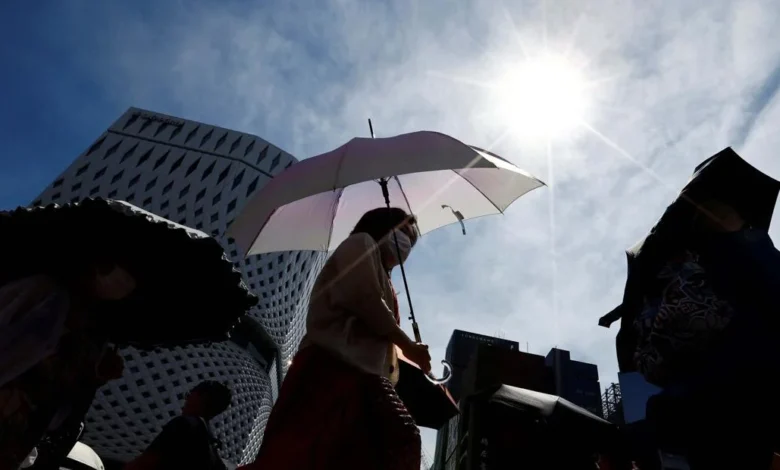
The global climate landscape is undergoing a profound and dangerous transformation that extends far beyond the mere record-breaking spikes in mercury. A comprehensive new study, recently published in the scientific journal AGU Advances, reveals that extreme heat is no longer confined to the traditional summer months. Instead, researchers have identified a shifting temporal pattern where lethal heatwaves are increasingly occurring during the shoulder seasons—the months of spring and autumn—posing unprecedented risks to human health, agricultural productivity, and critical infrastructure.
The Shift in Temporal Boundaries
The study, led by Catherine Ivanovich, a climatologist at NASA’s Goddard Institute for Space Studies (GISS) and the Columbia Climate School, analyzed 45 years of global climate data. By comparing the baseline period of 1980–1989 with the most recent decade of 2015–2024, the researchers found that extreme heat events have expanded across approximately half of the world’s landmass.
Traditionally, heatwave mitigation strategies, such as the activation of public cooling centers and the issuance of heat-health warnings, are calibrated to the standard calendar of summer months. This temporal misalignment means that when heat extremes occur early in the spring or late in the autumn, societies are often caught off guard, lacking the necessary infrastructure and preparedness to protect vulnerable populations.
Methodology and Global Comparative Analysis
To arrive at these findings, the research team employed two distinct metrics: dry-bulb temperature (the standard thermometer reading) and wet-bulb globe temperature (WBGT). The latter is a more nuanced measurement that accounts for humidity, solar radiation, and wind speed, providing a more accurate representation of how heat affects the human body’s ability to cool itself via sweat evaporation.
The analysis covered six inhabited continents, using both NASA datasets and data from the European Centre for Medium-Range Weather Forecasts (ECMWF) to ensure robustness. The findings indicate that while the rise in mean global temperatures is a significant driver, the shifting timing of these extremes follows complex, region-specific patterns rather than a uniform shift.
For instance, in the western United States, parts of eastern China, northern Africa, and eastern Europe, the frequency of extreme heat events has surged in the two months following the traditional peak summer period. Conversely, regions such as western Europe, southern Africa, and northwestern India are experiencing an increase in early-season heat, with extreme temperatures occurring frequently in the two months preceding the typical onset of summer.
Case Study: The Transformation of Phoenix
The city of Phoenix, Arizona, serves as a stark illustration of this phenomenon. During the 1980s, the city recorded 183 days of extreme heat—defined as days in the top 5% of historical temperature readings. By the 2015–2024 period, this number had swelled to 338 days. More alarming than the frequency is the timing: in the 1980s, post-summer extreme heat was virtually non-existent. In the recent decade, however, approximately 6% of extreme heat days occurred after the traditional summer window.
The year 2024 provided a harrowing preview of this "extended summer" reality. Phoenix endured 113 consecutive days with temperatures exceeding 100°F (37.8°C). The heat did not subside as expected; instead, the city logged a record-breaking streak of 21 consecutive days of extreme heat extending from late September into mid-October. This deviation from the expected seasonal cooling cycle illustrates how the "normal" boundaries of seasons are effectively dissolving.
The Complexity of Atmospheric Drivers
While the researchers acknowledge that global warming is a primary catalyst, they note that the phenomenon is not merely a linear consequence of rising average temperatures. When testing the data against climate models, the team found that while general warming explains the intensity of mid-summer heat, it does not fully account for the asymmetrical expansion at the edges of the seasons.
"There is a very clear imbalance in how extreme summer seasons are expanding across different parts of the world," Ivanovich stated. The study suggests that localized atmospheric circulation patterns, combined with the changing moisture content in the soil and atmosphere, contribute to these idiosyncratic shifts. Future research, which will incorporate more advanced climate simulations, is required to determine the precise influence of anthropogenic climate change versus natural internal variability in driving these specific temporal shifts.
Broader Implications: A Multi-Hazard Crisis
The extension of the heat season carries far-reaching consequences that transcend mere discomfort. The impact of extreme heat is bifurcated by the type of heat: dry versus humid. Dry heat places immense strain on agricultural systems, depleting soil moisture and challenging crop resilience, while humid heat—characterized by high WBGT—is physiologically hazardous, as it prevents the human body from shedding heat, leading to heatstroke and organ failure.
Furthermore, the shift in timing creates a "compounding hazard" scenario. In the western United States, the prolongation of heat into the autumn months overlaps with the peak of wildfire season, creating a feedback loop where extreme heat desiccates vegetation, providing more fuel for fires that are then fanned by the lingering, hot, and dry atmospheric conditions. Similarly, in the southeastern United States, late-season heat events coincide with the active hurricane season, complicating emergency response efforts and increasing the demand on power grids that may already be strained.
The Need for Adaptive Policy
The findings from the Columbia Climate School and NASA researchers provide a crucial warning for policymakers and urban planners. Current disaster management frameworks are largely predicated on historical norms that no longer reflect contemporary reality.
- Infrastructure Resilience: Public buildings, schools, and hospitals may need to maintain climate-controlled environments for a significantly longer duration than in previous decades.
- Early Warning Systems: Meteorological agencies must pivot toward "all-season" heat monitoring rather than relying on fixed-date summer warnings.
- Health Preparedness: Public health departments need to recognize that heat-related morbidity is likely to shift, requiring healthcare systems to be prepared for heat-related surge capacity well into the spring and autumn months.
As climate patterns continue to destabilize, the traditional concept of a "summer season" is becoming an artifact of the past. The data suggests that we are entering an era where extreme heat is a persistent threat throughout a larger portion of the year. The study by Ivanovich and her colleagues acts as a call to action for global communities to recalibrate their climate adaptation strategies to match this new, extended, and increasingly volatile reality. As the climate continues to respond to the accumulation of greenhouse gases, the ability to anticipate and manage these shifts will become a defining challenge for global stability in the 21st century.