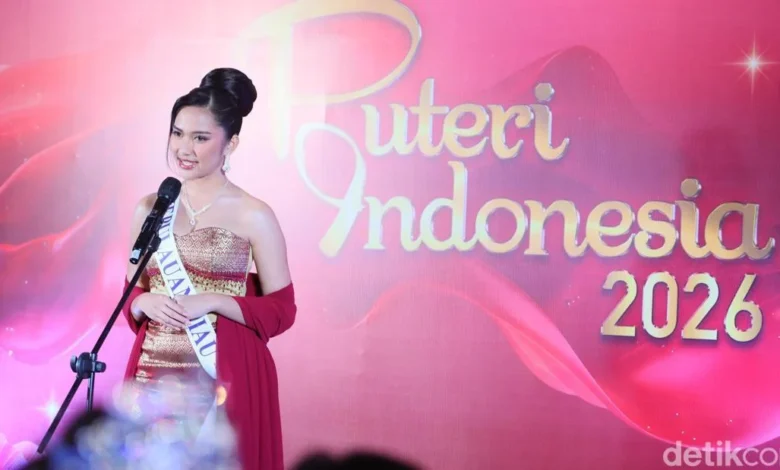
Jakarta – The Yayasan Puteri Indonesia (YPI) has unveiled the 45 finalists for the Puteri Indonesia 2026 pageant, representing 34 provinces across the archipelago. These accomplished women are poised to embark on their quarantine period, marking a significant milestone in their journey to potentially become Indonesia’s next beauty ambassador. This year’s competition embraces a powerful theme: "From Indonesia for the World: Women’s Contributions in Innovation and Technology for Global Environmental Sustainability and Peace." This theme underscores a commitment to cultivating well-rounded women capable of making substantial contributions towards achieving Indonesia Emas 2045, the nation’s vision for a golden era of development.
The selection process this year has yielded a particularly impressive cohort, according to Putri Kus Wisnu Wardani, Chairwoman of the YPI’s Board of Trustees. "The quality of participants has escalated significantly this year," Wardani stated during an interview at Hutan Kota by Plataran, Jakarta, over the weekend. "We have numerous contestants who have completed Master’s degrees from prestigious Indonesian universities such as the University of Indonesia (UI), Diponegoro University (UNDIP), and the Bandung Institute of Technology (ITB). Furthermore, several finalists hold degrees from internationally renowned institutions, including Columbia University, the Royal College of Art in London, and Boston University."
This academic diversity is a cornerstone of the 2026 cohort. The finalists hail from a rich tapestry of academic disciplines, spanning fields like economics, medicine, midwifery, and public relations. This broad spectrum of expertise is seen as a significant asset, enabling them to engage with and contribute to various societal sectors upon their return to their communities.
A Legacy of Empowerment and Vision
The Puteri Indonesia pageant, a cornerstone of Indonesian cultural and social engagement for decades, has consistently aimed to nurture leaders who embody a holistic set of values. YPI emphasizes the philosophy of "Beauty, Brain, Behaviour, Brave, and Be Right" as the foundational pillars for each finalist.
"We want to emphasize that beauty is not merely superficial," Wardani elaborated. "Intelligence and skills must be continuously honed. Interpersonal conduct and behavior are equally crucial and require constant refinement. Then there are ‘Brave’ and ‘Be Right’ – the courage to make the right choices when faced with difficult situations in life. These are the qualities that define a complete Puteri Indonesia."
This emphasis on comprehensive development aligns with the pageant’s broader objectives. Beyond national representation, Puteri Indonesia aims to foster women who are not only poised and articulate but also intellectually capable and ethically grounded. The pageant serves as a platform to identify and cultivate these attributes, preparing young women to be influential figures in society.
Strategic Partnerships for National Advancement
PT Mustika Ratu Tbk (MRAT), a long-standing and principal supporter of the Puteri Indonesia pageant since 1992, reiterates its commitment to female empowerment. Bingar Egidius Situmorang, President Director of PT Mustika Ratu Tbk, views the pageant as a crucial stepping stone for these young women to become nationally recognized leaders.
"Our objective extends beyond merely nurturing accomplished young women," Situmorang explained. "We aim to develop their potential so they can evolve into future leaders who proudly represent our nation. They will be instrumental in advancing authentic Indonesian products, promoting tourism, preserving our rich culture, and championing Indonesian trade both domestically and on the international stage." This vision highlights the pageant’s role in economic and cultural diplomacy.
Kusuma Ida Anjani, Director of PT Mustika Ratu Tbk and Chair of the Puteri Indonesia Pageant, further elaborated on the rigorous selection process. The orientation for this year’s participants is geared towards cultivating tangible agents of change within society.
"We aspire to shape Puteri Indonesia figures who are not only ready to shine on stage but are also prepared to actively engage with communities as agents of transformation," Anjani stated. "The selection and coaching processes we have designed this year are focused on quality and sustainability, recognizing that Indonesia needs resilient, intelligent young women who can inspire across generations." This forward-looking approach emphasizes practical impact and enduring influence.
Commitment to Education and Global Engagement
In a significant move to further enhance the caliber of its participants, the Yayasan Puteri Indonesia is providing access to educational scholarships. These scholarships cover various levels of study, from undergraduate (S1) to postgraduate (S2) and doctoral (S3) degrees, through partnerships with a diverse range of universities. This initiative aims to equip all finalists with robust educational foundations, ensuring they are well-prepared to contribute meaningfully to the nation’s development.
The intensive pre-quarantine coaching period, designed to hone their skills and knowledge, will be followed by a dedicated quarantine phase for the 45 finalists. This period, scheduled from April 18th to April 24th, 2026, will culminate in the Grand Final Gala Night on Friday, April 24th, 2026. The prestigious event is set to take place at the Plenary Hall of the Jakarta International Convention Center (JICC).
The Grand Final promises to be a spectacular event, graced by the presence of reigning beauty queens from around the globe. Attendees will include Miss Supranational 2025, Miss International 2025, Miss Cosmo 2025, and Miss Charm 2025. This international convergence underscores the global reach and significance of the Puteri Indonesia pageant, reinforcing its ambition to send Indonesian representatives who are prepared to shine on the world stage and achieve success in international competitions. The pageant’s consistent success in this regard has cemented its reputation as a vital platform for young Indonesian women to achieve international recognition and contribute to global discourse.
A Glimpse into the Finalists’ Backgrounds
While the specific names and detailed backgrounds of all 45 finalists are yet to be extensively publicized, the YPI’s statements offer a clear indication of the caliber of individuals selected. The inclusion of graduates from institutions like ITB and Columbia University highlights a strong emphasis on academic achievement and global perspective.
- ITB (Bandung Institute of Technology): As one of Indonesia’s premier engineering and technology institutions, graduates from ITB often possess strong analytical skills, problem-solving abilities, and a deep understanding of scientific and technological advancements. Their presence among the finalists suggests a focus on innovation and the practical application of knowledge.
- Columbia University: An Ivy League institution in the United States, Columbia University is globally recognized for its academic rigor across a wide array of disciplines. Finalists with degrees from such institutions are likely to bring a sophisticated understanding of international affairs, global challenges, and advanced research methodologies.
- Other Prestigious Institutions: The mention of UNDIP, UI, Royal College of Art, and Boston University further reinforces the theme of academic excellence and international exposure. These universities are known for their strengths in various fields, from social sciences and humanities to arts and business.
The combination of technical expertise, global outlook, and diverse academic backgrounds is expected to empower these finalists to address complex global issues, particularly those related to environmental sustainability and technological innovation, as outlined in the pageant’s theme. Their ability to articulate these issues and propose solutions will be a key focus during the competition.
The Road Ahead: Quarantine and Competition
The quarantine period is a critical phase where finalists undergo rigorous training and preparation. This typically includes activities focused on public speaking, interview skills, etiquette, cultural awareness, and advocacy. They are also often involved in community service projects and engage with national development agendas. This immersive experience is designed to transform them into well-rounded ambassadors capable of representing Indonesia with poise and substance.
The Grand Final itself is a culmination of months of preparation, both for the contestants and the organizing committee. It is a televised event that captures the nation’s attention, celebrating the achievements of these young women and crowning the next Puteri Indonesia. The presence of international queens adds a layer of global camaraderie and friendly competition, reinforcing the pageant’s role in fostering international relations.
The Puteri Indonesia 2026 pageant, with its strong emphasis on innovation, technology, sustainability, and global peace, is poised to showcase a new generation of Indonesian women who are not only beautiful but also intelligent, principled, and driven to make a positive impact on the world. The caliber of the finalists, with their impressive academic pedigrees from institutions like ITB and Columbia University, signals a bright future for Indonesian leadership on both national and international stages.