Global Architectural Heritage and the Evolution of Iconic Landmarks as Symbols of Civilization and Economic Prosperity

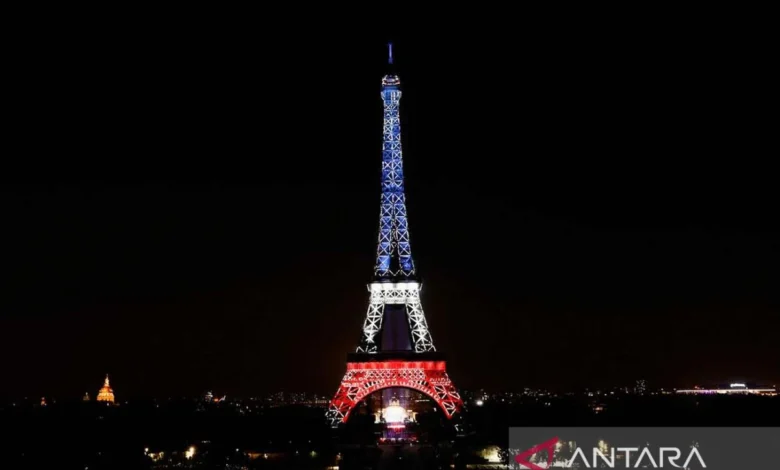
The architectural landscape of the modern world is defined by a collection of monumental structures that transcend their physical forms to become enduring symbols of human achievement, cultural identity, and economic power. From the historic spires of Europe to the record-breaking skyscrapers of the Middle East, these landmarks serve as the primary conduits for international tourism and the preservation of global history. While buildings like the Statue of Liberty in New York serve as beacons of political ideals, other structures across the globe represent a synthesis of religious devotion, imperial grandeur, and cutting-edge engineering. These 14 iconic landmarks, spanning continents and centuries, illustrate the progression of human civilization and continue to play a pivotal role in the socio-economic development of their respective nations.
The Socio-Economic Significance of Monumental Landmarks
Landmarks are often viewed through the lens of aesthetics and history, but their impact on the global economy is profound. According to data from the World Tourism Organization (UNWTO), cultural heritage sites and iconic architectural landmarks are the primary drivers for over 40% of international leisure travel. For countries like France, Italy, and Thailand, these structures are not merely relics of the past but are active "soft power" assets that generate billions of dollars in annual revenue through ticketing, hospitality, and secondary service industries.
The presence of a world-class landmark often dictates urban planning and infrastructure development. For instance, the Burj Khalifa did not just provide office space; it redefined Dubai’s global image, shifting the emirate’s economic dependency from oil to a service-and-tourism-based economy. Similarly, the restoration of Borobudur in Indonesia has turned the Magelang region into a focal point for international spiritual and cultural tourism, necessitating improved transportation networks and international airports.
A Chronological Survey of Global Masterpieces
To understand the evolution of these structures, it is essential to examine them within their historical and regional contexts. These landmarks represent different eras of human ingenuity, from the ancient stone-carving techniques of Southeast Asia to the industrial steel revolutions of the 19th century and the digital-age engineering of the 21st century.
1. The Eiffel Tower (France): The Industrial Revolution’s Iron Icon
Standing at 330 meters, the Eiffel Tower remains the definitive symbol of Paris. Designed by Gustave Eiffel for the 1889 Exposition Universelle (World’s Fair), it was originally intended to be a temporary structure. Despite initial criticism from the Parisian artistic elite, it became a marvel of 19th-century engineering. For 41 years, it held the title of the world’s tallest man-made structure until the completion of the Chrysler Building in 1930. Today, it attracts approximately 6 to 7 million visitors annually, serving as a testament to France’s industrial heritage.
2. The Taj Mahal (India): A Monument to Eternal Devotion
Located in Agra, the Taj Mahal is widely considered the finest example of Mughal architecture. Built between 1632 and 1653 by Emperor Shah Jahan in memory of his favorite wife, Mumtaz Mahal, the white marble mausoleum incorporates Persian, Islamic, and Indian architectural styles. Beyond its romantic narrative, the Taj Mahal is a UNESCO World Heritage site that requires constant conservation efforts to protect its marble from industrial pollution, highlighting the ongoing tension between heritage preservation and modern industrialization.
3. The Leaning Tower of Pisa (Italy): An Unintentional Engineering Marvel
The campanile of the cathedral of Pisa became world-famous not for its intended design, but for its four-degree lean caused by an unstable foundation on soft ground. Construction began in 1173 and spanned nearly two centuries due to various wars. By the time the third story was built in 1178, the tower began to sink. Modern stabilization efforts concluded in 2001, ensuring the structure remains safe for visitors while preserving the iconic tilt that defines its identity.
4. Big Ben and the Elizabeth Tower (United Kingdom): The Heartbeat of Westminster
While often referred to as Big Ben, that name technically belongs to the Great Bell inside the clock tower at the north end of the Palace of Westminster. Renamed the Elizabeth Tower in 2012 to honor Queen Elizabeth II’s Diamond Jubilee, the structure has stood since 1859. It represents the pinnacle of Gothic Revival architecture and serves as a global symbol of British parliamentary democracy. A massive five-year restoration project completed in 2022 ensured that its Victorian mechanics continue to function in the digital age.
5. Burj Khalifa (United Arab Emirates): The Pinnacle of Modern Engineering
At 828 meters, the Burj Khalifa in Dubai is the current record-holder for the world’s tallest building. Completed in 2010, it represents a "vertical city" with 160 stories. Its design is inspired by the Hymenocallis flower, a regional desert plant. The building utilizes a "buttressed core" structural system to support its immense height and wind loads. It stands as a symbol of the Middle East’s rapid modernization and its ambition to become a global hub for business and luxury.
6. The Ka’bah (Saudi Arabia): The Spiritual Epicenter
Situated at the heart of the Masjid al-Haram in Mecca, the Ka’bah is the most sacred site in Islam. While its architectural form is a simple cuboid, its significance is immeasurable, serving as the "Qibla" (direction of prayer) for nearly two billion Muslims worldwide. The surrounding infrastructure has undergone massive expansions under the Saudi government’s Vision 2030, aiming to accommodate over 30 million pilgrims annually, blending ancient spiritual tradition with ultra-modern crowd-management technology.
7. Christ the Redeemer (Brazil): A Beacon of Art Deco
Overlooking Rio de Janeiro from the summit of Mount Corcovado, this 30-meter-tall statue of Jesus Christ was completed in 1931. Made of reinforced concrete and soapstone, it is one of the largest Art Deco statues in the world. It serves as both a religious icon and a symbol of Brazilian hospitality, with its open arms welcoming travelers to the city.
8. St. Peter’s Basilica (Vatican City): The Zenith of Renaissance Art
As the largest church in the world by interior measure, St. Peter’s Basilica is a masterpiece of Renaissance architecture. Built between 1506 and 1626, it features contributions from legendary artists including Michelangelo, Bramante, and Bernini. The basilica is not only a pilgrimage site but also a massive museum of art and history, housing the Pietà and the majestic Baldacchino.
9. The Louvre Museum (France): From Fortress to Cultural Treasury
The Louvre is the world’s most visited museum, but the building itself is a historical landmark. Originally a 12th-century fortress, it was transformed into a royal palace before becoming a public museum during the French Revolution. The addition of I.M. Pei’s glass pyramid in 1989 created a striking contrast between historical stone and modern glass, symbolizing the museum’s role in bridging the past and the future.
10. Sydney Opera House (Australia): Expressionism on the Waterfront
Designed by Danish architect Jørn Utzon and opened in 1973, the Sydney Opera House is defined by its unique shell-like roof structures. It is a masterpiece of 20th-century architecture that pushed the boundaries of structural engineering and acoustics. Its location on Bennelong Point makes it one of the most photographed buildings in the southern hemisphere.
11. Empire State Building (United States): The Soul of the New York Skyline
For 40 years, the Empire State Building was the tallest building in the world. Completed in 1931 during the Great Depression, it became a symbol of American resilience and industrial might. Its Art Deco spire and observatory continue to attract millions, offering a quintessential view of the Manhattan grid.
12. Wat Pho (Thailand): The Cradle of Traditional Wisdom
Known as the Temple of the Reclining Buddha, Wat Pho in Bangkok is one of Thailand’s oldest and largest temple complexes. The 46-meter-long gold-leaf-covered Buddha is a marvel of religious art. Beyond its religious role, Wat Pho is considered the first public university in Thailand and remains the national center for the teaching and preservation of traditional Thai massage and medicine.
13. Shwedagon Pagoda (Myanmar): The Golden Dambun
The Shwedagon Pagoda in Yangon is a 99-meter-tall gold-plated stupa topped with a diamond-encrusted crown. It is the most sacred Buddhist pagoda in Myanmar, believed to contain relics of four previous Buddhas. The sheer volume of gold and precious gems integrated into its structure makes it one of the most opulent religious landmarks in existence.
14. Borobudur Temple (Indonesia): The World’s Largest Buddhist Monument
Built in the 8th and 9th centuries during the Sailendra Dynasty, Borobudur is a massive Mahayana Buddhist monument in Central Java. It comprises nine stacked platforms topped by a central dome, decorated with 2,672 relief panels and 504 Buddha statues. After centuries of neglect and volcanic ash burial, it was restored through a major UNESCO project between 1975 and 1982. Today, it stands as a testament to Indonesia’s rich ancient history and its commitment to multi-faith cultural heritage.
Comparative Analysis and Global Impact
The common thread among these 14 landmarks is their ability to act as "economic multipliers." Government officials and urban planners frequently cite the "Bilbao Effect"—a phenomenon where high-profile architecture boosts a city’s economic profile—when investing in the maintenance of these sites.
However, the preservation of these landmarks faces modern challenges. Climate change poses a threat to coastal structures like the Sydney Opera House, while air pollution affects the marble of the Taj Mahal and the stone of the Leaning Tower of Pisa. In response, international bodies like UNESCO have increased their oversight, often providing technical expertise and funding to ensure these structures survive for another millennium.
Furthermore, the digital era has transformed how these landmarks are perceived. Social media has increased the visibility of these sites, leading to "over-tourism." In response, many sites, including Borobudur and the Louvre, have implemented reservation systems and visitor caps to balance economic gain with structural integrity.
Conclusion: The Future of the Global Landmark
As we move further into the 21st century, the definition of a landmark continues to evolve. While ancient and historical sites like Borobudur and the Taj Mahal provide a sense of continuity and identity, modern marvels like the Burj Khalifa demonstrate the limitless potential of human engineering. These 14 landmarks are more than just tourist destinations; they are the physical manifestations of human aspiration. They remind us that whether through stone, marble, or steel, humanity possesses an inherent drive to create something that outlasts the individual, serving as a permanent mark on the face of the Earth. The continued protection and celebration of these sites remain essential for maintaining the cultural fabric of a globalized society.
Related posts: