Powerful 7.4 Magnitude Earthquake Strikes Northern Japan Triggering Three Meter Tsunami Warning and Mass Evacuations in Iwate Prefecture

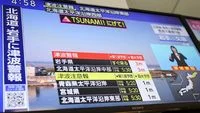
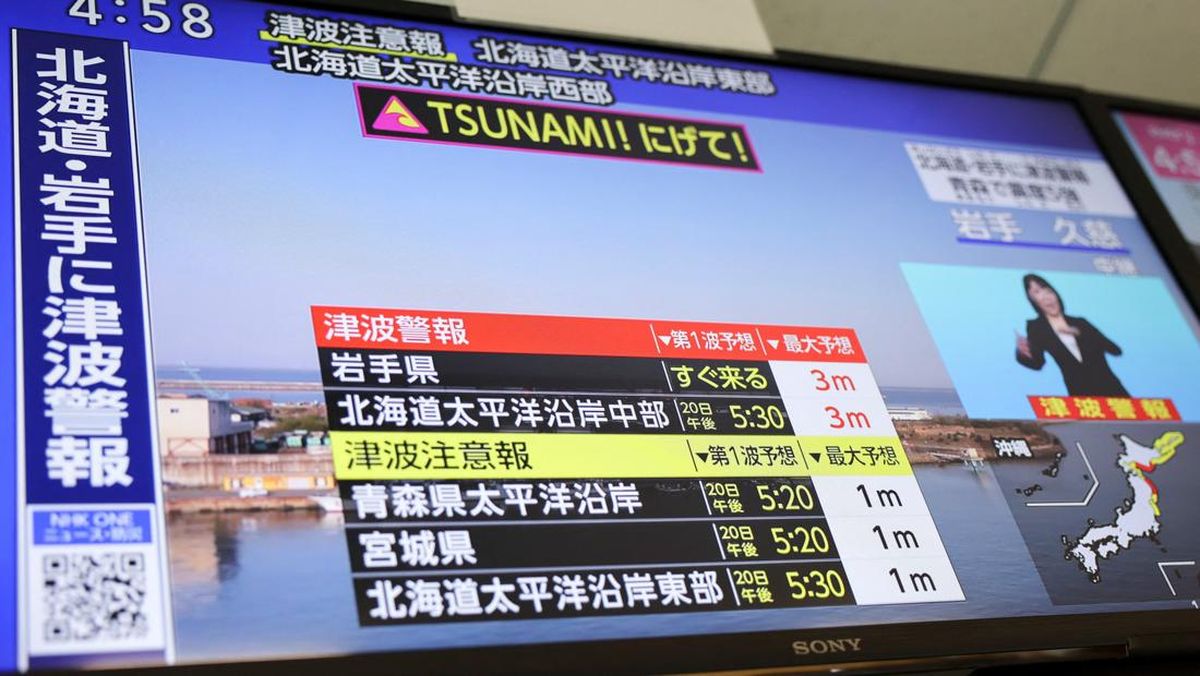
A powerful magnitude 7.4 earthquake struck off the coast of northern Japan on Monday, April 20, sending violent tremors across the Tohoku region and triggering an urgent tsunami warning for coastal areas. The Japan Meteorological Agency (JMA) immediately issued a high-level alert, warning of potential tsunami waves reaching up to three meters in height along the shores of Iwate Prefecture. The seismic event, which occurred at a significant depth beneath the Pacific Ocean, was felt as far away as the capital city of Tokyo, located hundreds of kilometers to the south, where high-rise buildings swayed for several minutes, causing widespread alarm among residents and commuters.
The earthquake struck during the morning hours, a time when many residents were beginning their daily routines. According to preliminary data from the JMA, the epicenter was located off the coast of Iwate Prefecture, a region that has historically been vulnerable to massive subduction-zone earthquakes. In the immediate aftermath of the initial shock, authorities moved with rapid precision, activating the nation’s advanced early warning systems. Television broadcasts were interrupted by the familiar chime of the J-Alert system, which flashed bright red warnings across screens, urging citizens to seek higher ground immediately.
Immediate Response and Tsunami Alerts in Iwate
The primary concern for disaster management officials was the immediate threat of a tsunami. The JMA’s warning specifically highlighted the Iwate coastline, where the geography of the deep-water bays can amplify the height and force of incoming waves. "Evacuate immediately from coastal areas and riverside areas to a safer place such as high ground or an evacuation building," the agency stated in a series of urgent bulletins. The warning emphasized that waves were expected to hit the coast repeatedly, and residents were cautioned not to return to low-lying areas until the warning was officially lifted, even if the initial waves appeared small.
Local government officials in Iwate utilized loudspeaker systems and mobile phone alerts to coordinate the evacuation. In coastal towns such as Miyako, Kamaishi, and Rikuzentakata—areas that were devastated by the 2011 Great East Japan Earthquake—the memory of past disasters fueled a swift and disciplined response. Residents were seen moving toward designated "Tsunami Tenders" and reinforced concrete evacuation towers. NHK, the national broadcaster, provided live aerial footage of the coastline; while initial reports did not show immediate visible damage to port infrastructure, the sea level was observed fluctuating significantly, a precursor to larger surges.
Impact on Tokyo and the Kanto Plain
Despite the epicenter being situated in the north, the sheer magnitude of the 7.4 earthquake meant that its energy traveled extensively through the Japanese archipelago. In Tokyo, the capital’s sophisticated seismic isolation technology was put to the test. Office workers in the Shinjuku and Marunouchi districts reported intense swaying that lasted for nearly two minutes. While no major structural damage was reported in the capital, the psychological impact was palpable, as the tremors served as a stark reminder of the city’s own vulnerability to the long-predicted "Big One."
Public transportation in the Kanto region faced immediate disruptions. Several lines of the Tokyo Metro and the East Japan Railway Company (JR East) were temporarily suspended as a safety precaution to allow engineers to inspect tracks for potential misalignments. The Shinkansen high-speed rail network, a backbone of Japanese domestic travel, was also halted in the northern sectors, stranding thousands of passengers as automated safety systems cut power to the lines the moment the primary waves were detected.
Geological Context: The Ring of Fire and Tectonic Activity
Japan is situated at the junction of four major tectonic plates: the Pacific, Philippine Sea, Eurasian, and North American plates. This specific earthquake is believed to have occurred along the subduction zone where the Pacific Plate thrusts beneath the North American Plate. This region, known as the Japan Trench, is one of the most seismically active areas in the world.
Seismologists noted that a magnitude 7.4 event is classified as a "major" earthquake, capable of causing significant damage to poorly constructed buildings and triggering secondary disasters like landslides and tsunamis. The depth of the quake—estimated at approximately 40 kilometers—likely mitigated some of the surface destruction that a shallower quake of the same magnitude would have caused, but it also provided the necessary displacement of the water column to generate a tsunami.
The JMA has warned that the region must remain on high alert for aftershocks. Historically, large earthquakes in Japan are often followed by significant aftershocks within the first 24 to 72 hours, some of which can be nearly as powerful as the initial event. These secondary tremors pose a severe risk to buildings already weakened by the primary quake and can hamper ongoing evacuation and rescue efforts.
Official Government Reaction and Crisis Management
In the capital, the Prime Minister’s Office acted swiftly to establish a crisis management center. Prime Minister Sanae Takaichi addressed the nation in a televised press conference shortly after the alerts were issued. "The government is currently working to confirm the extent of the damage and to ensure the safety of all citizens," PM Takaichi stated. She urged the public to remain calm but vigilant, emphasizing the importance of following local evacuation orders. "For those of you living in areas where warnings have been issued, please evacuate to higher and safer ground without delay."
The Prime Minister confirmed that the Self-Defense Forces (SDF) had been put on standby to assist in search and rescue operations or to provide emergency supplies should the situation deteriorate. Additionally, the National Police Agency and the Fire and Disaster Management Agency were tasked with coordinating with local municipalities to identify any trapped individuals or collapsed structures.
One of the government’s top priorities was the assessment of nuclear power facilities in the Tohoku region. Following the 2011 disaster, nuclear safety has become a paramount concern for the Japanese public. Authorities confirmed that the Onagawa Nuclear Power Plant in Miyagi Prefecture and the Fukushima Daiichi and Daini plants were being closely monitored. Preliminary reports indicated no abnormalities in radiation levels or cooling systems, though standard safety protocols necessitated a temporary halt to certain operations for thorough inspections.
Infrastructure Resilience and Lessons from the Past
The relatively low level of immediate casualties reported in the wake of such a powerful earthquake is a testament to Japan’s rigorous building codes and disaster preparedness culture. Since the 1995 Kobe earthquake and the 2011 Tohoku disaster, Japan has invested billions of dollars into seismic retrofitting and the development of "smart" infrastructure that can withstand extreme shaking.
Coastal Iwate, in particular, has seen the construction of massive sea walls and the implementation of sophisticated disaster-prevention urban planning. Many of the towns in the region were rebuilt on higher ground after 2011, with the lower-lying areas reserved for parks or industrial use. This "land-use regulation" strategy is designed specifically to prevent the loss of life during events like the one that unfolded on Monday.
Furthermore, the Japanese public is among the most well-trained in the world regarding disaster response. Regular "Great ShakeOut" drills in schools and workplaces ensure that citizens know exactly where to go and what to do when the ground begins to move. This cultural readiness, combined with world-class engineering, serves as the primary defense against the inevitable geological forces that shape the nation.
Economic and Social Implications
While the immediate focus remains on life safety, the economic implications of a magnitude 7.4 earthquake are often significant. Northern Japan is a hub for various industries, including agriculture, fisheries, and high-tech manufacturing. Disruptions to the supply chain are a major concern for global markets, particularly in the automotive and semiconductor sectors, which rely on precision components produced in Tohoku factories.
The temporary closure of ports and the suspension of rail and road networks can lead to logistical bottlenecks that take weeks to resolve. Local businesses, many of which are still recovering from the economic impacts of the global pandemic and previous seismic events, face the daunting task of assessing inventory damage and structural integrity.
On a social level, the earthquake has once again highlighted the psychological toll of living in a high-risk zone. For many survivors of the 2011 tragedy, the sound of tsunami sirens triggers deep-seated trauma. Mental health experts emphasize that providing emotional support to residents in the affected areas is just as critical as providing physical aid.
Looking Ahead: Monitoring and Recovery
As the sun sets on a day of tension and uncertainty, the focus in Iwate and across northern Japan shifts to the long-term monitoring of seismic activity. The JMA has stated that the tsunami warning will remain in place until sea level fluctuations have returned to a safe range. Scientists are also analyzing data from GPS stations and seafloor sensors to determine if the earthquake has caused any permanent coastal subsidence or uplift.
The international community has begun to offer messages of support. Alliances and neighboring countries have expressed their readiness to assist, although Japan’s domestic disaster response capabilities are generally considered sufficient for events of this scale.
In the coming days, the full extent of the property damage and any potential injuries will become clearer. However, the initial response suggests that the combination of rapid government action, advanced technology, and a prepared populace has once again mitigated the worst-case scenario. Japan’s battle against the elements is a continuous one, and the events of this Monday serve as a powerful reminder of the resilience required to thrive on the edge of the Pacific Ring of Fire. For now, the people of Iwate remain on high ground, watching the horizon and waiting for the "all clear" that will allow them to return to their homes and begin the process of recovery once more.