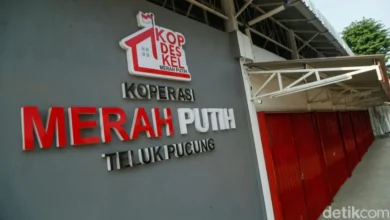
Government Assures Full Budget Readiness as Kopdes Merah Putih Faces Landmark Rp37 Trillion State-Bank Debt Maturity


Jakarta — The financial landscape of Indonesia has entered a critical monitoring phase as the controversial development debt linked to the village-level cooperative initiative, Koperasi Desa/Kelurahan (Kopdes) Merah Putih, reaches its first major repayment milestone. Official records indicate that a staggering Rp37 trillion tranche—part of a cumulative funding liability estimated to reach Rp240 trillion—has officially fallen due to a consortium of state-owned enterprises (SOE) banks, known locally as Himbara.
The debt originated through PT Agrinas Pangan Nusantara, a strategic corporate entity tasked with mobilizing funds from state-owned financial institutions to finance the massive physical infrastructure rollout of the Kopdes Merah Putih program nationwide. Under the foundational financing framework, PT Agrinas acts as the primary borrower securing capital from the banking sector, while the central government assumes the ultimate fiscal responsibility for liquidating the obligations upon the completion and verification of construction milestones.
The first billing cycle for this extensive cooperative infrastructure endeavor matured on Friday, September 25, prompting intense scrutiny from market analysts, financial regulators, and policymakers alike. Amidst growing public discourse regarding the sheer scale of the liabilities, high-ranking government officials have stepped forward to quell systemic liquidity concerns, affirming that fiscal buffers have been meticulously engineered to absorb the financial shock without destabilizing the national budget or straining the lending portfolios of the participating state-owned lenders.
Fiscal Assurance and APBN 2026 Integration
Addressing the media during an official press briefing held at the Bank Indonesia headquarters in Central Jakarta, Deputy Minister of Finance Suahasil Nazara delivered a definitive stance regarding the government’s capacity to honor the maturing financial instruments. Suahasil reassured stakeholders that the capital allocation required to settle the initial wave of liabilities is not an afterthought, but rather a deeply integrated component of the national fiscal architecture.
According to Suahasil, the budgetary provisions necessary to extinguish the construction debts tied to the Kopdes Merah Putih rollout were preemptively calculated, locked in, and secured from the nascent stages of drafting the 2026 State Budget (APBN).
"The debt repayment utilized to construct the Koperasi Desa/Kelurahan Merah Putih has been comprehensively budgeted within the APBN. Therefore, the funds are unequivocally available," Suahasil stated during the briefing.
Elucidating the broader elasticity of state financial planning, Suahasil noted that while the national budget inherently possesses a degree of dynamic flexibility—allowing the administration to source emergency allocations for unforeseen policy priorities—the Kopdes Merah Putih obligation bypassed the need for reactionary maneuvering. Because the initiative was recognized as a macro-level priority for rural economic stimulation, its financial servicing was codified well in advance of the current fiscal year.
Rigorous Verification and Inter-Agency Oversight
Despite the absolute assurance of budget availability, the disbursement of state funds to clear the bank liabilities is bound by stringent administrative and structural validation protocols. Suahasil emphasized that the Ministry of Finance, in tandem with the Ministry of Cooperatives and PT Agrinas Pangan Nusantara, is executing an exhaustive physical audit and verification process across thousands of cooperatives scattered throughout the archipelago.
The verification campaign is designed to cross-reference financial drawdown records against real-world infrastructure delivery. State auditors and program supervisors are tasked with ensuring that every rupiah borrowed translates into tangible, operational cooperative assets capable of serving local communities.
"Our colleagues at the Ministry of Cooperatives, I know firsthand, are executing this duty with extraordinary diligence and hard work. Similarly, the team at PT Agrinas has approached the construction phase with rigorous dedication," Suahasil remarked, acknowledging the logistical friction involved in scaling a rural cooperative network on such an unprecedented scale.
Furthermore, the entire liquidation and monitoring pipeline is being subjected to unprecedented cross-sectoral oversight. The Financial System Stability Committee (KSSK)—a macro-prudential oversight body comprising the Ministry of Finance, Bank Indonesia (BI), the Financial Services Authority (OJK), and the Indonesia Deposit Insurance Corporation (LPS)—is maintaining real-time surveillance over the settlement process.
A critical structural addition to this year’s oversight mechanism is the direct involvement of Danantara Indonesia, the newly empowered super-holding entity that acts as the shareholder for state-owned banks. The integration of Danantara into the KSSK monitoring framework establishes a closed-loop governance model, ensuring that the interests of the state as a fiscal authority, the banking institutions as creditors, and the public as beneficiaries remain harmonized.
"Therefore, with the presence of Danantara within that supervisory matrix, the narrative becomes complete. There is a direct SOE stakeholder representation embedded right at the core of the evaluation process," Suahasil explained.
Background and Context of the Kopdes Merah Putih Initiative
The Kopdes Merah Putih program was conceptualized as a cornerstone economic policy aimed at revitalizing grassroots commerce, strengthening agricultural supply chains, and modernizing the distribution network of subsidized goods and essential commodities across Indonesia’s rural villages and urban sub-districts (desa and kelurahan). By establishing standardized cooperative outposts equipped with modern warehousing, retail spaces, and digital transaction hubs, the government sought to eliminate middlemen and empower local producer cooperatives.
To fast-track the expansive infrastructure blueprint, the administration bypassed traditional multi-year incremental capital expenditures, opting instead for a commercial debt-financing model. PT Agrinas Pangan Nusantara was designated as the primary corporate vehicle to leverage funds directly from state-owned commercial banks. This allowed construction to proceed simultaneously across thousands of remote administrative zones.
However, the staggering scale of the financial commitment—with total projected liabilities touching Rp240 trillion upon the ultimate completion of all planned phases—has continually drawn sharp scrutiny from fiscal watchdogs. Economists have consistently warned that while infrastructure-led stimulus is vital for regional development, the concentration of massive sovereign-backed debts within state-owned financial institutions requires ironclad governance to prevent non-performing loan (NPL) contagion.
Economic Implications and Financial System Stability
The successful management and orderly repayment of the initial Rp37 trillion debt maturity serves as a crucial bellwether for Indonesia’s macroeconomic credibility. Because the loans were extended by major state-owned banks (Himbara), any disruption or delay in debt servicing could potentially introduce liquidity friction into the banking sector, impacting capital adequacy ratios and dampening future lending appetite for developmental projects.
Financial market analysts have observed that the proactive communication demonstrated by the Ministry of Finance is a deliberate strategy to maintain investor confidence and stabilize the bond and currency markets. By explicitly linking the debt settlement to pre-allocated APBN 2026 funds and reinforcing the supervisory mandate of the KSSK-Danantara alliance, the government aims to signal that fiscal discipline remains paramount, even amid aggressive infrastructure expansion.
Nevertheless, experts emphasize that the long-term viability of the Kopdes Merah Putih program will ultimately depend on the economic productivity of the cooperatives themselves. Once the physical assets are fully constructed and the initial construction debts are cleared by the state, the cooperatives must transition into self-sustaining commercial entities capable of generating sufficient operational revenue to support local members and contribute meaningfully to regional gross domestic product (GDP).
As the Ministry of Finance continues its exhaustive physical audits and the state-owned banks process the incoming settlement tranches, the coming months will test the administrative agility of the government in balancing rapid rural development with rigorous fiscal prudence.
Related posts: