Four-Meter Python Discovered Lurking Near Semarang Boarding House, Prompting Rescue Operation

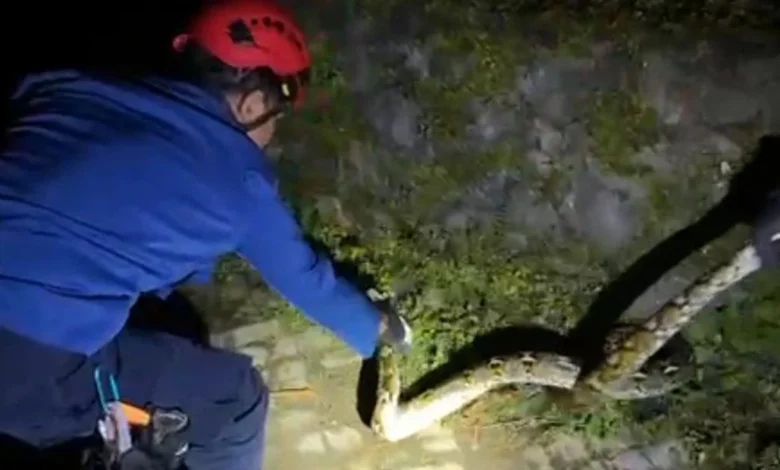
Semarang, Indonesia – A four-meter-long python was discovered by a resident of a boarding house in the Kramas sub-district of Banyumanik, Semarang City, Indonesia, early Monday morning, prompting an immediate response from the local fire department. The large reptile was found by Saktia Putra Arie Milwani, a tenant, as he returned to his accommodation around 2:30 AM Western Indonesian Time (WIB). The discovery was made amidst dense shrubbery situated directly in front of his rented room, creating a startling encounter for the returning resident.
The unexpected presence of the python in such close proximity to residential units immediately raised concerns, prompting Mr. Milwani to contact the Semarang City Fire and Rescue Department (Damkar Kota Semarang) for assistance in safely removing the snake. The department dispatched a specialized team to handle the delicate operation.
The Discovery and Initial Response
According to Tantri Pradono, Head of Operations and Rescue at the Semarang City Fire and Rescue Department, the tenant had just arrived back at his boarding house when he noticed the large snake. "The person had just returned and saw a snake in front of the boarding house, you know, there are bushes in front. Then they called the fire department," Pradono stated in a phone interview with detikJateng.
The python was reportedly found coiled within the thick vegetation, remaining stationary, which significantly aided the subsequent rescue efforts. Pradono confirmed the snake’s impressive size, estimating its length at approximately four meters, and identified it as a python species. "The snake happened to be motionless, just in the bushes. Its length was about 4 meters, a python type," he elaborated.
Rescue Operation: A Swift and Uneventful Evacuation
The Semarang City Fire and Rescue Department mobilized five personnel to the scene to undertake the snake’s evacuation. The operation was described as smooth and largely uncomplicated due to the snake’s docile behavior and its predictable location. "The evacuation process went smoothly because the snake’s position remained still, right in front of the boarding house," Pradono explained.
The rescue team followed established protocols for handling large constrictors. Firefighters first carefully secured the snake’s head to prevent any sudden movements or defensive actions. This was immediately followed by securing the rest of its body. The large python was then carefully placed into a blue drum for transport.
Aftermath and Relocation
Following its successful and safe evacuation from the residential area, the python was transported to the main headquarters of the Semarang City Fire and Rescue Department, located in the Semarang Barat sub-district. The snake is currently being held at the Damkar facility.
"It is now at the Mako Damkar," Pradono confirmed. The department typically handles such animal rescue incidents, often relocating the animals to safer, more suitable habitats away from populated areas to prevent future conflicts.
Context of Urban Wildlife Encounters in Semarang
This incident is not entirely unprecedented in urban and peri-urban environments across Indonesia, where human settlements often encroach upon natural habitats. Semarang, a major port city and the capital of Central Java province, is characterized by a mix of dense urban areas, industrial zones, and pockets of remaining natural vegetation, particularly in its hilly outskirts. The Banyumanik sub-district, where the discovery occurred, is known for its more suburban character, with residential areas interspersed with green spaces and some undeveloped land, which can serve as habitats for various wildlife, including reptiles.
The presence of pythons, particularly Reticulated Pythons (Malayopython reticulatus), is common in Southeast Asia, including Indonesia. These snakes are apex predators and are known for their camouflage abilities, often blending seamlessly into their surroundings. While generally not aggressive towards humans unless provoked or threatened, their large size and constricting capabilities necessitate caution and professional handling when encountered in close proximity to human habitation.
Contributing Factors and Potential Implications
The timing of the discovery, in the early hours of the morning, suggests the python may have been active during its nocturnal hunting period or seeking a cooler environment. The proximity of the boarding house to shrubbery provides a plausible explanation for the snake’s presence. Urban development and habitat fragmentation are often cited as primary drivers for increased encounters between humans and wildlife. As natural environments shrink, animals are forced to adapt and venture into human-dominated landscapes in search of food, water, or shelter.
The successful and swift evacuation by the Damkar team highlights the importance of trained emergency responders in managing human-wildlife conflicts. Such incidents, while potentially alarming, are generally resolved without harm to either the animal or the public when handled by experienced professionals.
The long-term implications of such encounters often revolve around conservation efforts and community awareness. Educating residents on how to react safely and responsibly when encountering wildlife, and promoting coexistence strategies, are crucial. Furthermore, understanding the ecological role of species like pythons, which help control rodent populations, can foster a more balanced perspective on their presence in the environment.
The Semarang City Fire and Rescue Department’s role in these situations is vital, not only in immediate rescue operations but also in potentially educating the public about local fauna and safety measures. The relocation of the python to a secure facility ensures it poses no further threat to residents and allows for its eventual release into a more appropriate natural environment, contributing to the preservation of local biodiversity. The department’s prompt action in this instance prevented potential panic and ensured the safe resolution of an unusual encounter.
Related posts: