The Premier League 2025/2026 Title Race Nears Thrilling Climax as Goal Difference Looms Large for Arsenal and Manchester City.

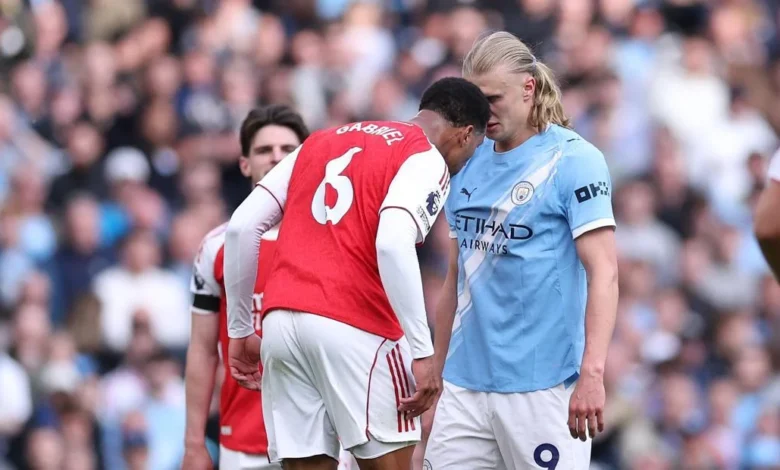
Jakarta – The highly anticipated conclusion to the Premier League 2025/2026 season is poised to deliver a dramatic finish, with Arsenal and Manchester City locked in a fiercely contested battle for the coveted title. As the season enters its final weeks, the margin for error has dwindled to virtually nothing, and both clubs are acutely aware that mere victories may not suffice; an aggressive pursuit of goals could be the decisive factor in crowning the champions. The recent clash between the two titans at the Etihad Stadium, which saw Manchester City emerge with a narrow 2-1 victory on Sunday, April 19, 2026, has only intensified this already nail-biting scenario, setting the stage for one of the most compelling title run-ins in recent memory.
The Current Standings and the Goal Difference Conundrum
Following the pivotal encounter, Arsenal currently occupies the top spot in the Premier League table, accumulating 70 points from 33 matches played. Their closest rivals, Manchester City, sit just behind them in second place with 67 points, crucially having played one game less. This disparity in games played sets up a direct opportunity for City to draw level on points and potentially overtake Arsenal at the summit during the upcoming midweek fixtures. Should Manchester City secure a victory against Burnley in their outstanding fixture, they would match Arsenal’s 70 points.
However, the intricacies of the Premier League tie-breaker rules introduce an additional layer of complexity. If teams are level on points, the title is decided first by goal difference (GD), and then by goals scored (GS). As it stands, Arsenal possesses a goal difference of +37, while Manchester City trails slightly with +36. Should City triumph over Burnley by any margin, their goal difference would at least equal Arsenal’s, pushing the tie-breaker to the next criterion: goals scored. Here, Manchester City currently holds an advantage, having netted 65 goals compared to Arsenal’s 63. This means that a single-goal victory for City against Burnley would not only draw them level on points but also propel them to the top of the table based on a superior number of goals scored, assuming their goal difference becomes equal or better.
This statistical tightrope dictates a radical shift in tactical approach for both teams. From this point forward, every goal scored and every goal conceded will carry immense weight. The imperative is clear: win, but win comprehensively. Both Arsenal and Manchester City must now strive for dominant performances, converting every possible scoring opportunity, as the difference between a 1-0 win and a 3-0 win could ultimately decide the destination of the Premier League trophy.
A Pivotal Encounter: Manchester City Edges Arsenal
The 2-1 victory for Manchester City over Arsenal at the Etihad on April 19, 2026, was more than just three points; it was a psychological blow and a tactical masterclass that reshaped the immediate landscape of the title race. The match, anticipated as a potential title decider, lived up to its billing, showcasing high-octane football, tactical adjustments, and moments of individual brilliance. City’s disciplined performance, coupled with their clinical finishing, allowed them to capitalize on crucial moments, demonstrating their seasoned experience in high-pressure encounters. For Arsenal, the defeat, though narrow, meant surrendering control over their destiny. While still leading the pack, the Gunners now face the added pressure of not only winning their remaining games but also needing to outperform City in terms of goal tally, or hope for a slip-up from their rivals.
The match itself was a testament to the evolving rivalry between Mikel Arteta’s Arsenal and Pep Guardiola’s Manchester City. It underscored City’s relentless pursuit of domestic dominance and Arsenal’s continued maturation as genuine title contenders. The result injected a fresh wave of excitement into the league, ensuring that the final weeks would be anything but predictable.
Historical Precedents: The Ghost of Goal Difference Past
The current scenario evokes powerful memories of past Premier League (and First Division) title races decided by the narrowest of margins, particularly goal difference. The most celebrated example in the Premier League era occurred in the 2011/2012 season. Manchester City, under Roberto Mancini, famously snatched the title from their city rivals, Manchester United, on the final day of the season. Both teams finished with 89 points, but City’s superior goal difference of +64 trumped United’s +56, primarily thanks to Sergio Agüero’s iconic last-gasp goal against Queens Park Rangers. That season became a permanent fixture in Premier League folklore, a testament to the fact that every goal truly counts.
Even further back, the 1988/1989 First Division season saw Arsenal themselves win the title from Liverpool in dramatic fashion. Heading into the final match at Anfield, Arsenal needed to win by two clear goals to clinch the championship. A 2-0 victory, sealed by Michael Thomas in the dying seconds, saw them finish level on points (76) with Liverpool, but with a superior goals scored record (73 vs 65), as goal difference was identical (+37 for both). These historical precedents serve as a stark reminder for both Arsenal and Manchester City of the fine margins at play and the profound impact that an extra goal, or indeed a prevented goal, can have on the ultimate outcome.
The Journey to Contention: Arsenal’s Resurgence
Arsenal’s presence at the top of the table is a culmination of several seasons of meticulous rebuilding under manager Mikel Arteta. Following a period of relative decline post-Arsène Wenger, the club has systematically invested in young talent, fostered a cohesive team spirit, and instilled a clear tactical identity. The 2025/2026 season has seen the Gunners demonstrate remarkable consistency, showcasing an attacking flair combined with a newfound defensive resilience. Key signings and the continued development of homegrown stars have propelled them back into the elite echelon of English football.
Their journey to this point has not been without its challenges. Early in the season, Arsenal showcased blistering form, often dominating opponents and building a comfortable lead. However, a mid-season wobble, characterized by draws against resilient opponents and a couple of unexpected defeats, allowed Manchester City to close the gap. The Gunners have since rediscovered their winning momentum, but the pressure of a relentless City side has meant that every match has become a high-stakes affair. The experience gained from their strong, albeit ultimately unsuccessful, title challenge in previous seasons has undoubtedly contributed to their current resilience, making them a more formidable and mentally tougher outfit.
Manchester City’s Relentless Pursuit: Chasing History
Manchester City, under the stewardship of Pep Guardiola, continues its pursuit of unprecedented domestic dominance. Having lifted multiple Premier League titles in recent years, their relentless consistency and tactical innovation remain unmatched. The 2025/2026 season has seen City maintain their characteristic high standards, overcoming early-season challenges and demonstrating their formidable squad depth. Their ability to integrate new talent while maintaining the core of their championship-winning squad has been a cornerstone of their sustained success.
City’s title charge often follows a familiar pattern: a steady accumulation of points, sometimes trailing early leaders, followed by an almost unstoppable surge in the latter half of the season. This campaign has been no different. Despite navigating demanding schedules across multiple competitions – including the UEFA Champions League and domestic cups – Guardiola’s squad has managed to maintain peak performance. Their ability to score goals from various sources, coupled with a robust defensive structure, makes them incredibly difficult to beat, especially when the stakes are highest. Their pursuit of another Premier League title is not merely about silverware; it is about cementing their legacy as one of the greatest English football teams of all time.
The Road Ahead: Remaining Fixtures and Strategic Implications
The remaining fixtures for both Arsenal and Manchester City will be scrutinized with unparalleled intensity. While specific match-ups for the 2025/2026 season’s final weeks are hypothetical, a typical Premier League run-in often includes a mix of challenging encounters against top-half teams, potential banana skins against relegation-threatened sides, and seemingly straightforward matches against mid-table clubs.
For Arsenal, the strategic imperative will be to maintain their defensive solidity while maximizing their attacking output. Games against teams fighting for European qualification or battling to avoid the drop often prove tricky, as these opponents have their own desperate motivations. Mikel Arteta will need to ensure his squad remains focused, avoiding complacency, and capitalizing on every scoring opportunity to bolster their goal difference and goals scored tally. Rotational strategies, managing player fatigue, and dealing with potential injuries will be paramount.
Manchester City, with their deep squad, may have a slight advantage in managing fixture congestion. Pep Guardiola will likely continue to rotate key players, ensuring freshness and minimizing the risk of burnout. Their approach will be aggressive, aiming to dominate possession and create numerous scoring chances in every match. The psychological boost of potentially taking the lead this midweek could provide crucial momentum. For City, every match is a chance to not only secure three points but also to add to their goal count, putting further pressure on Arsenal.
Voices from the Camps: Managers and Captains Weigh In
The pressure on the managers and players is immense, and their public statements often reflect the high stakes involved. Arsenal captain Martin Odegaard’s sentiment, "Everything is still possible – and this is the best part of the season. Everything is still possible, so we’ll just look forward to the next game now, and go on from there," encapsulates the hopeful yet pragmatic mood within the Arsenal camp. It speaks to a belief in their capabilities while emphasizing the need to focus on one game at a time.
Mikel Arteta, known for his intense focus and tactical acumen, would undoubtedly echo this sentiment, stressing the importance of mental fortitude and execution. "We know what is required of us. Every match is a final. We must perform with conviction, fight for every ball, and be clinical in front of goal. The support of our fans will be vital in these last weeks," he might logically infer to say, reflecting the unified front he often presents.
On the other side, Pep Guardiola, ever the master of managing expectations and maintaining intensity, would likely convey a similar message of singular focus. "We do not look at the table, we look at the next training session, the next opponent. We know our quality, we know our responsibility. We must be consistent, we must be excellent, and we must score goals. This is the Premier League; nothing is given," a statement that aligns with his typical philosophy of process over outcome. The unspoken understanding within both camps is that the chase for goal difference adds an extra layer of strategic thinking to every offensive and defensive play.
Beyond the Pitch: Squad Depth, Injuries, and Mental Fortitude
Beyond the tactical battles and statistical permutations, several other factors will play a crucial role in the outcome of this title race. Squad depth is paramount, especially as both teams navigate potential injury crises or suspensions in the grueling final weeks. Manchester City, renowned for its extensive and high-quality squad, often has the edge in this department, allowing Guardiola to rotate players without a significant drop in quality. Arsenal, while having strengthened their roster, will be keenly aware of the impact any key injuries to their starting XI could have.
The mental fortitude of the players will also be tested to its limits. The pressure of a title race, especially one decided by such fine margins, can be immense. The ability to perform under extreme scrutiny, to bounce back from setbacks, and to maintain focus until the final whistle of the final game will distinguish the champions from the runners-up. The psychological battle between the two teams, amplified by the head-to-head result and the goal difference situation, will be as compelling as the physical one.
Broader Implications for Premier League Supremacy
This 2025/2026 Premier League title race, irrespective of its eventual winner, carries broader implications for the narrative of English football. For Arsenal, winning the title would signify a complete return to the pinnacle of the sport, validating Arteta’s long-term vision and solidifying their status as a consistent powerhouse. It would end a significant drought and potentially usher in a new era of dominance for the North London club.
For Manchester City, another title would further cement their legacy as one of the most dominant teams in Premier League history, continuing their incredible run of success under Pep Guardiola. It would be a testament to their sustained excellence, strategic recruitment, and unwavering commitment to an ambitious footballing philosophy.
The intensity of this particular race, with goal difference playing such a critical role, also highlights the hyper-competitiveness of the Premier League itself. It underscores that every decision, every performance, and indeed, every goal throughout a 38-game season can contribute to the ultimate triumph or heartbreak. As the league prepares for a grandstand finish, football fans worldwide are bracing themselves for what promises to be an unforgettable conclusion to the 2025/2026 Premier League campaign. The stage is set for an enthralling climax where strategy, skill, and sheer determination will collide, making every single goal a potential kingmaker.
Related posts: