United States Military Deploys Advanced Robotic Systems for Critical Mine Clearance in Strait of Hormuz

The United States military has initiated a significant deployment of sea drones and other robotic systems to assist in mine clearance operations within the strategically vital Strait of Hormuz. This critical endeavor, first reported by the Wall Street Journal, involves the U.S. Navy utilizing a sophisticated combination of manned and unmanned systems to meticulously scan for and neutralize potential naval mines that could impede navigation through the narrow waterway, a conduit through which approximately one-fifth of the world’s total supply of oil and liquefied natural gas (LNG) passes daily. A U.S. defense official confirmed that these efforts constitute a crucial part of broader mine countermeasures (MCM) operations aimed at ensuring the unimpeded reopening of this essential global shipping lane. Military analysts, speaking to the media, underscored the efficiency of such advanced systems, noting that initial seabed surveys can be rapidly conducted using unmanned underwater vehicles (UUVs). Once a mine is detected and positively identified, specialized robotic sea vehicles can then be dispatched to neutralize or destroy the explosive device, mitigating risk to human personnel. Kevin Donegan, a former U.S. Navy Admiral, highlighted the speed and efficacy of these modern technologies, stating, as quoted by News18, that small shipping lanes can be thoroughly surveyed within a matter of days using such integrated systems.
The Strategic Nexus: Strait of Hormuz’s Global Importance
The Strait of Hormuz is arguably the world’s most important oil transit choke point, connecting the oil-rich Persian Gulf to the Gulf of Oman and the Arabian Sea. Its narrowest point is only about 21 nautical miles (39 kilometers) wide, with the shipping lanes themselves being just two miles wide in each direction, separated by a two-mile buffer zone. This geographic constraint makes it exceptionally vulnerable to disruption. Approximately 21 million barrels per day (bpd) of crude oil, condensates, and refined petroleum products transited the Strait in 2018, representing about one-third of total global seaborne oil trade and nearly 20% of total global oil consumption. Key oil exporters like Saudi Arabia, Iran, Iraq, Kuwait, Qatar, and the United Arab Emirates rely heavily on this passage to transport their hydrocarbon resources to international markets. Furthermore, Qatar, the world’s largest exporter of LNG, sends virtually all of its LNG shipments through the Strait. Any prolonged closure or significant impediment to transit in the Strait of Hormuz would trigger a severe energy crisis, sending oil and gas prices soaring, destabilizing global markets, and potentially leading to a worldwide economic recession. The deployment of advanced mine clearance technology by the U.S. is therefore not merely a tactical military operation but a strategic effort to safeguard global economic stability and energy security.
Escalating Tensions: A Backdrop of Geopolitical Friction
This latest U.S. military action unfolds against a backdrop of persistently high tensions between the United States and Iran. The relationship has been fraught with challenges, particularly since the U.S. withdrew from the Joint Comprehensive Plan of Action (JCPOA), commonly known as the Iran nuclear deal, in 2018 and reimposed stringent sanctions on Tehran. These sanctions have severely impacted Iran’s economy, particularly its vital oil exports, leading to a tit-for-tat cycle of retaliatory measures and heightened rhetoric.
Iran has consistently maintained that it will not permit normal maritime traffic to resume through the Strait of Hormuz unless the U.S. lifts its blockades on Iranian ports. This stance frames the strait’s navigability as a leverage point in its broader confrontation with Washington. Historically, Iran has demonstrated a willingness to threaten or interfere with shipping in the strait during periods of elevated tension, employing tactics ranging from harassment of commercial vessels to the suspected deployment of naval mines. Previous incidents have included attacks on oil tankers in 2019, which the U.S. and its allies attributed to Iran, as well as the seizure of commercial vessels.
Iran’s Shifting Stance and Mine Threats
The immediate catalyst for the current mine clearance operation appears to be Iran’s recent, erratic behavior regarding the strait’s status. Following a ceasefire related to fighting involving Israel and Hezbollah—a regional conflict that typically sees heightened vigilance from Iran—Tehran had briefly reopened the strait. This move had initially sparked hopes for a return to regional stability and contributed to a temporary dip in global oil prices, as market fears of supply disruption eased. However, Iran abruptly reversed this decision just one day later. In a move that significantly raised alarm bells in international maritime circles, Tehran issued a stark warning to commercial vessels, advising them to avoid the primary shipping lanes and instead utilize routes closer to Iran’s coastline, citing the presence of a "mine threat."
This sudden declaration of mines in the vital international waterway, particularly after a brief period of opening, has been widely interpreted by defense analysts as a deliberate tactic by Iran to assert control, exert pressure, and potentially deter foreign naval presence or commercial shipping without direct engagement. The implication of such a threat is clear: to sow uncertainty and fear, thereby disrupting commerce and escalating the geopolitical stakes.
The Threat Profile: Iran’s Modern Mine Arsenal
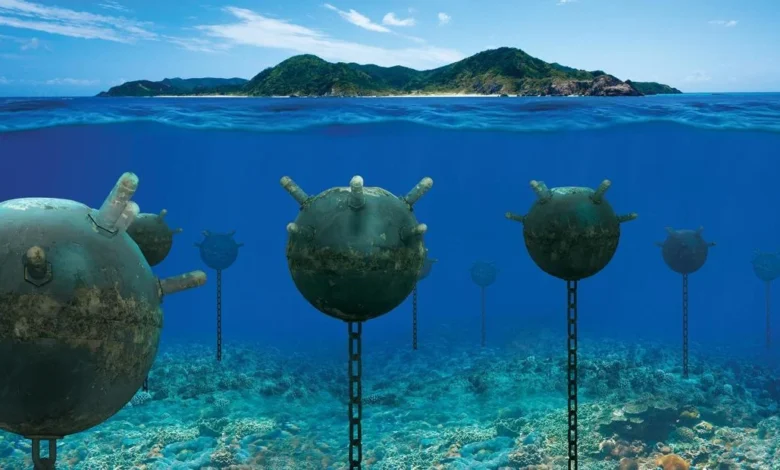
The U.S. military’s concern is particularly focused on two specific types of naval mines believed to be deployed by Iran in the Strait of Hormuz: the Maham 3 and Maham 7. These are not rudimentary, contact-detonated devices of earlier eras. Instead, they represent a more modern and sophisticated class of naval mines designed to be harder to detect and more effective in their destructive capability.
Unlike older mines that rely on direct physical contact between a ship’s hull and a mechanical trigger, the Maham 3 and Maham 7 utilize advanced sensor technology. Both variants are equipped with magnetic and acoustic sensors, which allow them to detect the unique magnetic signature and propeller cavitation noise of a passing vessel. This enables them to detonate when a ship is in close proximity, rather than requiring a direct impact, significantly increasing their lethality and making evasion more challenging.
- Maham 3: This is an anchor mine, weighing approximately 300 kilograms (660 pounds). Anchor mines are typically moored to the seabed by a cable, allowing them to float at a predetermined depth beneath the surface. The Maham 3 is reportedly capable of being deployed in waters up to 100 meters (approximately 328 feet) deep. Its substantial explosive charge poses a significant threat to large commercial vessels, including oil tankers, as well as naval warships.
- Maham 7: In contrast, the Maham 7 is a seabed mine, weighing around 220 kilograms (485 pounds). Seabed mines are designed to lie directly on the seafloor, often in shallower waters. A distinctive feature of the Maham 7 is its conical shape, which is specifically engineered to evade detection by conventional sonar systems. By presenting a challenging profile to sonar waves, it can remain hidden on the seabed, posing a covert threat to vessels traversing the shallower parts of the strait.
The deployment of such modern, sensor-activated mines underscores Iran’s investment in asymmetric warfare capabilities aimed at disrupting maritime traffic in a high-stakes environment. Their presence necessitates the use of equally advanced countermeasures, making the U.S. robotic deployment particularly crucial.
Technological Vanguard: The Role of Unmanned Systems in Mine Countermeasures
The U.S. Navy’s reliance on sea drones and robotic systems for mine clearance marks a significant evolution in mine countermeasures (MCM) strategy. Traditional MCM operations are inherently dangerous, requiring manned minehunters to navigate potentially mined waters, often involving divers in hazardous conditions. Unmanned systems revolutionize this by removing human operators from the immediate vicinity of danger.
- Unmanned Underwater Vehicles (UUVs): These autonomous vehicles can be pre-programmed to follow specific search patterns, equipped with high-resolution sonar, magnetic anomaly detectors, and optical sensors to identify objects on the seabed or floating in the water column. They can operate for extended periods, covering vast areas more efficiently and safely than manned vessels. Data collected by UUVs is then transmitted back to a control station, often on a mothership, for analysis by human experts.
- Remotely Operated Vehicles (ROVs): Once a potential mine is identified by a UUV, an ROV, tethered to a surface vessel for power and communication, can be deployed. These vehicles are maneuverable and often equipped with cameras, lights, and manipulator arms. They can approach the suspected mine, provide visual confirmation, and then either attach a neutralizer charge or use specialized tools to disarm or destroy the mine remotely. This "detect-classify-identify-neutralize" sequence is made significantly safer and faster through the integration of these robotic platforms.
The agility, persistence, and expendability of these robotic systems make them ideal for the challenging environment of the Strait of Hormuz, where time is of the essence and the risk to human life must be minimized.
International Law and Freedom of Navigation
The U.S. mine clearance operation also implicitly asserts the principle of freedom of navigation, a cornerstone of international maritime law enshrined in the United Nations Convention on the Law of the Sea (UNCLOS). This principle dictates that all nations, whether coastal or landlocked, enjoy the right to navigate the high seas and transit through international straits for passage. The Strait of Hormuz is recognized as an international strait, making any attempt to impede or restrict innocent passage a violation of international law.
The U.S. and its allies consistently conduct Freedom of Navigation Operations (FONOPs) globally to challenge what they perceive as excessive maritime claims and to uphold these international norms. The current mine clearance effort can be seen as a practical extension of this commitment, ensuring that a vital artery for global commerce remains open and safe for all legitimate traffic, despite unilateral threats or actions by any state.
Broader Implications and Outlook
The situation in the Strait of Hormuz carries profound implications across several dimensions:
- Geopolitical Ramifications: The U.S. deployment signals a firm resolve to counter Iranian attempts at destabilization in a critical region. It underscores the potential for miscalculation and escalation, as both sides operate with high stakes. The presence of advanced military technology from a major power in such a contested space always carries the risk of unintended confrontations, particularly if Iranian forces perceive these operations as a provocation.
- Economic Impact: While the immediate effect of the mine clearance operation is to reassure markets, any prolonged uncertainty or future disruptions in the Strait of Hormuz would inevitably lead to spikes in oil and gas prices, increased shipping insurance premiums, and potential delays in global supply chains. The cost of securing maritime routes in such environments directly impacts global trade efficiency.
- Technological Evolution in Warfare: This deployment highlights the increasing sophistication and indispensable role of autonomous and robotic systems in modern military operations, particularly in hazardous tasks like mine countermeasures. It previews a future where human soldiers are increasingly augmented or replaced by machines in dangerous environments, pushing the boundaries of military technology and doctrine.
- Regional Stability: The incident further complicates efforts to de-escalate tensions in the broader Middle East. While a ceasefire in one conflict may have briefly offered hope, the continued maritime standoff in the Strait of Hormuz remains a flashpoint that could reignite broader regional instability.
As the U.S. military meticulously works to clear the potential mine threat, the eyes of the world remain fixed on the Strait of Hormuz. The success of this operation is not just a matter of military efficacy but a critical determinant of global energy security, economic stability, and the delicate balance of power in one of the world’s most volatile regions. The ongoing deployment serves as a stark reminder of the continuous challenges to maintaining freedom of navigation and the intricate dance of diplomacy and deterrence required to safeguard international waterways.
Related posts: