Kemendikdasmen Announces Strategic Roadmap for Large-Scale CPNS Teacher Recruitment Starting in 2027

The Ministry of Basic and Secondary Education (Kemendikdasmen) has officially unveiled a comprehensive strategic roadmap for the recruitment of civil servant (CPNS) teachers, set to commence in 2027. This initiative, designed to address the persistent imbalances in the national education workforce, marks a significant shift toward a data-driven and region-specific allocation strategy. By moving away from a uniform, nationwide quota system, the government aims to rectify critical shortages in high-demand areas while ensuring fiscal responsibility and long-term sustainability.
The Strategic Framework for 2027
According to Nunuk Suryani, the Director General of Teachers and Education Personnel (Dirjen GTK) at Kemendikdasmen, the 2027 recruitment process will not be a singular event but rather the initiation of a multi-year effort. Addressing participants during a recent digital engagement session, Nunuk emphasized that the logistical and administrative complexities of managing such a massive workforce intake necessitate a phased approach.
The core philosophy behind this recruitment drive is "prioritization based on necessity." Unlike previous iterations of CPNS selection, which often drew criticism for failing to account for localized teacher-to-student ratios, the 2027 framework integrates real-time data from regional educational offices. This ensures that districts with the most acute vacancies receive the largest share of the available human capital.
Geographical Distribution and High-Need Regions
The Ministry has identified specific provinces that currently bear the brunt of teacher shortages. Based on current vacancy projections, West Java, Central Java, and East Java occupy the top three positions in terms of demand. These regions, characterized by high population density and a large number of primary and secondary schools, have been designated as the primary focus for the initial rollout.
Nunuk clarified that the distribution of positions will be strictly proportional to the documented needs of each province. "We are moving away from the ‘one-size-fits-all’ approach. If a province demonstrates a high deficit in educators, they will naturally be the recipients of the highest number of CPNS formations," she explained. This policy is expected to reduce the reliance on contract-based (non-ASN) teachers in these regions, who have historically filled gaps without the stability or benefits afforded to permanent civil servants.
Subject-Specific Prioritization
In addition to geographical considerations, the Ministry is applying a granular analysis to subject-specific shortages. The recruitment roadmap recognizes that a surplus of educators in one discipline does not mitigate the crisis in another. For instance, if a specific regency or city reports a surplus of English language teachers but a severe shortage of mathematics or science educators, the 2027 recruitment quota for that district will be tilted toward the latter.
This targeted approach has direct implications for current non-ASN educators. The Ministry acknowledged that many contract teachers who previously failed to secure permanent status did so because they specialized in subjects where supply currently meets or exceeds demand. By realigning the recruitment process with current market needs, the Ministry hopes to streamline the professionalization of the existing workforce while simultaneously opening doors for new entrants who possess the skills most critically required by the national curriculum.
The Chronology of the Roadmap
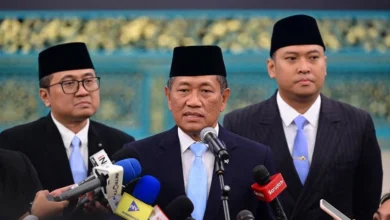
The formal proposal for this recruitment cycle was presented by the Minister of Basic and Secondary Education, Abdul Mu’ti, to the leadership of the House of Representatives (DPR RI) and the Ministry of Finance. The proposal outlines a three-year implementation phase designed to fulfill a total requirement of 464,000 teacher positions across the country.
The distribution timeline is as follows:
- 2027: The initiation phase, aiming to fulfill 30% of the total requirement (approximately 139,200 positions).
- 2028: The second phase, targeting another 30% of the requirement.
- 2029: The final phase of the current roadmap, aiming for the remaining 40% of the total requirement.
Minister Mu’ti emphasized that these figures are inherently dynamic. The Ministry maintains a fluid database that accounts for annual retirements, administrative transfers, and the establishment of new school units. Consequently, the roadmap remains subject to periodic adjustments to ensure that the supply of new teachers consistently matches the evolving educational landscape.
Contextual Background and National Teacher Shortage
The impetus for this massive recruitment drive lies in a decade-long struggle to balance the national teacher workforce. For years, Indonesia has relied heavily on honorary teachers—non-ASN staff who are paid significantly less than their civil servant counterparts and lack job security. This reliance has created a two-tiered system that often hampers long-term educational quality.
As of late 2026, the national shortage is estimated to include approximately 178,000 non-ASN teachers who are eligible for transition into permanent roles, provided they meet the competency requirements and fit the identified regional needs. The integration of these individuals is a primary objective of the 2027 roadmap, reflecting a commitment to professionalizing the teaching workforce while minimizing the socioeconomic precarity of current contract workers.
Economic and Administrative Implications
The involvement of the Ministry of Finance in the planning stages highlights the significant fiscal burden of the recruitment program. Each new civil servant adds to the national and regional salary expenditure, requiring careful coordination between the central government and local administration budgets.
Financial analysts note that the phased approach (30%-30%-40%) is a strategic move to manage the budgetary impact. By spreading the intake over three years, the government avoids a sudden, unsustainable spike in the national payroll. Furthermore, the focus on high-need regions ensures that the investment yields the highest possible impact on national literacy and numeracy rates, which are the primary benchmarks for the Ministry’s performance.
Reactions and Broader Educational Impact
The announcement has been met with cautious optimism from various education stakeholders. Teachers’ unions and pedagogical associations have praised the move toward a transparent, data-driven roadmap, noting that the predictability of the 2027-2029 schedule allows for better career planning for aspiring educators. However, concerns remain regarding the rigorousness of the selection process. Critics argue that simply increasing numbers is insufficient; the government must also ensure that the recruitment process filters for high-quality candidates capable of meeting the demands of a modern, digital-era curriculum.
For prospective teachers, the 2027 cycle represents a critical window of opportunity. The focus on regional and subject-specific needs means that candidates who are willing to relocate to high-need areas or who possess specialized skills in core subjects (STEM fields) will likely have a higher probability of success.
Future Outlook
As the Ministry moves toward the 2027 implementation date, the focus will shift to administrative preparation and the finalization of the quota database. The success of this policy will depend heavily on the accuracy of the data provided by regional governments and the Ministry’s ability to maintain a transparent, meritocratic selection process.
Ultimately, the 2027 recruitment roadmap serves as a cornerstone of the national strategy to revitalize the education sector. By institutionalizing a systematic, phased, and needs-based recruitment model, the Kemendikdasmen is signaling a departure from reactive hiring policies toward a proactive, long-term human resource strategy. If executed as planned, this initiative could fundamentally stabilize the teacher workforce, elevate the professional status of educators, and provide the consistency necessary for sustained improvements in the quality of education across the Indonesian archipelago. The eyes of the nation will remain fixed on the upcoming recruitment cycle as it sets the trajectory for the next generation of Indonesian pedagogical leadership.