Indonesia Considers Pertamax Price Adjustment Amidst Soaring Global Oil Prices, Government Vows to Maintain Subsidies


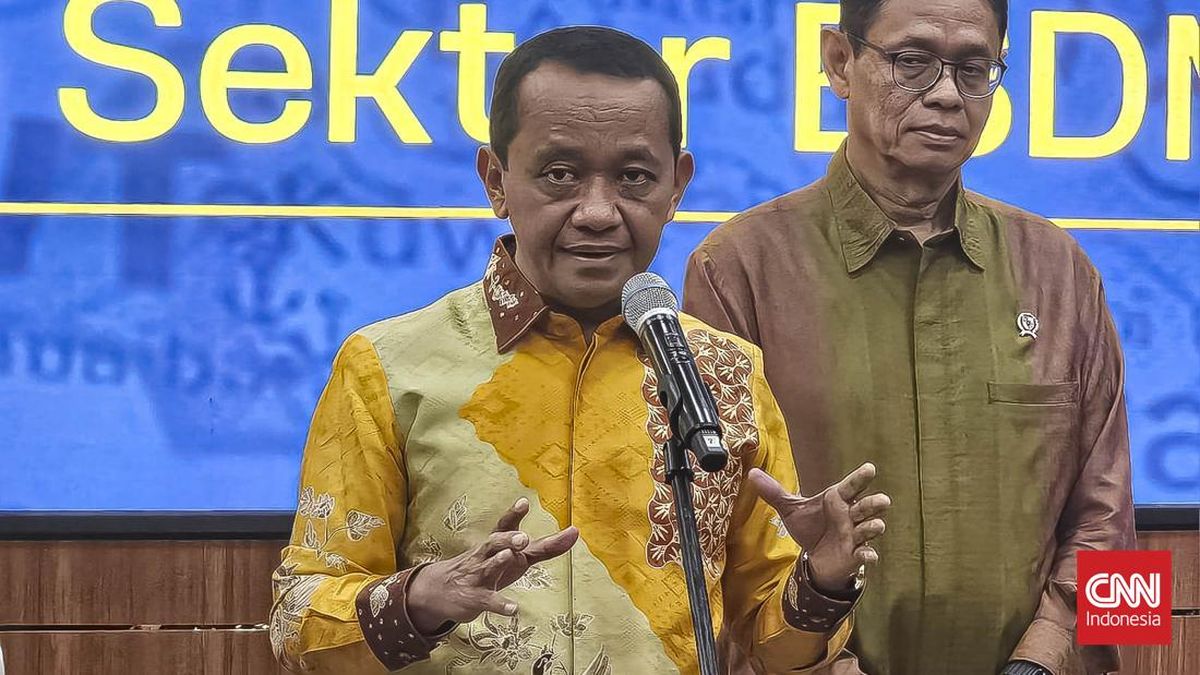
Jakarta, CNN Indonesia – The Indonesian government is signaling a potential adjustment in the price of non-subsidized fuel, specifically Pertamax, directly linking the decision to the volatile trajectory of global crude oil prices. Minister of Energy and Mineral Resources (ESDM) Bahlil Lahadalia affirmed that the pricing mechanism for non-subsidized fuels like Pertamax inherently follows international market dynamics. This pronouncement, made on Monday, April 20, 2022, highlights the nation’s struggle to insulate its domestic economy from external shocks while balancing fiscal responsibilities and public welfare. The minister’s statement underscores a critical juncture for Indonesia’s energy policy, differentiating clearly between market-driven prices for non-subsidized fuels and the steadfast commitment to shielding subsidized fuels from similar volatility.
Understanding Indonesia’s Fuel Pricing Landscape
Indonesia, a significant player in the global energy market and a member of OPEC (though currently a net oil importer), operates a dual-tier fuel pricing system. This system distinguishes between subsidized fuels, primarily Pertalite (gasoline) and Solar (diesel), and non-subsidized or commercial fuels, which include Pertamax, Pertamax Turbo, Dexlite, and Pertamina Dex. The subsidized fuels are crucial for a large segment of the population, particularly lower-income households, small and medium enterprises, and public transportation. Their prices are set by the government and are heavily cushioned by state funds through subsidies, aiming to maintain affordability and stabilize the cost of living. Conversely, non-subsidized fuels cater to a different market segment, typically those with higher purchasing power, and their prices are generally expected to reflect market realities. This distinction is vital for understanding the government’s current dilemma and its strategic approach to managing energy costs.
The Ministry of Energy and Mineral Resources (ESDM) plays a pivotal role in regulating the energy sector, including fuel pricing. State-owned energy giant PT Pertamina (Persero) is the primary distributor of fuel across the archipelago, tasked with implementing government policies while also operating as a commercial entity. Pertamina’s financial health is directly impacted by the gap between global crude oil prices and domestic retail prices, especially for non-subsidized fuels sold below market rates or for subsidized fuels where the subsidy compensation might not fully cover the cost.
Chronology of Recent Price Adjustments and the Pertamax Conundrum
The signal for a Pertamax price adjustment did not come in isolation but followed a series of increases for other non-subsidized fuel variants. As Minister Bahlil Lahadalia elaborated, several non-subsidized fuels had already seen significant price hikes in the preceding weeks, reflecting the upward trend in global crude oil benchmarks. For instance, Pertamax Turbo, a high-octane gasoline, experienced an increase from Rp13,100 per liter to Rp19,400 per liter. Similarly, Dexlite, a premium diesel variant, saw its price jump from Rp14,200 per liter to Rp23,600 per liter, and Pertamina Dex, another high-quality diesel, rose from Rp14,500 to Rp23,900 per liter. These adjustments, some of which represented increases of over 40-50%, were a direct consequence of the sustained surge in international oil prices.
However, Pertamax, which is a widely consumed non-subsidized gasoline with an octane rating of 92, had conspicuously remained at Rp12,300 per liter at the time of the minister’s statement. This price point, while higher than subsidized Pertalite, was increasingly diverging from its market-reflective peers. The government’s decision to hold Pertamax prices steady for a period, even as other non-subsidized fuels climbed, suggests a careful deliberation process, likely aimed at mitigating the immediate impact on a broader segment of consumers and managing public sentiment. Minister Bahlil hinted at a phased approach, stating, "I say that for non-subsidized BBM [fuel], there will be price adjustments. The first stage might be done now, like what we see. For the next stage, we will see the adjustments." This implies that the government and Pertamina were closely monitoring the situation, preparing for further adjustments if global oil prices continued their ascent.
Crucially, Minister Bahlil emphatically reiterated that subsidized fuels, Pertalite and Solar, would remain untouched by these market-driven adjustments. "The government can guarantee that these are subsidized prices, and the ESDM Minister Regulation 2022 already clearly outlines its formulation," he affirmed. This commitment to maintaining subsidized prices is a cornerstone of the government’s social protection strategy, especially in times of economic uncertainty and rising global commodity prices.
Global Oil Market Dynamics and Indonesia’s Fiscal Framework
The primary driver behind these price adjustment considerations was the dramatic increase in global crude oil prices throughout late 2021 and early 2022. Several geopolitical and economic factors converged to push oil benchmarks like Brent crude and West Texas Intermediate (WTI) well above historical averages. The post-pandemic economic recovery fueled a surge in demand for energy, while supply remained constrained due to years of underinvestment in the oil sector and cautious production policies by OPEC+ nations. The geopolitical tensions, particularly the escalating conflict between Russia and Ukraine which began in February 2022, further exacerbated the situation. Russia, a major global oil and gas producer, faced severe sanctions, disrupting supply chains and creating immense uncertainty in the market. As a result, Brent crude prices frequently surpassed the US$100 per barrel mark, even touching highs of over US$120 per barrel during this period.
Indonesia’s State Budget (APBN) for 2022 had initially projected an Indonesian Crude Price (ICP) – the average price of Indonesian crude oil – at US$70 per barrel. This assumption forms the basis for revenue projections from oil and gas and for calculating the necessary budget for fuel subsidies. However, with global prices consistently staying above US$90 per barrel, and often exceeding US$100 per barrel, the actual ICP was significantly higher than the budget assumption. This substantial discrepancy created a considerable fiscal strain. Every dollar increase in the average ICP above the budget assumption translates into a higher cost for fuel imports and a larger subsidy burden for the government if domestic fuel prices are to be maintained.
The financial burden on Pertamina also became immense. As a state-owned enterprise, Pertamina is expected to manage fuel supply and distribution across the vast archipelago, often at prices dictated or heavily influenced by the government. When global crude prices soar, Pertamina’s cost of procuring crude and refined products increases sharply. If it sells non-subsidized fuels like Pertamax at prices significantly below market value, it incurs commercial losses, impacting its profitability and investment capacity. This situation highlights the complex interplay between national energy security, fiscal policy, and the commercial viability of state-owned enterprises.
Inferred Reactions and Official Stances
While the original article focuses on Minister Bahlil’s statements, it is possible to infer reactions and official stances from various related parties, consistent with typical government and corporate responses in such scenarios.
- PT Pertamina (Persero): Pertamina, as the primary fuel distributor, would likely emphasize its commitment to ensuring national energy security and maintaining fuel availability across Indonesia. Facing commercial pressures, the company would logically welcome price adjustments for non-subsidized fuels, as it helps alleviate the financial strain from selling below cost. Pertamina’s management would likely reiterate that such adjustments are necessary to sustain its operations, invest in infrastructure, and ensure long-term energy supply, aligning with government directives while striving for commercial viability. They might also highlight their efforts to enhance efficiency and diversify energy sources.
- Ministry of Finance: The Ministry of Finance would be deeply concerned with the escalating fuel subsidy bill. The widening gap between the budgeted ICP and the actual global oil prices directly impacts the state’s coffers. The Ministry would advocate for fiscal prudence and sustainable budget management. While committed to protecting the public through subsidies, they would also be keenly aware of the opportunity cost of these subsidies, which could otherwise be directed towards infrastructure, education, or healthcare. They would likely support market-based adjustments for non-subsidized fuels to contain the overall subsidy expenditure.
- Economic Coordinating Ministry: This ministry would be tasked with overseeing the broader economic implications. They would balance the need for economic stability, controlling inflation, and maintaining purchasing power against the realities of global commodity prices. Their statements would likely emphasize the government’s comprehensive approach to economic management, including social safety nets, while acknowledging the necessity of adapting to global economic shifts. They might also stress the importance of encouraging energy efficiency and diversification.
- Bank Indonesia (Central Bank): Bank Indonesia’s primary mandate is price stability. Rising fuel prices, even for non-subsidized variants, contribute to inflationary pressures across the economy, as transportation costs affect the prices of goods and services. Bank Indonesia would likely express vigilance regarding inflation risks and might signal its readiness to implement monetary policy tools (e.g., interest rate adjustments) if inflation accelerates beyond target ranges, thereby safeguarding macroeconomic stability.
Broader Impact and Implications
The potential adjustment of Pertamax prices, alongside the already implemented increases for other non-subsidized fuels, carries significant economic, social, and political implications for Indonesia.
- Consumer Impact: Directly, the increase in Pertamax prices would affect millions of Indonesian motorists, particularly those owning private cars and motorcycles who opt for higher-octane fuel. While Pertamax users generally belong to the middle and upper-middle-income brackets, any increase in fuel prices inevitably has a ripple effect. Transportation costs for businesses that rely on Pertamax-fueled vehicles would rise, potentially leading to higher prices for goods and services. This indirect impact can affect all consumers, regardless of the type of fuel they use. The government’s commitment to holding subsidized fuel prices (Pertalite and Solar) steady is a crucial buffer, protecting the most vulnerable segments of society from direct impact on their daily commutes and essential goods. However, the psychological impact of any fuel price increase can be substantial, often leading to broader perceptions of rising living costs.
- Economic Impact: The most immediate economic concern is inflation. Fuel is a critical input cost across almost all sectors of the economy. Higher fuel prices can fuel cost-push inflation, making it more challenging for Bank Indonesia to achieve its inflation targets. While the adjustments are for non-subsidized fuels, the overall sentiment and indirect effects can still contribute to inflationary pressures. From a fiscal perspective, allowing non-subsidized fuel prices to float with market rates helps alleviate the financial burden on the state budget. If Pertamina were forced to sell Pertamax below cost, it would require government compensation or lead to reduced profitability, potentially impacting state dividends or requiring capital injections. By allowing market mechanisms to work for non-subsidized fuels, the government can better allocate its resources, focusing subsidies on those who need them most and freeing up funds for other developmental priorities.
- Political Implications: Fuel price increases are consistently a sensitive political issue in Indonesia. Past governments have faced significant public protests and political backlash following hikes in subsidized fuel prices. While the current adjustments target non-subsidized fuels, the government must still manage public perception carefully. The clear communication regarding the government’s unwavering commitment to maintaining subsidized fuel prices is a strategic move to mitigate widespread discontent. However, sustained high global oil prices and recurrent calls for price adjustments, even for non-subsidized fuels, can still create an environment of public anxiety and scrutiny of government economic policies. The government’s challenge lies in transparently explaining the economic realities while demonstrating its dedication to protecting the welfare of its citizens.
- Energy Transition and Sustainability: In the longer term, the volatile nature of fossil fuel prices reinforces the urgency for Indonesia to accelerate its energy transition towards renewable sources. While not directly addressed in the article, the economic imperative to reduce reliance on imported fossil fuels becomes stronger when global prices are high. Higher domestic fuel prices, even for non-subsidized variants, could also subtly encourage more efficient energy use and potentially shift consumer behavior towards more fuel-efficient vehicles or public transportation, although this effect is typically gradual.
Future Outlook and Government’s Continued Challenges
The outlook for global oil prices remains uncertain, heavily influenced by geopolitical developments, global economic recovery trajectories, and OPEC+ production policies. As long as these external factors keep crude oil prices elevated, the Indonesian government and Pertamina will continue to face the dilemma of balancing market realities with domestic affordability.
The government’s strategy appears to be a two-pronged approach: allowing non-subsidized fuels to adjust to market prices to manage Pertamina’s financial health and the state budget, while steadfastly protecting the prices of subsidized fuels to safeguard public welfare. This approach necessitates robust social safety nets and efficient targeting of subsidies to ensure that the intended beneficiaries receive the support.
Ultimately, Indonesia’s ability to navigate the volatile global energy landscape will depend on its capacity for flexible policy adjustments, transparent communication with the public, and continued efforts to strengthen its energy resilience through diversification and efficiency initiatives. The potential Pertamax price adjustment is not merely a change in numbers on a fuel pump; it is a microcosm of the broader economic challenges facing Indonesia in a rapidly changing global environment.
Related posts: