Navigating the Battery Subscription Model: A Comprehensive Guide to Affordable Electric Motorcycle Ownership in Indonesia

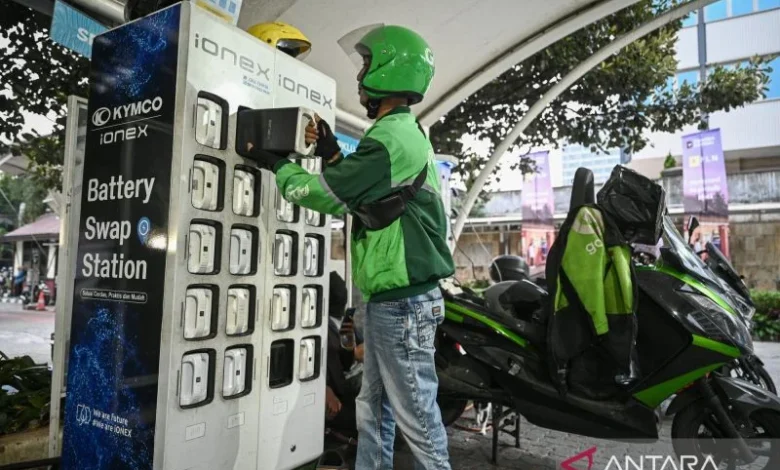
The landscape of electric vehicle (EV) ownership in Indonesia has undergone a significant structural transformation as of September 2026, driven primarily by the widespread adoption of battery subscription schemes. By decoupling the high cost of the battery—often the most expensive component of an electric motorcycle—from the vehicle chassis, manufacturers have successfully lowered the initial barrier to entry for consumers. This strategic shift is not merely a pricing adjustment; it represents a broader effort by the automotive industry to accelerate the electrification of Indonesia’s massive two-wheeler market, aligning with national goals for emission reduction and energy independence.
The Economic Rationale of Decoupled Ownership
Historically, the prohibitive upfront cost of electric motorcycles, exacerbated by the price of lithium-ion battery packs, has been the primary deterrent for potential buyers. In many cases, the battery accounts for 30% to 40% of the total vehicle cost. By moving toward a "Battery-as-a-Service" (BaaS) model, manufacturers allow consumers to purchase the motorcycle unit at a significantly reduced price while paying a recurring monthly fee for the use of the battery.
This model shifts the financial burden from a capital expenditure (CAPEX) to an operational expenditure (OPEX). For the average consumer, this translates to a more manageable monthly budget, akin to paying for fuel, while the manufacturer retains responsibility for the lifecycle management, maintenance, and eventual recycling of the battery cells.
Comparative Analysis of Leading Market Players
As of September 2026, several key players have solidified their market presence through varied subscription structures. The following breakdown details the current offerings from prominent manufacturers operating within the Indonesian market.
VinFast: Setting the Floor for Entry-Level Costs
VinFast has emerged as a aggressive competitor by offering one of the lowest entry points for battery subscription in the country. For its popular models—the Evo, Feliz II, and Viper—the company offers a tiered pricing structure based on the number of batteries utilized.
- Single Battery Configuration: Rp84,000 per month.
- Dual Battery Configuration: Rp144,000 per month.
VinFast’s model is particularly attractive to urban commuters, as these models are designed for easy battery swapping, allowing users to minimize downtime. By pricing their subscription starting at under Rp100,000, VinFast has positioned itself as the most accessible option for price-sensitive segments, including gig-economy workers and students.
Polytron: Performance-Oriented Subscription
Polytron has tailored its subscription model to reflect the varying performance capabilities of its "Fox" series. Unlike providers who offer a flat rate, Polytron’s pricing scales with the motor’s power output and intended use case.
- Fox 200: Rp125,000 per month.
- Fox 500 and Fox R: Rp200,000 per month.
Polytron has integrated a value-added service into this cost: a performance guarantee. According to company policy, users are entitled to a battery replacement if the state-of-health (SoH) drops below 85% under normal operating conditions. This provision mitigates the long-term risk of battery degradation, which has historically been a major consumer concern regarding second-hand EV values.
ALVA: Premium Service and Seamless Integration
ALVA targets the premium segment of the market with its "BEBAS" (Berlangganan Baterai Sewa) program. Designed for the N3 and CERVO models, the subscription fees are inclusive of taxes, providing a transparent cost structure for the user.
- ALVA N3 (Single Battery): Rp150,000 per month.
- ALVA N3 (Dual Battery): Rp250,000 per month.
- ALVA CERVO (Dual Battery): Rp250,000 per month.
ALVA’s approach emphasizes convenience, aiming to position the battery subscription as a seamless service that guarantees performance and safety without the consumer needing to worry about the technical nuances of battery chemistry or thermal management.
Chronology and Regulatory Context
The push for battery subscription models did not occur in a vacuum. It follows a series of government-led initiatives designed to meet the ambitious target of having millions of electric motorcycles on the road by 2030.
- 2023–2024: The government introduced various subsidies for new electric motorcycle purchases and conversion kits. However, market adoption remained lukewarm due to lingering concerns over battery longevity and resale value.
- Early 2025: Industry leaders and regulators recognized that subsidies alone were insufficient. Discussions shifted toward standardized battery swapping and leasing models to mirror successful Asian markets like Taiwan.
- Late 2025–2026: Manufacturers began formalizing subscription agreements as a standard industry practice, supported by government encouragement to reduce the nation’s dependence on fossil fuel imports for transportation.
Fact-Based Analysis of Market Implications
The transition to battery subscription models has significant implications for the Indonesian automotive ecosystem.
1. Lifecycle Management and Sustainability
When the consumer owns the battery, there is often a lack of clarity regarding end-of-life disposal. In a subscription model, the manufacturer remains the legal owner of the battery. This ensures that when a battery reaches its end-of-life (usually defined as 70-80% capacity), it is returned to the manufacturer for recycling or "second-life" applications, such as stationary energy storage for residential solar systems.
2. Data Collection and Grid Stability
Connected batteries allow manufacturers to monitor real-time health and usage patterns. This data is invaluable for improving future vehicle designs and could eventually be integrated into a smart grid, where swappable battery stations act as load-balancing nodes during peak electricity demand.
3. Secondary Market Dynamics
The subscription model effectively solves the "battery depreciation" problem in the secondary market. A buyer purchasing a used electric motorcycle under a subscription contract does not need to worry about the "hidden" cost of a failing battery; they simply continue the subscription, ensuring a more stable and transparent resale value for the motorcycle chassis.
Challenges and Consumer Considerations
While the benefits are clear, potential buyers must perform a thorough cost-benefit analysis before committing to a subscription.
- Total Cost of Ownership (TCO): Consumers should compare the cumulative cost of subscription fees over three to five years against the one-time cost of purchasing a battery outright. For high-mileage users, the subscription might prove more expensive in the long run.
- Flexibility and Contract Terms: Terms regarding cancellation, early termination, and battery replacement latency vary significantly by brand. Consumers are advised to scrutinize the service-level agreement (SLA) regarding how quickly a depleted or faulty battery can be replaced.
- Infrastructure Dependency: The subscription model often thrives on the availability of battery-swapping stations. Before purchasing, users must ensure that their daily routes are well-served by the manufacturer’s network of swapping or charging stations.
Official Stance and Future Outlook
Government officials, including representatives from the Ministry of Industry, have repeatedly emphasized that the expansion of the electric motorcycle ecosystem is a priority for the national economy. The goal is to lower energy imports, which have historically strained the state budget, by pivoting to domestic electricity production.
"The growth of the electric motorcycle population, now reaching over 280,000 units, is a testament to the success of collaborative efforts between the government and the private sector," a ministry spokesperson noted. As the industry matures, the focus is shifting from simply selling units to building a sustainable service infrastructure.
The legislative bodies, including the House of Representatives (DPR), are also pushing for the acceleration of the national battery industry. By localizing the production of battery cells, the cost of these subscription services is expected to decrease further as economies of scale are realized.
Conclusion
The battery subscription model in Indonesia is a critical pivot point in the nation’s journey toward electrification. By offering flexible, tiered pricing options from brands like VinFast, Polytron, and ALVA, the market is effectively democratizing access to electric mobility. While consumers must remain diligent regarding the terms and total cost of these services, the shift represents a maturing market that is increasingly prioritizing convenience, sustainability, and affordability. As technology improves and infrastructure expands, the "Battery-as-a-Service" model is likely to become the standard, rather than the exception, for the Indonesian two-wheeler market.
Related posts: