PAN Leadership Continuity Secured: Viva Yoga Mauladi Dismisses Rumors of Zulkifli Hasan Replacement as Baseless Hoax

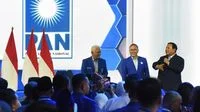
The internal stability of the National Mandate Party (PAN) has faced a renewed wave of speculative friction following the rapid dissemination of unverified reports across various digital platforms regarding an imminent change in the party’s highest office. Addressing these rumors head-on, the leadership of the political party has moved quickly to quell any potential disruption, labeling the circulating narratives as fabricated falsehoods designed to destabilize the organization from within. The claims, which began gaining traction following a gathering identified as the PAN Cadre Friendship Forum, suggested an abrupt transition in authority away from incumbent Chairman Zulkifli Hasan. However, senior party officials have categorically rejected these assertions, framing them as deliberate acts of political sabotage aimed at fracturing the solidarity of the party’s grassroots and elite membership alike.
The controversy underscores the delicate nature of political alignments within Indonesia’s contemporary democratic landscape, where digital communication channels can rapidly amplify unsubstantiated claims. As PAN continues to position itself strategically ahead of future electoral cycles, the swift containment of internal discord remains a primary objective for the party’s central executive board.
Denunciation of Rumors and Verification Efforts
The allegations regarding a leadership coup or forced transition surfaced prominently on social media following a meeting held by the Forum Silaturahmi Kader PAN on Monday, November 9. The digital whispers suggested deep-seated internal friction leading to a challenge against Zulkifli Hasan’s leadership tenure.
Responding to these claims on Tuesday, November 10, PAN Vice Chairman Viva Yoga Mauladi issued a definitive denial through an official statement. Mauladi emphasized that the party leadership did not merely dismiss the claims based on intuition but conducted direct verifications with key senior figures whose names were allegedly implicated in the discussions.
According to Mauladi, direct confirmations were sought and obtained from prominent party figures, including senior statesman Hatta Rajasa, Drajad Wibowo, and Bima Arya, among others. The unanimous consensus resulting from these inquiries was that the reports lacked any factual foundation.
"First, we have directly confirmed this with Bang Hatta Rajasa, Mas Drajad Wibowo, Mas Bima Arya, and others, and it turns out the news is a hoax, completely untrue, and merely garbage news polluting the democratic space in Indonesia," Mauladi stated in his official release.
Mauladi further characterized the rumors as a calculated maneuver intended to sow discord and provoke internal conflict among party members. He asserted that such malicious intentions are destined to fail, noting that the party’s collective focus remains firmly anchored on organizational consolidation and the execution of people-centric programs. The ultimate strategic objective, Mauladi reiterated, is to secure a top-three finish for PAN in the upcoming national legislative elections.
Furthermore, Mauladi issued a clear directive to all regional cadres and party workers, stressing that official policy instructions and organizational guidance continue to emanate solely from Zulkifli Hasan. He warned members to remain vigilant against external attempts at provocation and divide-and-rule tactics, emphasizing that any alternative directives circulating outside official channels should be treated as unauthorized attempts at political manipulation. "If there are attempts to pit us against each other, they will certainly be in vain," Mauladi added.
Evolution of Leadership: The Tenure of Zulkifli Hasan
To understand the weight of the current leadership rumors, it is essential to examine the trajectory of Zulkifli Hasan’s tenure at the helm of the National Mandate Party. Zulkifli Hasan, widely known as Zulhas, has maintained a central and enduring role in the party’s governance for nearly a decade.
His journey as party leader began in 2015 during the Fourth National Congress (Kongres PAN ke-IV), where he was first elected to lead the organization. At the time, his ascension marked a significant transition in the party’s administrative approach, aiming to modernize its electoral apparatus and strengthen its footing within the national coalition framework.
The validation of his leadership was reaffirmed during the Fifth National Congress in 2020. In a contested electoral process that reflected robust internal democracy, Zulkifli Hasan competed against two notable party rivals: Mulfachri Harahap and Drajad Wibowo. Demonstrating substantial support among the voting delegates, Zulkifli secured a decisive victory by obtaining 331 out of the 562 valid votes cast during the congress floor vote, thereby earning his second consecutive term as party chairman.
The continuity of his leadership was cemented once more at the Sixth National Congress (Kongres Ke-VI PAN). Through this gathering, Zulkifli Hasan was formally chosen to lead the National Mandate Party for the 2024–2029 legislative period. This milestone marked his third consecutive term leading the party since 2015.
In addition to his responsibilities as the leader of a major political party, Zulkifli Hasan holds a prominent position within the executive branch of the Indonesian government. Serving as the Coordinating Minister for Food, his dual roles as a senior cabinet minister and a political party leader place him at the intersection of state policy formulation and legislative coalition management. This high-profile governmental portfolio inherently positions him—and by extension, the party he leads—under intense public scrutiny, making PAN a frequent target of speculative media narratives and political posturing.
Broader Implications for Party Stability and the Democratic Ecosystem
The rapid circulation and subsequent debunking of the rumors surrounding PAN’s leadership highlight broader vulnerabilities within Indonesia’s information ecosystem. In an era characterized by the proliferation of social media and decentralized digital content, political parties increasingly find themselves needing to deploy rapid-response communication strategies to neutralize misinformation before it can inflict reputational or structural damage.
Political analysts note that rumors regarding internal party fractures are a common tactic used during periods of political realignment. As parties adjust their strategies following national elections and prepare for future electoral contests, external actors often attempt to exploit perceived vulnerabilities or historical factional rivalries. By publicly demonstrating a unified front and swift internal alignment, PAN’s leadership sought to project resilience and maintain investor and constituent confidence.
The prompt involvement of senior figures such as Hatta Rajasa and Bima Arya in corroborating the party’s official stance served a dual purpose: it invalidated the hoax while simultaneously reinforcing the institutional hierarchy. For a party striving to break into the top tier of Indonesia’s electoral hierarchy—a stated ambition to secure a top-three finish in upcoming legislative polls—internal cohesion is paramount. Disunity at the executive level can easily cascade down to regional branches, potentially disrupting grassroots mobilization and campaign fundraising efforts.
Furthermore, the timing of the rumors—occurring as Zulkifli Hasan balances his extensive duties as the Coordinating Minister for Food alongside his party chairmanship—suggests an awareness of the heavy demands placed on national leaders. Balancing executive governance with party management frequently requires delegation and robust internal communication channels to ensure that administrative focus remains undisturbed by external noise.
Conclusion and Outlook
Ultimately, the swift containment of the leadership rumors surrounding the National Mandate Party demonstrates the efficacy of proactive crisis communication within modern Indonesian political organizations. Through definitive statements from high-ranking officials like Viva Yoga Mauladi, backed by the explicit backing of party elders and structural leaders, PAN has signaled that its leadership under Zulkifli Hasan remains unchallenged and secure for the duration of his 2024–2029 mandate.
As the political landscape continues to evolve toward the next major electoral milestones, the ability of parties to filter out disinformation and preserve internal solidarity will remain a critical determinant of their long-term viability and electoral success. For PAN, the episode has served as both a test of its internal communications network and a reaffirmation of its strategic alignment behind its established leadership core.
Related posts: