Indonesia Sends Twenty Elite Vocational Talents to Compete on the Global Stage at the 48th WorldSkills Competition in Shanghai

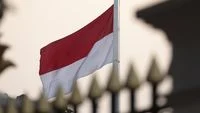
JAKARTA — Demonstrating the nation’s ongoing commitment to raising educational and technical standards, a delegation of twenty elite Indonesian vocational talents is preparing to test its expertise against peers from more than eighty countries. The contingent has officially departed for Shanghai, China, to participate in the prestigious 48th WorldSkills Competition (WSC). Often referred to as the "Olympics of Skills," this global gathering brings together the world’s most proficient young professionals to compete across a vast array of technical and vocational disciplines.
The Indonesian delegation comprises twenty primary competitors alongside seventeen industry experts. Together, they will represent the nation across seventeen distinct fields of expertise. The competitors have been carefully selected from a diverse pool of vocational high school (SMK) students, recent graduates, and standout participants from various industrial partnership institutions across the archipelago. Their participation marks a critical milestone in Indonesia’s broader national strategy to align its domestic workforce with rapidly evolving international industrial standards.
Rigorous Preparation and Holistic Development
Ahead of the departure, officials emphasized that the months leading up to the competition involved far more than standard technical training. The preparation regimen was designed to be comprehensive, addressing not only vocational proficiency but also psychological resilience, professional discipline, integrity, and the capacity to execute tasks under rigorous international constraints.
Tatang Muttaqin, Director General of Secondary Education and Special Education, underscored the magnitude of the mission during a press statement released on Thursday. He noted that the young competitors carry the responsibility of representing the nation’s growing industrial capability on the world stage.
"They are departing not merely carrying suitcases, but carrying the great name of Indonesia. They have been forged technically, mentally, and with high discipline according to world standards," Tatang stated.
The training camps incorporated state-of-the-art machinery and simulation exercises modeled directly on previous WorldSkills events. Instructors, including the seventeen accompanying experts, worked intensively with the competitors to bridge the gap between traditional classroom instruction and the advanced technological demands of the modern global workplace. This holistic approach ensures that the representatives are prepared to handle high-pressure environments, unexpected technical hurdles, and strict time constraints typical of international manufacturing, technology, and service sectors.
Beyond Medals: Benchmarking Global Competence
While capturing podium finishes and medals remains a point of national pride, government officials and educational leaders have stressed that the true value of the WorldSkills Competition extends well beyond the medal tally. For Indonesia, participation serves as a vital benchmarking exercise to evaluate how local vocational training stacks up against global benchmarks.
Tatang elaborated on the broader strategic objectives of the mission, highlighting that the experience gained by the contestants will serve as a catalyst for systemic improvements within the domestic education sector.
"Our target is not only to return home bringing medals, but also to bring back experience, technology, and global standards to advance vocational education in the homeland," he explained.
By exposing students and educators to cutting-edge technologies and international assessment criteria, the Ministry of Education aims to identify critical areas for improvement. The insights gathered in Shanghai will be funneled back into curriculum development, instructional methodologies, and competency frameworks across Indonesia’s extensive network of vocational institutions.
Background and Context of the WorldSkills Competition
The WorldSkills Competition is organized biennially by WorldSkills International, a global movement that aims to raise the profile and recognition of skilled people, and show how important skills are in achieving economic growth and personal success. Originating in the 1950s in post-war Spain, the organization has grown into a massive international platform uniting governments, industries, and educational institutions from across the globe.
Hosting the 48th edition in Shanghai places China at the epicenter of international technical discourse, highlighting the host nation’s rapid advancements in automation, artificial intelligence, advanced manufacturing, and digital services. For developing economies like Indonesia, participating in a competition hosted in such a technologically advanced hub provides invaluable exposure to the frontier of industrial innovation.
Over the decades, Indonesia’s participation in WorldSkills has evolved significantly. In earlier years, the nation’s involvement was sporadic and primarily symbolic. However, in recent years, the government has adopted a more systematic approach to talent identification and preparation. This shift reflects a national economic imperative: as Indonesia strives to harness its demographic dividend and transition toward a high-income economy, upgrading the skills of its workforce is non-negotiable.
Implications for Indonesia’s Domestic Vocational Education Reform
The findings and performance data gathered from the Shanghai competition are expected to directly influence domestic policy. Modern industries—driven by the paradigms of Industry 4.0 and emerging green technologies—demand a workforce equipped with both specialized hard skills and adaptable soft skills.
For years, critics have pointed to a mismatch between the curricula taught in traditional schools and the actual competencies required by modern employers. By utilizing the WorldSkills framework, Indonesian educational authorities can conduct an empirical gap analysis. The performance of the nation’s youth in fields such as mechatronics, information network cabling, web technologies, and CNC milling will provide a clear mirror reflecting the strengths and weaknesses of current vocational education and training (VET) programs.
Furthermore, the involvement of seventeen industry experts highlights the indispensable role of the private sector in shaping modern education. Industry partnerships ensure that training facilities reflect real-world working conditions, utilizing the exact software, hardware, and safety protocols found in modern factories and corporate offices. The collaboration between educational institutions and industrial partners during the preparation phase serves as a working model for broader implementation nationwide.
Strategic Alignment with National Economic Goals
Indonesia’s participation in the 48th WorldSkills Competition is closely tied to the country’s long-term economic roadmap. The government has repeatedly emphasized the need to transition from an economy reliant on raw commodity exports to one driven by value-added manufacturing, technology, and creative industries. Achieving this transformation requires a robust pipeline of skilled technicians, engineers, and digital practitioners.
When the twenty competitors return from Shanghai, their journeys will not end at the airport. Plans are already underway to utilize these young talents as ambassadors of excellence within their respective regions and schools. By sharing their firsthand experiences with younger students, they hope to inspire a cultural shift regarding the perception of vocational education—traditionally viewed by some as a secondary educational track, but increasingly recognized as a primary engine of national development.
Ultimately, the performance of the Indonesian delegation in Shanghai will be measured not merely by the gold, silver, or bronze medals hung around their necks, but by the permanent institutional knowledge they bring home. As global industries continue to shift at an unprecedented pace, initiatives like the WorldSkills Competition ensure that Indonesia’s future workforce remains adaptable, globally competitive, and prepared to meet the complex challenges of the twenty-first century.
Related posts: