Understanding the Critical Differences Between Pertamax and Pertalite for Vehicle Engine Longevity and Performance

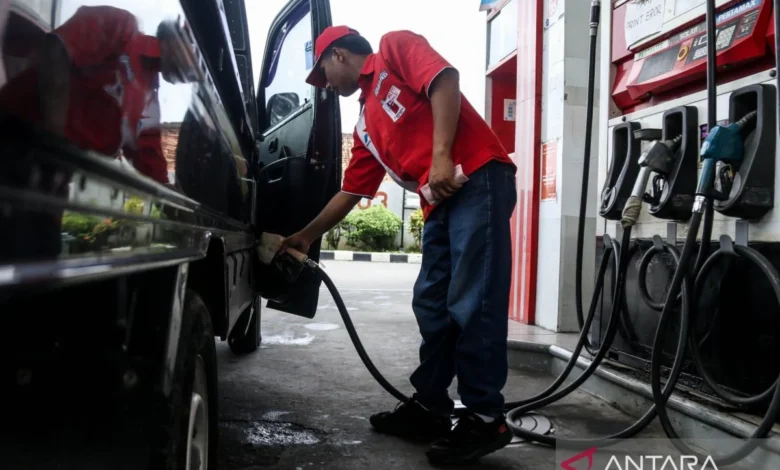
Selecting the appropriate fuel for a motor vehicle is a fundamental aspect of automotive maintenance that directly dictates engine health, long-term durability, and overall operational efficiency. In the Indonesian market, two primary gasoline products dominate the landscape: Pertamax, with a Research Octane Number (RON) of 92, and Pertalite, which carries a RON of 90. While these fuels are widely available at Pertamina stations across the archipelago, they serve distinct technical functions based on engine design, compression ratios, and ignition timing. Misalignment between fuel choice and engine requirements is not merely a matter of cost-efficiency; it is a mechanical decision that can lead to premature wear, internal combustion instability, and significant repair expenses.
The Science of Octane Ratings and Engine Combustion
The distinction between Pertamax and Pertalite is fundamentally rooted in their Research Octane Number (RON). The RON is a measure of a fuel’s ability to resist "knocking" or "pinging" during the combustion process. Engine knocking occurs when the air-fuel mixture in the cylinder ignites prematurely due to high pressure and heat before the spark plug triggers the intended combustion. This chaotic, uncontrolled ignition generates shockwaves that can cause severe damage to pistons, spark plugs, and cylinder walls over time.
A higher octane rating, such as the 92 found in Pertamax, indicates a greater resistance to auto-ignition. This property is crucial for engines with higher compression ratios. In modern automotive engineering, manufacturers design engines to compress the air-fuel mixture significantly to extract more power and efficiency from every drop of fuel. When a high-compression engine is fed with lower-octane fuel like Pertalite (RON 90), the fuel may ignite spontaneously under pressure, leading to the aforementioned knocking. Conversely, using higher octane fuel in a low-compression engine does not necessarily provide a performance boost; it simply provides a higher safety margin against detonation, which may be unnecessary depending on the manufacturer’s design.
Historical Context and Fuel Evolution in Indonesia
The evolution of fuel standards in Indonesia has been a multi-decade journey toward cleaner and more efficient energy consumption. For years, the market was dominated by lower-octane, leaded fuels before the transition toward cleaner alternatives began in the early 2000s. The introduction of Pertalite in 2015 was a strategic move by the national energy company, PT Pertamina (Persero), to provide a bridge between the heavily subsidized and lower-quality fuels of the past and the higher-performance, environmentally conscious products like Pertamax.
However, as automotive technology has advanced, the global standard for passenger vehicles has shifted. Modern engines equipped with turbochargers, direct injection, and sophisticated engine management systems (ECU) are increasingly sensitive to fuel quality. The push toward higher RON fuels is also linked to environmental regulations, as better combustion efficiency typically results in lower carbon emissions and fewer harmful particulates released into the atmosphere.
Supporting Data: When RON Matters
To understand the practical implications, one must look at the compression ratio (CR) of an engine. Generally, engines with a compression ratio of 9:1 to 10:1 are well-suited for RON 90 fuel. Engines with a compression ratio exceeding 10:1, which is common in modern city cars and SUVs, are specifically engineered to utilize fuels with a RON of 92 or higher to achieve their advertised power and fuel economy figures.
According to automotive data analysis, the use of fuel that is "under-spec" for a vehicle can result in a loss of power of up to 5-10% as the engine’s ECU detects knocking and automatically retards the ignition timing to protect the engine. This "limp mode" or timing adjustment is a safety mechanism, but it forces the engine to operate outside of its optimal thermal efficiency window, leading to higher fuel consumption to cover the same distance.
Official Perspectives and Industry Standards
Industry experts, including researchers from the Bandung Institute of Technology (ITB), have frequently emphasized that the "best" fuel is not necessarily the one with the highest octane, but the one that aligns with the manufacturer’s technical specifications. The Automotive Engineering Department at ITB has conducted various studies using diagnostic tools like the Oktis-2 to measure how different fuels behave under real-world load conditions. Their findings consistently underscore that while premium fuels contain additives that help keep fuel injectors and intake valves clean, these benefits are secondary to the primary requirement of meeting the engine’s compression demands.
Pertamina, as the primary distributor, has integrated specific additive packages into Pertamax. These chemical compounds serve to prevent corrosion within the fuel system and reduce deposit build-up on critical engine parts. While these additives provide a preventative maintenance advantage, they are not a substitute for regular servicing. Lubricant changes, air filter replacements, and spark plug inspections remain essential to ensure that the engine remains within factory-specified tolerances.
Economic Implications and Real-World Usage
A common misconception among consumers is that using higher-priced, high-octane fuel will automatically result in better gas mileage and increased power. While this is true for engines specifically designed for high-octane fuel, it is often a fallacy for older or lower-compression engines. If a vehicle is designed for RON 90, the engine management system is calibrated to burn that fuel efficiently. Filling such a car with RON 92 will not change the combustion dynamics, as the engine cannot take advantage of the increased knock resistance.
The economic impact must therefore be calculated based on the cost-per-kilometer rather than the price-per-liter. A vehicle that achieves 15 kilometers per liter on Pertalite might only achieve 15.2 kilometers per liter on Pertamax. If the price difference between the two fuels is significant, the marginal increase in fuel efficiency may not offset the additional cost at the pump. Conversely, for a high-performance engine, the "cost" of using lower-octane fuel manifests as long-term engine damage, which can lead to catastrophic repair costs that far exceed the cumulative price difference of fuel over the vehicle’s lifespan.
The Role of Maintenance in Fuel Efficiency
Beyond the choice of RON 90 or 92, overall vehicle efficiency is governed by a complex array of factors. Tire pressure, for instance, can affect rolling resistance and fuel consumption by as much as 3-5%. Aerodynamic drag, vehicle load, and the use of air conditioning systems also play substantial roles. Furthermore, the driving style—specifically aggressive acceleration and excessive idling—often accounts for a greater variance in fuel consumption than the fuel type itself.
Owners are advised to refer strictly to their vehicle’s user manual. Most modern manufacturers explicitly state the minimum required RON. Following these guidelines ensures that the engine’s emissions control systems, such as the catalytic converter, remain in good condition. The catalytic converter is particularly sensitive to combustion quality; incomplete combustion due to improper fuel use can lead to premature clogging and failure of the exhaust system, an expensive component to replace.
Conclusion: Making Informed Decisions
The debate between Pertamax and Pertalite should not be framed as a competition between a "better" and "worse" product, but rather as a technical selection process. For the average motorist, the hierarchy of priorities should be as follows:
- Manufacturer Specification: Always prioritize the RON rating recommended by the manufacturer in the owner’s manual.
- Engine Condition: Older engines with carbon deposits may benefit from the detergent additives found in higher-octane fuels, though this should be paired with proper mechanical cleaning.
- Usage Profile: High-load usage, such as driving in mountainous terrain or towing, often increases internal engine temperatures, potentially making higher octane fuel a safer choice even for engines with moderate compression ratios.
As the automotive industry continues to transition toward more complex engine designs and stricter environmental standards, the importance of choosing the correct fuel will only grow. By disregarding marketing claims and focusing on the mechanical reality of their vehicle’s engine, owners can maximize their engine’s longevity, ensure reliable performance, and maintain better control over their long-term automotive operating costs. Understanding the nuance of RON 90 versus RON 92 is a small but vital component of responsible vehicle ownership in the modern era.
Related posts: