PT Len Industri Appointed as Lead Integrator for Indonesia National Electric Motorcycle Program to Drive Domestic Automotive Independence

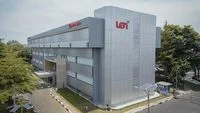
The Indonesian government has officially designated state-owned defense and electronics enterprise PT Len Industri (Persero) as the primary executor and lead integrator for the National Electric Motorcycle, or Motor Listrik Nasional (Molinas), development program. This strategic milestone was formalized through an official state assignment letter bearing the number B-15/M/SDK/KI.00/08/2026, issued by the Minister of State Secretariat to the president director of the company.
The appointment marks a pivotal step in Jakarta’s broader economic master plan to achieve long-term technological self-reliance, slash carbon emissions across the transportation sector, and secure a dominant position in the global electric vehicle (EV) supply chain. By harnessing domestic manufacturing capabilities and fostering synergy across state-owned enterprises (SOEs), the Molinas initiative aims to transform Indonesia from a mere consumer market into a formidable regional producer of sustainable mobility solutions.
Strategic Directives and Institutional Mandate
According to the official assignment letter—dated August 12, 2026—the legal foundation of PT Len Industri’s involvement stems directly from a high-level directive issued by the President of the Republic of Indonesia during a limited cabinet meeting held on July 14, 2026. The executive directive prioritized the realization of a self-reliant national automotive industry and the systematic strengthening of domestic downstream mineral processing industries, particularly nickel and other battery-grade raw materials.
"In the framework of realizing the independence of the national automotive industry and strengthening industrial downstreaming, the President during a limited meeting on July 14, 2026, gave the directive that PT Len Industri (Persero) is assigned as the executor of the National Electric Motorcycle Development Program," reads a translated excerpt from the formal state document.
The assignment mandates PT Len Industri to spearhead the program through rigorous, cross-sectoral coordination with relevant ministries, government agencies, and state-owned entities. Furthermore, the document—signed by Minister of State Secretariat Prasetyo Hadi—explicitly instructs the company to submit periodic implementation reports directly to the President via the Ministry of State Secretariat. This oversight mechanism is designed to ensure strict adherence to national development timelines, budget transparency, and strategic key performance indicators.
PT Len Industri as the Lead Integrator within the Danantara Ecosystem
The operational architecture of the Molinas program was detailed by Setia Diarta, Director General of Metal, Machinery, Transport Equipment, and Electronics (ILMATE) at the Ministry of Industry, during a hearing with Commission VII of the House of Representatives (DPR RI) on Thursday, September 10, 2026. During the parliamentary session, Setia underscored that PT Len Industri would act as the central "lead integrator" for the entire domestic EV ecosystem.
"PT Len will later become the lead integrator of the National Electric Motorcycle program," Setia stated before legislators.
Comprehensive briefing materials presented during the hearing revealed that the Molinas ecosystem is deeply integrated with Danantara, Indonesia’s newly consolidated sovereign wealth and super-holding entity. Within this collaborative framework, PT Len Industri’s responsibilities extend across multiple critical verticals, including advanced product design, Research and Development (R&D), component manufacturing, vehicle assembly, and the nationwide deployment of public charging stations.
The broader industrial ecosystem has been meticulously distributed among specialized entities to maximize efficiency and expertise. Battery production and technological integration will be supported by Indonesia Battery Corporation (IBC), alongside strategic partnerships with global battery giants CATL and its domestic joint venture operations, which have already completed facility construction in Karawang, West Java.
Meanwhile, retail distribution, servicing workshops, and after-sales infrastructure will leverage the grassroots network of Koperasi Merah Putih in tandem with broader SOE retail channels. Capital expenditure, project financing, and long-term financial structuring will be managed in collaboration with PT Sarana Multi Infrastruktur (Persero), a state-owned infrastructure financing enterprise.
"This is the Molinas ecosystem, and almost all of it will involve Danantara in the process. For R&D, Len will act as the lead integrator, while for batteries, it will involve CATIB and CATL, whose facilities in Karawang have currently finished construction," Setia elaborated to the parliamentary commission.
Technological Readiness and the Electric Bike Sprint
Long before receiving its formal designation as the national lead integrator, PT Len Industri had already established a foundational footprint in indigenous electric vehicle engineering. The company’s engineering division has been actively developing the "Electrical Bike Sprint," an electric trail motorcycle that the firm proudly asserts has been entirely conceptualized, rigorously tested, and assembled on Indonesian soil.
The Electrical Bike Sprint is equipped with a robust 3,000-watt electric motor designed to navigate challenging terrains while maintaining high energy efficiency. Performance benchmarks indicate that the vehicle boasts a maximum operating range of up to 60 kilometers on a single battery charge, with top speeds reaching approximately 80 kilometers per hour. Industry observers note that targeting the electric trail bike segment is a strategic move, as it caters immediately to specialized commercial markets—such as plantation operations, rural logistics, and defense patrols—before scaling up to mass-market consumer scooters and commuter motorcycles.
Chronology of the National Electric Vehicle Ambition
Indonesia’s journey toward establishing an indigenous electric vehicle industry has evolved through a deliberate, multi-year policy framework. The genesis of the push began with the issuance of Presidential Regulation (Perpres) Number 55 of 2019 concerning the Acceleration of the Battery-Based Electric Vehicle Program for Road Transportation. This foundational regulation created the legal and fiscal incentives necessary to attract foreign direct investment into nickel processing and battery manufacturing.
Between 2020 and 2024, the Indonesian government focused heavily on upstream industrial policies, banning the export of raw nickel ore to force multinational corporations to build domestic smelters. This policy successfully attracted multi-billion-dollar investments from global battery supply chain leaders, particularly from East Asia, transforming regions like Morowali in Central Sulawesi and Weda Bay in North Maluku into global hubs for refined battery materials.
By 2025, attention shifted toward midstream and downstream integration, culminating in the creation of Danantara to streamline the governance and capital allocation of strategic state enterprises. The culmination of this policy trajectory arrived in mid-2026, when top-level executive evaluations highlighted the need for a unified state actor to coordinate domestic intellectual property, manufacturing, and distribution. The July 14, 2026 cabinet meeting served as the turning point, directly resulting in the August assignment letter designating PT Len Industri as the overseer of the Molinas project.
Broader Economic Implications and Strategic Outlook
Economists and industrial analysts view the formalization of the Molinas program as a critical test of Indonesia’s capacity to move beyond resource extraction and enter high-value manufacturing. For decades, the nation’s automotive sector has been dominated by foreign original equipment manufacturers (OEMs)—predominantly Japanese and, more recently, Chinese brands—which utilize Indonesia primarily as a lucrative assembly and sales market rather than a hub for indigenous technological innovation.
By empowering PT Len Industri to act as a lead integrator backed by Danantara and specialized SOEs like IBC, the government is attempting to replicate successful state-led industrialization models seen in East Asia. The integration of domestic R&D with established global battery supply chains—such as the CATL facilities in Karawang—mitigates the risk of technological isolation while ensuring that intellectual property and core engineering competencies remain anchored within domestic institutions.
However, analysts caution that significant challenges remain. The success of the Molinas program will depend heavily on the competitiveness of locally manufactured components against imported alternatives, particularly from established Chinese EV manufacturers offering aggressive pricing. Furthermore, building consumer trust in domestic brands will require stringent quality control, robust after-sales support networks, and competitive financing schemes enabled by partners like PT Sarana Multi Infrastruktur and Koperasi Merah Putih.
As PT Len Industri begins executing its comprehensive mandate, all eyes will be on the state enterprise to deliver tangible prototypes and scalable production lines that can meet both domestic public sector demands and commercial market expectations. If successful, the Molinas initiative could redefine Indonesia’s industrial landscape, cementing the nation’s transition from a passive resource exporter into an autonomous powerhouse in the future of global clean transportation.