Prabowo Subianto Engages in Strategic Diplomatic Discussions with Global Leaders at the 18th BRICS Summit in New Delhi

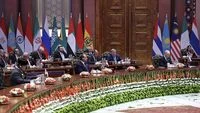
Indonesian President Prabowo Subianto participated in high-level diplomatic exchanges on Saturday, September 12, at the 18th BRICS Summit held in New Delhi, India. Amidst a gathering of the world’s most influential emerging economies, President Prabowo was captured in deep and cordial conversations with several prominent global figures, including Indian Prime Minister Narendra Modi, Russian President Vladimir Putin, and Chinese President Xi Jinping. This informal yet significant interaction took place in the moments leading up to the official opening session of the summit, underscoring Jakarta’s active posture in contemporary multilateral diplomacy and its ongoing commitment to maintaining robust, balanced partnerships across the geopolitical spectrum.
The informal dialogue among the four leaders has drawn considerable attention from international relations analysts and geopolitical observers. According to Cabinet Secretary Teddy Indra Wijaya, who accompanied the Indonesian delegation, the discussion highlighted the smooth communication channels existing between Indonesian leadership and key global stakeholders. The visual of President Prabowo standing alongside President Putin, shortly before being joined by Prime Minister Modi and President Xi, served as a potent symbol of Indonesia’s inclusive foreign policy doctrine—one that actively seeks cooperation with both traditional and emerging power blocs without aligning exclusively with any single geopolitical axis.
Chronology of Events and the Lead-Up to the Summit
The events in New Delhi represent a continuation of President Prabowo’s intensive foreign policy outreach since assuming office. The 18th BRICS Summit itself brought together heads of state and government from member nations, alongside numerous invited leaders from the Global South and key emerging markets, to deliberate on pressing global economic and security challenges.
The sequence of events on Saturday morning began with the arrival of delegations at the summit venue. While bilateral and multilateral meetings form the core agenda of such high-profile gatherings, informal interactions in the VIP holding rooms and pre-session lounges often provide critical opportunities for leaders to build personal rapport and lay the groundwork for subsequent diplomatic breakthroughs.
President Prabowo initially engaged in dialogue with Russian President Vladimir Putin, discussing areas of mutual interest, trade continuity, and bilateral cooperation. Shortly thereafter, Prime Minister Narendra Modi and Chinese President Xi Jinping approached the group, transforming a bilateral exchange into a mini-multilateral dialogue among the leaders of four major Asian and Eurasian nations. Cabinet Secretary Teddy noted that the atmosphere was characterized by warmth and mutual respect, reflecting the long-standing diplomatic ties that bind Indonesia to India, Russia, and China.
Background Context of Indonesia and the BRICS Group
Indonesia’s relationship with the BRICS bloc—originally comprising Brazil, Russia, India, China, and South Africa, and recently expanded to include several new member states—has been a subject of strategic evaluation in Jakarta. While Indonesia has historically maintained a strict "free and active" (bebas aktif) foreign policy, declining formal membership in past years while prioritizing ASEAN centrality and non-aligned platforms, the shifting global economic landscape has prompted a more pragmatic approach.
Jakarta’s engagement with BRICS reflects a calculated effort to diversify its economic partnerships, secure resilient supply chains, and advocate for the interests of developing nations within global financial governance structures such as the International Monetary Fund, the World Bank, and the World Trade Organization. India, China, and Russia represent critical economic and strategic partners for Indonesia. China remains Indonesia’s largest trading partner and a primary source of infrastructure investment, while India is a vital market for Indonesian commodities such as palm oil and coal. Russia, meanwhile, remains an important partner in energy security, defense technology, and agricultural trade, particularly concerning fertilizer supplies.
By attending the 18th BRICS Summit, President Prabowo signals that Indonesia is keen to remain closely attuned to the policy directions and economic initiatives spearheaded by the bloc, even as policymakers in Jakarta continue to weigh the formal costs and benefits of full membership.
Official Statements and Perspectives from the Indonesian Delegation
The Indonesian government has consistently framed its international engagements through the lens of mutually beneficial cooperation and inclusive multilateralism. Throughout his presidential campaign and into the early months of his administration, President Prabowo has reiterated that Indonesia stands ready to be a friend to all nations—"thousand friends too few, one enemy too many" has frequently been cited by Indonesian diplomats as a guiding philosophical framework.
Cabinet Secretary Teddy emphasized that the informal interactions in New Delhi are indicative of the personal diplomacy style that President Prabowo brings to the international stage. Rather than relying solely on rigid, protocol-driven negotiations, the Indonesian leader has consistently leveraged direct, face-to-face dialogue to foster trust and mutual understanding with his global counterparts.
"The warm atmosphere prior to the opening session of the summit reflects the excellent state of relations between Indonesia and its key strategic partners in the region and globally," Teddy stated in an official release. "This moment exemplifies the personal diplomacy that continually characterizes President Prabowo’s attendance at major international forums."
Furthermore, the delegation reiterated that Prabowo’s presence in New Delhi is part of a broader national strategy to elevate Indonesia’s profile on the world stage. As global supply chains face disruptions, inflationary pressures persist, and geopolitical rivalries intensify between major powers, Indonesia has positioned itself as a bridge-builder capable of maintaining constructive dialogues across geopolitical divides.
Geopolitical Implications and Economic Analysis
The diplomatic optics of President Prabowo conversing casually with the leaders of Russia, China, and India carry profound implications for regional and global stability.
From an economic perspective, closer alignment or sustained dialogue with BRICS nations provides Indonesia with alternative avenues for trade and investment diversification. As Western economies grapple with sluggish growth and protectionist tendencies, emerging economies within the BRICS framework are driving a significant share of global GDP growth. By participating in these forums, Indonesia ensures that its economic interests—particularly concerning green transition minerals, digital economy frameworks, and food security—are integrated into wider multilateral discussions.
From a geopolitical standpoint, Prabowo’s engagement reinforces Indonesia’s traditional stance of strategic autonomy. In an era marked by increasing polarization reminiscent of Cold War-era blocs, Indonesia’s ability to comfortably converse with Western allies on one hand, and BRICS heavyweights like China and Russia on the other, demonstrates the enduring viability of non-aligned diplomacy. This balancing act allows Jakarta to extract maximum developmental benefits from global superpowers while insulating itself from secondary sanctions or coercive diplomatic pressures.
However, analysts also point out the delicate tightrope Indonesia must walk. Engaging deeply with BRICS—especially at a time when the bloc is explicitly working to reduce its reliance on the U.S. dollar and reform Western-dominated global institutions—requires careful calibration to avoid alienating traditional Western security and economic partners, such as the United States, Japan, and the European Union. President Prabowo’s administration appears acutely aware of this challenge, ensuring that overtures to Eastern and Eurasian powers are matched by continued diplomatic engagement with Western capitals.
Looking Forward: Indonesia’s Role in Multilateral Architecture
As the 18th BRICS Summit progresses, the outcomes of the formal sessions and bilateral side-meetings will be closely monitored by international observers. For Indonesia, the summit serves as a crucial testing ground for Prabowo’s foreign policy vision: an assertive, confident Indonesia that refuses to be sidelined in major global discourse.
The personal rapport established between President Prabowo, Prime Minister Modi, President Putin, and President Xi in the opening moments of the summit is expected to facilitate smoother diplomatic communications moving forward. Whether these interactions will translate into formal policy shifts, new trade agreements, or a formal change in Indonesia’s stance toward BRICS membership remains to be seen.
What is certain, however, is that Indonesia under President Prabowo is determined to project a strong and independent voice globally. By actively participating in platforms that shape the future of the Global South, Jakarta is positioning itself not merely as a passive observer of international trends, but as an influential stakeholder capable of shaping the architecture of 21st-century diplomacy.