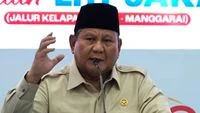
Partai Bulan Bintang (PBB) Challenges Minister of Law’s Authority Over Party Leadership Approval at Constitutional Court


Jakarta, Indonesia – The Partai Bulan Bintang (PBB), specifically the faction emerging from its VI National Congress (Muktamar VI) held in Bali, has formally submitted a petition for judicial review to the Constitutional Court (MK). The legal challenge targets the extensive powers vested in the Minister of Law and Human Rights concerning the ratification of political party leadership changes, arguing that these powers are overly broad and susceptible to political manipulation and abuse. This move by the PBB underscores a recurring tension in Indonesian political governance: the delicate balance between state oversight and the internal autonomy of political parties.
The Heart of the Challenge: Minister’s Authority Under Scrutiny
Gugum Ridho Putra, the Chairman of the PBB’s Muktamar VI faction, confirmed that the party is challenging specific provisions within Law Number 2 of 2008 concerning Political Parties, as amended by Law Number 2 of 2011. The core contention revolves around the Minister of Law’s authority to grant official endorsement to the central leadership of political parties. Gugum articulated the faction’s belief that such wide-ranging executive power risks undermining the democratic principles within parties and could be weaponized for political ends. "On this day, we announce that the Central Executive Board (DPP) of Partai Bulan Bintang, as a result of the VI National Congress, has filed a judicial review petition with the Constitutional Court," Gugum stated from the Constitutional Court building in Central Jakarta on Monday, April 20, as reported by detikcom.
The PBB’s petition highlights the potential for the Minister’s power to facilitate "political marginalization, party fragmentation, and even the hijacking of political parties." This assertion reflects a deep-seated concern within the Indonesian political landscape regarding executive interference in internal party affairs, a phenomenon that has historically plagued numerous political entities, leading to protracted disputes and instability. The party argues that while administrative oversight is necessary, the current legal framework grants the executive branch an overly decisive role in determining legitimate party leadership, a role that should ideally rest with internal party mechanisms or, failing that, an independent judicial body.
A History of Internal Strife: The PBB’s Dualism Dilemma
The judicial review is rooted in the PBB’s own recent internal dynamics, which have seen a divergence in leadership claims. Gugum Ridho Putra elaborated that his faction had submitted its revised leadership structure to the Ministry of Law and Human Rights on March 9, 2026. This submission followed the Muktamar VI Bali, which Gugum maintains is the party’s highest legitimate forum for determining leadership. However, a competing faction subsequently emerged, claiming legitimacy from a "Musyawarah Dewan Partai" (Party Council Deliberation, or MDP), and also sought ratification from the Ministry.
Gugum emphasized that under principles of administrative law, the faction that submits its documentation first should be accorded priority. "Legally, in public law, the party that submits first should be given priority," he asserted. Furthermore, he strongly contended that the leadership produced by the Muktamar VI Bali is the rightful one, as it originated from the party’s supreme forum. Conversely, he dismissed the MDP convened by the rival faction as illegitimate, citing its purported deviation from the party’s Articles of Association and Bylaws (AD/ART). According to Gugum, the MDP was not organized by the legitimate DPP but by provincial executive boards (DPW) and, crucially, failed to provide evidence that the sitting Chairman was permanently incapacitated, a prerequisite for such extraordinary deliberations under the AD/ART.
Adding to the complexity, Gugum revealed that his faction had received intelligence suggesting the Minister of Law and Human Rights had already issued a decree (SK) validating the opposing MDP faction. However, he stressed that no physical evidence of such a decree has ever been presented. "Neither the Minister’s side nor that faction has ever shown the decree. We have also formally requested clarification, but there has been no response," Gugum stated, highlighting the lack of transparency surrounding the alleged executive decision. This opacity further fuels the PBB’s argument about the potential for abuse and arbitrary decision-making.
Chronology of Events Leading to the Legal Battle
The timeline of events underscores the rapid escalation of the internal PBB conflict into a full-blown legal challenge against the state:
- Late 2025/Early 2026 (Inferred): Preparations and holding of the PBB’s Muktamar VI in Bali, resulting in the election of new leadership, including Gugum Ridho Putra as Chairman.
- March 9, 2026: The PBB Muktamar VI Bali faction officially submits its updated central leadership structure to the Ministry of Law and Human Rights for ratification. This is the first formal step in seeking government recognition for their leadership.
- Mid-March 2026 (Inferred): A rival faction reportedly convenes a Musyawarah Dewan Partai (MDP) and subsequently seeks validation from the Ministry for its own leadership structure, creating a dualism claim.
- Late March/Early April 2026 (Inferred): The PBB Muktamar VI faction learns of reports suggesting the Minister of Law and Human Rights has issued a decree (SK) recognizing the MDP faction, but no official confirmation or physical proof of the SK is provided despite requests. This alleged lack of transparency and preferential treatment becomes a key grievance.
- April 20, 2026: The PBB Muktamar VI Bali faction, led by Gugum Ridho Putra, formally files a petition for judicial review at the Constitutional Court, challenging the Minister of Law’s broad authority to ratify party leadership changes, as stipulated in Law No. 2 of 2008 and Law No. 2 of 2011.
Broader Context: The Role of the Minister of Law and Human Rights in Party Governance
The Minister of Law and Human Rights plays a critical role in the administrative oversight of political parties in Indonesia. Under the prevailing laws, the Ministry is responsible for registering political parties, recording their leadership changes, and ensuring compliance with legal and statutory requirements. This role is intended to ensure order and prevent administrative chaos within the political system. However, the extent of the Minister’s "approval" or "ratification" power has been a contentious issue for decades.
Historically, this executive authority has been a flashpoint, particularly during periods of intense political rivalry or internal party conflicts. Critics argue that the power to "legalize" one faction over another effectively grants the executive branch undue influence over the internal affairs and political direction of parties. This can be seen as undermining the principle of party autonomy, a cornerstone of a healthy democracy where political organizations should be free to determine their own leadership and policies without external governmental interference, beyond basic legal compliance. The PBB’s current challenge is not merely about their specific internal dispute but about refining the interpretation and application of this executive power within the broader framework of Indonesian constitutional law.
Precedent and the Perceived Failure of Internal Mechanisms
The PBB’s petition is not an isolated incident; it echoes a long history of dualism disputes within Indonesian political parties. Gugum Ridho Putra explicitly cited past conflicts in major parties such as Golkar, PPP, Hanura, and Partai Berkarya as examples where the Minister’s intervention or the perceived ineffectiveness of internal dispute resolution mechanisms led to prolonged instability and factionalism.
In many of these cases, internal "Mahkamah Partai" (Party Courts) were established with the intention of being the primary arbiter of intra-party disputes. However, as Gugum pointed out, "From Golkar to Berkarya and now PBB, none of them were resolved by the Party Court." This statement reflects a widespread disillusionment with these internal bodies, which are often perceived as lacking independence, being beholden to the dominant faction, or simply failing to enforce their decisions effectively. The protracted nature of these conflicts, often spilling into general elections and impacting political stability, underscores the systemic issue PBB is now bringing before the Constitutional Court. The PBB’s argument suggests that when internal mechanisms fail, and the executive’s power is too decisive, the Constitutional Court should serve as the ultimate, impartial arbiter to protect party democracy.

Proposed Reforms: Redefining the Executive’s Role
To address these systemic issues, the PBB has put forward a series of concrete proposals for reform, aiming to redefine the Minister of Law’s role and strengthen the rule of law in party governance. Their central request to the Constitutional Court is to restrict the Minister’s authority in ratifying party leadership. Instead of possessing the power to "approve" or "validate" changes, the PBB proposes that the Minister’s role should be limited to merely recording or registering these changes.
Under this proposed model, the current "Surat Keputusan" (SK) or decree of endorsement would be replaced with a "surat keterangan tercatat" (registered certificate). This subtle but significant semantic shift implies a move from an active, determinative role to a passive, administrative one. "So the Minister only needs to record the legal event, not determine who is legitimate," Gugum clarified, emphasizing the intent to remove the executive’s discretion in legitimizing one faction over another.
Furthermore, the PBB advocates for the establishment of an "open objection period" following the registration of leadership changes. This period would allow any aggrieved party or faction to formally object to the recorded changes. If a dispute persists after this objection period, the PBB proposes that the matter should then be escalated directly to the Constitutional Court for resolution. The rationale behind this is that the Constitutional Court’s decisions are "final and binding, and conducted transparently," offering a level of impartiality and legal certainty that internal party courts or executive decisions have often failed to provide.
Finally, the PBB specifically urges the Constitutional Court to formally declare the "Mahkamah Partai" (Party Court) as ineffective in resolving dualism disputes. This declaration would effectively relegate internal party courts to a secondary or preliminary role, recognizing the Constitutional Court as the definitive arbiter for complex leadership disputes that threaten party unity and democratic principles.
Legal and Political Implications: A Test for Party Autonomy and Judicial Oversight
The PBB’s judicial review carries significant legal and political implications for Indonesia’s democratic landscape. If the Constitutional Court rules in favor of the PBB’s petition, it could fundamentally alter the relationship between the executive branch and political parties. By curtailing the Minister of Law’s power, the ruling would likely enhance party autonomy, allowing internal mechanisms and judicial processes to play a more prominent role in resolving leadership disputes. This could be viewed as a victory for internal party democracy, reducing the perceived threat of government interference.
Such a decision would also strengthen the Constitutional Court’s role as a guardian of constitutional democracy, particularly in areas concerning the functioning of political institutions. It would reinforce the principle that political parties, while subject to general laws, should largely govern themselves, with judicial oversight as a last resort rather than executive fiat. Legal scholars and political analysts have long debated the appropriate balance, with many advocating for greater party independence. This case could set a precedent that reshapes how political parties operate, organize, and resolve their internal conflicts, potentially leading to more stable and internally democratic political entities in the long run.
However, a ruling limiting the Minister’s power might also introduce new complexities. Some argue that a strong executive role helps prevent endless internal squabbles from destabilizing the political system, acting as a quick administrative arbiter. Shifting the ultimate resolution to the Constitutional Court could lead to an increase in judicialization of political disputes, potentially burdening the Court and prolonging resolutions, though PBB argues this would be offset by the finality and transparency of MK decisions. The outcome of this case will undoubtedly have a ripple effect across all political parties, forcing them to re-evaluate their internal dispute resolution mechanisms and their relationship with the state.
Reactions and Anticipated Responses
While Gugum Ridho Putra has been vocal about the PBB Muktamar VI faction’s position, formal reactions from other implicated parties are yet to fully emerge. The Ministry of Law and Human Rights typically asserts that its role is to ensure administrative order, legal compliance, and adherence to party statutes, often defending its powers as necessary for maintaining political stability. Any official response from the Ministry would likely emphasize the statutory basis of its authority and the need for clear executive oversight.
The opposing PBB faction, purportedly formed through the MDP, has not yet issued a public statement specifically addressing this judicial review. However, their actions in also seeking validation from the Ministry suggest they believe their claim to leadership is legitimate and adheres to party regulations. Their future stance will likely depend on the Constitutional Court’s proceedings and any interim decisions.
Legal experts and academics are expected to weigh in significantly as the case progresses. Many have historically expressed concerns about the broad discretionary powers of the Minister, advocating for a more robust framework that respects party autonomy while ensuring accountability. This case provides a critical opportunity for a definitive legal interpretation that could redefine the boundaries of executive power in party administration.
The Path Ahead: Constitutional Court’s Deliberations
With the petition now formally submitted, the Constitutional Court will commence its review process. This typically involves initial administrative checks, followed by preliminary hearings where the petitioners present their arguments in detail. The Court will then invite relevant parties, including the Minister of Law and Human Rights, to provide their counter-arguments and explanations. Legal experts may also be called upon to offer insights.
The deliberations of the nine constitutional justices will be crucial in interpreting the challenged articles of Law No. 2 of 2008 and No. 2 of 2011 in light of the Indonesian Constitution. The Court will examine whether the Minister’s current authority unduly infringes upon the constitutional rights of political parties to organize and govern themselves, and whether the proposed reforms align with democratic principles. The ultimate decision will not only determine the fate of the PBB’s internal dispute but will also set a significant precedent for the future of political party governance in Indonesia, potentially ushering in an era of enhanced party autonomy and greater judicial oversight over executive actions in this critical domain.