Pentagon scrambles to recover F-35 stealth jet components seized by China in high-stakes logistics breach

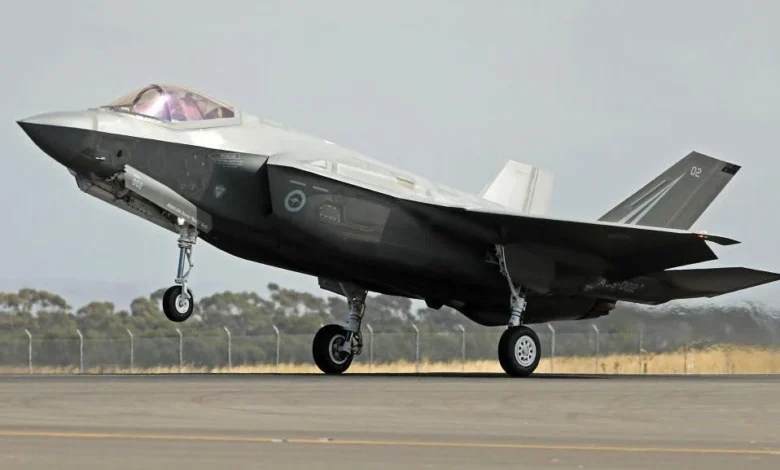
The United States Department of Defense is currently engaged in a high-priority effort to recover sensitive aerospace components belonging to the F-35 Lightning II program that were intercepted and seized by Chinese authorities in Hong Kong earlier this year. The incident, which has sent shockwaves through the American defense establishment, involves critical hardware originally originating from the Royal Australian Air Force (RAAF) that was being transported for maintenance. The seizure has raised significant alarms regarding the potential compromise of highly classified stealth technology and the vulnerability of global military logistics chains.
Chronology of the Logistical Breach
The incident began in May, when a shipment of decommissioned or damaged F-35 parts was scheduled for transport from Australia to a facility in the United States. The shipment, handled by international logistics firm UPS, contained components essential to the structural integrity and signature management of the F-35 stealth fighter, including a cockpit canopy and weapon bay doors.
According to reports, the transport aircraft carrying the cargo was scheduled for a standard route, which included a stopover in South Korea. However, the flight was unexpectedly diverted to Hong Kong. Upon landing in the territory, which operates under Chinese sovereignty, local authorities moved to seize the cargo. The intervention effectively placed some of the most sensitive pieces of Western military hardware into the hands of the Chinese government.
For several months, the full extent of the incident remained shielded from public scrutiny. It was only after the internal investigation reached a critical juncture that the breach surfaced, coinciding with high-level diplomatic maneuvers between Washington and Beijing. The timing of the disclosure—occurring just prior to a state visit by President Xi Jinping—has added a layer of geopolitical friction to an already strained bilateral relationship.
The Technological Stakes: Why the F-35 Matters
The F-35 Lightning II is widely considered the cornerstone of the United States’ air superiority strategy for the 21st century. Developed by Lockheed Martin, the aircraft is renowned for its advanced sensor fusion, network-centric warfare capabilities, and, most importantly, its Low Observable (LO) stealth technology.
The specific components seized—the cockpit canopy and the weapon bay doors—are not merely structural parts. They are engineered with sophisticated Radar Absorbent Material (RAM) coatings. These coatings are designed to minimize the aircraft’s Radar Cross Section (RCS), making the fighter nearly invisible to enemy detection systems.
Defense analysts suggest that by obtaining these parts, Chinese military engineers could potentially conduct reverse-engineering or materials analysis. "The concern is not just about the shape of the parts," explained a retired defense consultant familiar with stealth programs. "It is about the chemical composition of the coatings and the structural design that allows the jet to maintain its stealth profile while operating at high speeds and under extreme thermal conditions. If China gains insights into these manufacturing processes, it could fundamentally undermine the ‘stealth advantage’ that the U.S. and its allies rely upon."
Official Pentagon Response and Remediation
In response to inquiries regarding the breach, the F-35 Joint Program Office (JPO) and the Department of Defense issued a joint statement acknowledging the incident. The Pentagon confirmed that it is actively coordinating with U.S. federal authorities and industry partners to secure the return of the components.
"The F-35 Joint Program Office and the Department of Defense are aware of the shipping issue involving non-serviceable F-35 Lightning II components," the statement read. "We are actively coordinating with U.S. authorities and industry partners to secure these components, investigate the circumstances of the incident, and establish preventive measures to ensure this does not happen again."
The Pentagon has not yet clarified why the flight was diverted to Hong Kong, nor has it publicly stated whether the diversion was the result of a logistical error or an intentional act of corporate or state-sponsored interference. An internal audit of the supply chain is currently underway to determine whether the diversion was a failure in the routing process or an exploitation of global transit hubs by foreign intelligence services.
Political Fallout and Congressional Concern
The revelation of the seizure has triggered an immediate reaction on Capitol Hill. Legislators have expressed outrage that such sensitive equipment could be so easily rerouted into the jurisdiction of a primary geopolitical competitor.
Senator Elissa Slotkin, a prominent voice on national security matters, emphasized the severity of the situation. "The contrast of this situation is stark," Slotkin noted. "China is holding some of our most sensitive technology, and we are holding a state dinner for their president. When it comes to intelligence and military matters, China is both a competitor and an adversary. They are always looking for gaps to gain information on our military equipment, and this is exactly the kind of information they seek."
The incident has reignited debates regarding the "Global Supply Chain" model used by the Pentagon. While outsourcing logistics to private firms like UPS is standard practice to reduce costs and increase efficiency, critics argue that the reliance on commercial shipping for military-grade equipment creates unacceptable security risks. There are now calls for a complete overhaul of how the Department of Defense transports critical components, with potential mandates for stricter oversight, dedicated secure transport channels, or more stringent tracking protocols for hardware originating from international partners.
The Broader Geopolitical Context
The interception of the F-35 parts occurs within a period of heightened tension in the Indo-Pacific region. China has been aggressively expanding its own stealth fighter program, most notably with the development of the J-20 "Mighty Dragon." While the J-20 is a capable platform, Chinese engineers have long been accused of attempting to replicate Western stealth technology through cyber-espionage and the acquisition of stolen intellectual property.
The seizure in Hong Kong represents a move from the digital realm to the physical, providing Chinese experts with tangible, physical samples to examine. This incident underscores the ongoing "Grey Zone" warfare, where adversaries utilize non-combat methods—such as customs seizures, logistical interference, and administrative manipulation—to gain strategic military advantages without triggering a traditional kinetic conflict.
Furthermore, the incident highlights the complexities of the F-35 program’s multinational structure. Because the program involves numerous international partners—including Australia, the United Kingdom, Japan, and others—the hardware is constantly in transit across the globe. Ensuring the security of this "rolling inventory" is a logistical nightmare, and the Hong Kong incident serves as a stark reminder of the potential for failure when parts move through regions with conflicting interests.
Path Forward: Lessons and Adjustments
Moving forward, the Pentagon faces two distinct challenges: the recovery of the components and the fortification of the supply chain.
- Recovery and Diplomatic Pressure: The U.S. State Department is likely to leverage diplomatic channels to pressure the Chinese government into returning the components. However, Beijing may choose to hold the hardware, citing "administrative procedures" or "customs investigations" as a pretext to stall for time while they conduct their own analysis.
- Supply Chain Reform: The Department of Defense is expected to implement new protocols for the transport of "Controlled Unclassified Information" (CUI) and sensitive military hardware. This may include "do not route" lists for commercial carriers, requiring them to avoid ports or airports in countries deemed a national security risk, regardless of the cost implications for transit speed.
- Security Audits: Every carrier contract associated with the F-35 program is currently under review. The Pentagon will likely require increased transparency from logistics partners, including real-time monitoring and mandatory reporting for any unexpected route deviations.
As the U.S. continues to navigate a complex relationship with China, the F-35 seizure serves as a sobering case study in the vulnerability of modern military logistics. It underscores that in an era of globalized trade, the physical movement of military parts is as much a security concern as the development of the technology itself. The resolution of this incident will be closely watched by defense observers, as it sets a precedent for how the U.S. will handle future challenges to the integrity of its most advanced military assets.