Innovations in Coastal Defense BRIN Introduces Parallel Concrete Panel Technology to Combat Land Subsidence and Tidal Flooding in Indonesia

The Indonesian archipelago, characterized by its vast coastline extending over 108,000 kilometers, currently faces an existential threat from the dual pressures of climate change and rapid urban development. Coastal regions, particularly along the northern coast of Java, are increasingly vulnerable to land subsidence, aggressive abrasion, and the recurring phenomenon of tidal flooding, locally known as "banjir rob." In response to these escalating environmental challenges, the National Research and Innovation Agency (BRIN), through its Center for Hydrodynamics Technology Research (PRTH), has unveiled a strategic breakthrough in civil engineering: the Parallel Concrete Panel (PCP) technology. This innovation aims to provide a sustainable, cost-effective, and structurally superior alternative to traditional coastal protection methods, ensuring that Indonesia’s maritime infrastructure can withstand the volatile conditions of the 21st century.
The structural integrity of coastal soil is notoriously unstable, often consisting of soft alluvial deposits that are highly susceptible to compression and erosion. When coupled with rising sea levels—a direct consequence of global thermal expansion and glacial melt—the result is a dramatic increase in the frequency and severity of coastal inundation. BRIN’s research highlights that the traditional "business as usual" approach to seawall construction is no longer sufficient to protect high-risk zones. Instead, the nation requires a transition toward "Green Infrastructure" and modular systems that can be deployed rapidly and maintained efficiently. The PCP technology, developed in collaboration with the private sector, represents a pivotal shift in this direction.
Understanding the Parallel Concrete Panel (PCP) System
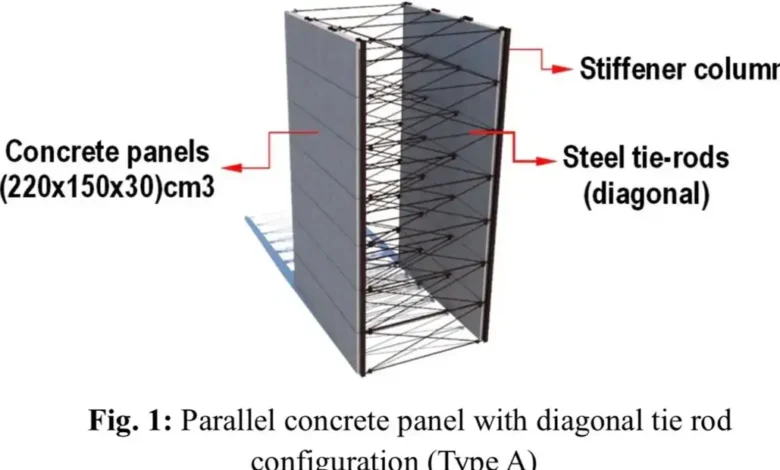
The Parallel Concrete Panel (PCP) is the technical foundation of a commercialized infrastructure solution known as the "Sistem Urug dengan Perkuatan Wadah" (SUPW), or the Container-Reinforced Embankment System. Produced by PT Jaya Wadah Lestari, this system utilizes a modular container structure designed to function as a multi-purpose levee. Unlike traditional solid concrete walls that rely on sheer mass to resist the force of the ocean, the PCP system employs a sophisticated mechanical design. It consists of two parallel concrete plates held together by internal tie rods. This hollow-core approach allows the structure to be filled with earth or other materials, creating a stable, weighted embankment that manages horizontal loads with high efficiency.
The core innovation lies in the interaction between the concrete panels and the tie rods. By distributing the pressure across two connected surfaces, the system reduces the risk of structural cracking and tilting, which are common failure points in conventional gravity walls. The modular nature of the SUPW means that it can be adapted to various terrains and coastal profiles, making it a versatile tool for urban planners and environmental engineers tasked with protecting Indonesia’s most vulnerable shorelines.
Technical Analysis: Tie-Rod Configurations and Structural Stability
A critical component of BRIN’s research involved the rigorous testing of different structural configurations to determine the most effective design for long-term stability. Engineers at the Center for Hydrodynamics Technology Research focused on comparing two primary setups for the tie rods that connect the parallel panels. The first, designated as "Type A," utilizes a diagonal tie-rod configuration, which is the original patented design. The second, "Type B," serves as a horizontal comparison model developed by BRIN to test for economic and mechanical efficiency.
Using advanced structural mechanics software for numerical modeling, BRIN’s lead researcher, Affandy Hamid, and his team simulated the stresses these walls would face in real-world coastal environments. The results of the analysis provided significant insights into the safety and reliability of the PCP technology. According to the data, both configurations surpassed the stringent safety standards required for geotechnical engineering. Type A achieved a safety factor of 1.35, while Type B recorded a safety factor ranging between 1.32 and 1.35. In the field of geotechnics, any value above 1.3 is generally considered to represent a high level of stability with a very low risk of failure.
However, the simulations also revealed a nuanced trade-off between the two designs. While Type B (horizontal) allowed for the use of tie rods with smaller diameters, making it potentially more economical in terms of raw material costs, it resulted in higher bending moments within the concrete panels. Conversely, Type A (diagonal) provided superior overall stability and better distribution of forces, though it required a more complex arrangement. These findings have led researchers to propose a "Type C" configuration—a hybrid model that combines the strengths of both diagonal and horizontal bracing to maximize cost-efficiency without compromising the structural integrity of the barrier.
Comparative Advantages Over Conventional Infrastructure
The shift from traditional seawalls to PCP technology offers several transformative benefits for the Indonesian construction industry. One of the most significant advantages is the reduction in concrete consumption. Because the PCP system utilizes a hollow, modular design that is later filled with local soil or aggregate, it requires substantially less cement than a solid gravity wall of the same dimensions. This reduction in material use directly translates to a lower carbon footprint, aligning with global trends toward sustainable construction.
Furthermore, the construction process for PCP is notably simpler and faster. Traditional seawalls often require extensive foundation work, including the driving of deep piles into the seabed—a process that is both expensive and environmentally disruptive. BRIN’s simulation results indicate that the PCP structure remains remarkably stable even without additional foundation piles, as the weight of the fill material and the geometry of the panels provide sufficient anchoring. This lack of a need for deep piling significantly accelerates the construction timeline and reduces the logistical burden on coastal communities.
The efficiency of the PCP system also extends to its spatial footprint. In densely populated coastal cities like Jakarta, Semarang, and Surabaya, land is at a premium. The PCP technology allows for the creation of narrow yet strong embankments, freeing up more space for public use, green belts, or transport corridors. This makes it an ideal solution for "integrated coastal zone management," where flood protection must coexist with urban development.
The Chronology of Development and Future Implementation
The journey of the PCP technology from a conceptual design to a validated engineering solution has followed a meticulous timeline. It began with the patenting of the SUPW system by PT Jaya Wadah Lestari, followed by a strategic partnership with BRIN to provide scientific validation. Over the past several years, the PRTH-BRIN team has moved from theoretical designs to the current phase of numerical modeling and computer-aided simulations.
The next phase of the project, as outlined by BRIN researcher Shafan Abdul Aziz, involves a transition from the digital realm to physical experimentation. While numerical models provide a strong baseline, real-world conditions—such as the corrosive nature of seawater, the impact of high-velocity waves during storms, and the long-term settlement of the seabed—require physical validation. BRIN plans to conduct large-scale wave tank testing and field trials to observe how the PCP panels react to prolonged exposure to salt spray and tidal cycles.
Moreover, the research team is conducting a comprehensive study on material durability, specifically focusing on the corrosion resistance of the tie rods. In a maritime environment, the longevity of steel components is a major concern. Future iterations of the PCP technology may incorporate advanced coatings or composite materials to ensure that the internal skeleton of the wall can last for decades without significant maintenance.
Broader Implications for Indonesia’s National Resilience
The deployment of PCP technology is not merely a technical achievement; it is a vital component of Indonesia’s national security and economic stability. Land subsidence in the northern coastal plain of Java is occurring at an alarming rate, with some areas of Jakarta sinking by as much as 10 to 20 centimeters per year. This subsidence makes the impacts of tidal flooding significantly worse, as the land sits lower than the sea level during high tide.
By providing a cheaper and more efficient way to build protective barriers, BRIN is offering a lifeline to millions of Indonesians living in coastal areas. The economic implications are vast. Frequent flooding disrupts trade, damages property, and necessitates expensive emergency response efforts. A more resilient coastline means fewer disruptions to the supply chain and a more stable environment for investment.
Furthermore, the PCP technology supports Indonesia’s commitment to the "Blue Economy" and "Green Infrastructure." By using less concrete and avoiding the destructive nature of deep-pile driving, the system preserves local marine ecosystems. It allows for a more harmonious relationship between human-made structures and the natural environment, potentially incorporating "living shoreline" elements where mangroves or other vegetation can be planted alongside the concrete panels to further dissipate wave energy.
Conclusion and Strategic Recommendations
The introduction of Parallel Concrete Panel technology by BRIN marks a significant milestone in Indonesia’s quest for climate adaptation. As the nation continues to grapple with the realities of a rising sea and a sinking coast, the need for innovative, science-backed solutions has never been more urgent. The PCP system offers a rare combination of structural strength, economic viability, and environmental consciousness.
Moving forward, it is essential that there is strong synergy between government agencies, private developers, and local municipalities to integrate this technology into national coastal defense projects. The recommendation from BRIN to continue with physical validation and the development of the "Type C" configuration should be prioritized. With the right support, the PCP technology could become the standard for coastal protection across the Indonesian archipelago, providing a robust defense against the encroaching tides and ensuring the long-term sustainability of the nation’s coastal heritage. Through such innovations, Indonesia demonstrates its capacity to transform environmental challenges into opportunities for technological and structural advancement.