Kareena Kapoor Steals the Spotlight at Diwali Celebrations Wearing a Historic 30-Carat Emerald Necklace Inscribed with Ayat al-Kursi

The festive season in the Indian subcontinent is a time when traditional fashion, ancestral heritage, and contemporary celebrity culture intersect on a grand scale. Diwali, the Hindu festival of lights, consistently serves as the ultimate runway for Bollywood’s elite, who utilize the occasion to showcase elaborate ensembles crafted by the nation’s premier designers. Among the multitude of high-profile appearances that graced social media feeds during the recent celebrations, Bollywood superstar Kareena Kapoor Khan emerged as a central figure of fascination and critical acclaim. Her sartorial choice for the evening transcended conventional festive wear, drawing widespread public attention not merely for its aesthetic brilliance, but for the profound historical lineage, cultural syncretism, and sentimental value embedded within her accessories.
Captured alongside her husband, veteran actor Saif Ali Khan, and their two children, Taimur and Jeh, Kapoor presented an image reminiscent of traditional South Asian royalty. While the visual appeal of the family portrait initially captivated fans and fashion critics alike, subsequent revelations regarding the provenance of Kapoor’s jewelry transformed a standard celebrity fashion feature into a captivating narrative of aristocratic heritage. At the center of this discussion was a rare, museum-quality emerald pendant inscribed with sacred Islamic calligraphy, worn by Kapoor as part of her modest festive attire. This piece, alongside other historical artifacts incorporated into the family’s wardrobe, provided a rare glimpse into the opulent personal archives of the Pataudi and Bhopal royal lineages, offering enthusiasts and historians alike a tangible connection to India’s princely past.
An Ensembling Masterclass: Blending Contemporary Design with Royal Legacy
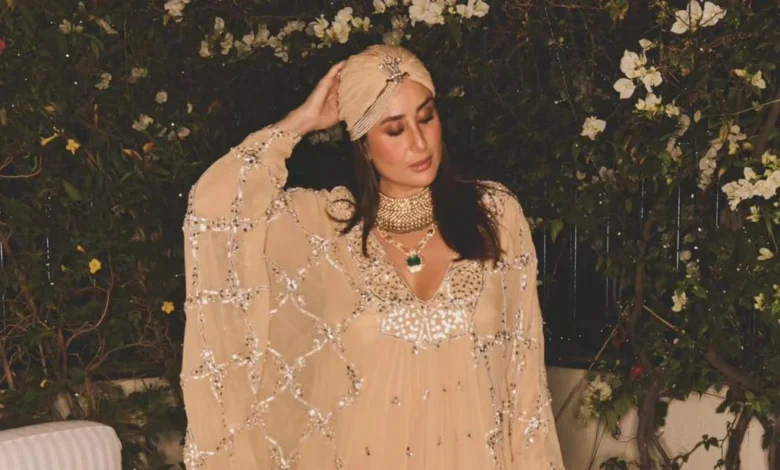
The genesis of Kareena Kapoor’s Diwali look began with a sophisticated foundation designed by celebrated couturier Punit Balana. Known for his ability to merge traditional Rajasthani textiles with modern silhouettes, Balana outfitted the actress in a striking, meticulously tailored kaftan paired with a matching head wrap, or sorban. The ensemble struck a delicate balance between ease and regal elegance, setting a distinct tone for the evening’s festivities. The choice of a kaftan—frequently associated with relaxed luxury—was elevated through rich fabric choices, intricate embroidery, and the dramatic framing provided by the headwear.
However, the true significance of the styling emerged through the disclosures made by celebrity stylist Rhea Kapoor via social media. While the Balana creation formed the visible anchor of the outfit, it was the integration of heirloom jewelry that elevated the look to an entirely different stratum of fashion history. Kapoor completed her modest styling with a magnificent 30-carat emerald pendant. The gemstone, remarkable for its deep green saturation and impressive carat weight, bore a deeply sacred engraving: Ayat al-Kursi, the renowned 255th verse of Surah Al-Baqarah from the Holy Quran.
The juxtaposition of a high-fashion contemporary kaftan with an artifact carrying profound spiritual and historical weight immediately sparked viral engagement across various digital platforms. Fashion analysts and cultural commentators noted that Kapoor’s choice reflected a growing trend among South Asian celebrities of utilizing red carpet and festive platforms to honor familial heritage through vintage and heirloom pieces, rather than relying exclusively on newly commissioned high jewelry.
Tracing the Provenance: From the Begums of Bhopal to Modern Bollywood
The narrative surrounding the 30-carat emerald pendant extends far beyond the realm of celebrity styling, tracing a complex historical trajectory through some of the most influential political and social dynasties of pre-independence India. According to detailed accounts provided by Rhea Kapoor and corroborated by fashion historians familiar with the Pataudi and Bhopal archives, the pendant was originally a prized possession of the Begums of Bhopal.
Bhopal, a prominent princely state during the British Raj, was uniquely governed for over a century by a succession of powerful female rulers known as Begums. These women were renowned for their progressive governance, administrative acumen, and substantial patronage of the arts, architecture, and fine jewelry. The emerald pendant in question eventually passed down through matrimonial alliances to the family of Saif Ali Khan. Specifically, the heirloom belonged to Saif’s grandmother, Sajida Sultan, who was the daughter of Hamidullah Khan, the last reigning Nawab of Bhopal.
Upon Kapoor’s marriage to Saif Ali Khan in October 2012, this priceless piece—alongside other significant items from the royal treasury—was integrated into the bridal and festive collections accessible to the actress. The passing of such artifacts represents more than a transfer of physical wealth; it constitutes a custodial responsibility, preserving centuries-old craftsmanship and dynastic history within the public eye. The inclusion of the Ayat al-Kursi engraving highlights the rich Islamic heritage of the Bhopal royal family, seamlessly blending spiritual devotion with material opulence.
A Family Affair: Echoes of the Pataudi Wedding
The historical resonance of the evening was further amplified by Saif Ali Khan’s own sartorial choices, which directly referenced the couple’s high-profile wedding day held more than a decade prior. Posing alongside his wife, the actor wore a classic, impeccably tailored all-black kurta set, complemented by polished leather shoes and a clean-shaven look accented by his signature mustache.
Topping his traditional attire, Khan incorporated a kalgi—a traditional ornamental brooch or plume historically affixed to the front of a groom’s turban. Significantly, this was not a newly sourced accessory, but the exact 200-year-old kalgi that Khan had worn during his wedding to Kapoor in 2012. Crafted centuries ago and preserved within the Pataudi family vaults, the antique piece added a layer of profound personal nostalgia and dynastic continuity to the family’s Diwali appearance.
The couple’s two young sons, Taimur and Jeh, complemented their parents’ refined aesthetic by donning silk kurtas in contrasting jewel tones, ensuring that the entire family unit presented a cohesive visual narrative that bridged historical legacy with contemporary paternal pride. The careful curation of these looks underscored a deliberate strategy to celebrate their dual heritage—blending the Nawabi traditions of northern India with the modern sensibilities of contemporary Indian cinema.
Cultural Implications and the Renaissance of Royal Heirlooms in Fashion
The widespread public reaction to Kareena Kapoor’s Diwali attire points to a broader cultural shift within the South Asian fashion and celebrity landscape. In recent years, audiences have grown increasingly appreciative of authenticity, sustainability, and historical storytelling in celebrity styling. The reliance on mass-produced, transient trends is gradually being counterbalanced by a renewed reverence for archival fashion, vintage textiles, and generational jewelry.
By wearing pieces tied to the Begums of Bhopal and the Pataudi house, Kapoor and her styling team tapped into a rich vein of cultural heritage that resonates deeply with the public imagination. The trend of wearing museum-quality ancestral pieces not only redefines modern luxury for the elite but also serves an educational purpose, sparking public interest in the intricate histories of India’s princely states, the legacy of female empowerment under the Bhopal regency, and the preservation of historic Islamic art forms such as gemstone engraving.
Furthermore, the integration of religious and dynastic artifacts into mainstream festive fashion highlights a celebration of pluralism and historical continuity. As digital platforms continue to democratize access to high-society events, the detailed breakdown of such ensembles by stylists and historians allows millions of followers to engage with the stories behind the sparkle.
Ultimately, Kareena Kapoor’s appearance during the Diwali celebrations transcended the ephemeral nature of seasonal celebrity gossip. It functioned as a living tableau of dynastic history, masterfully curated to remind observers of a bygone era of royal patronage, exquisite craftsmanship, and enduring familial legacy. As Bollywood continues to influence global fashion standards, moments like these demonstrate that the most powerful statements are often those rooted in history, carrying the weight of generations past into the spotlight of the modern age.
Related posts: