Europe in Turmoil: Milan and French Cities Face Escalating Civil Unrest Amid Cost of Living Crisis

The mid-October 2026 period has marked a significant inflection point for social stability across the European continent, as a wave of civil unrest fueled by the escalating cost of living and deep-seated dissatisfaction with public services has gripped major urban centers. While France has garnered global headlines for the scale of its protests, the city of Milan, Italy, has simultaneously emerged as a focal point of intense confrontation. The demonstrations, which began as peaceful expressions of economic frustration, rapidly devolved into violent clashes between protestors and law enforcement, signaling a volatile atmosphere that threatens to undermine regional stability.
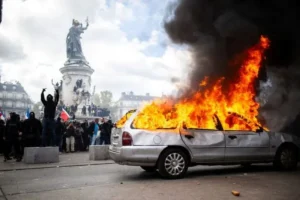
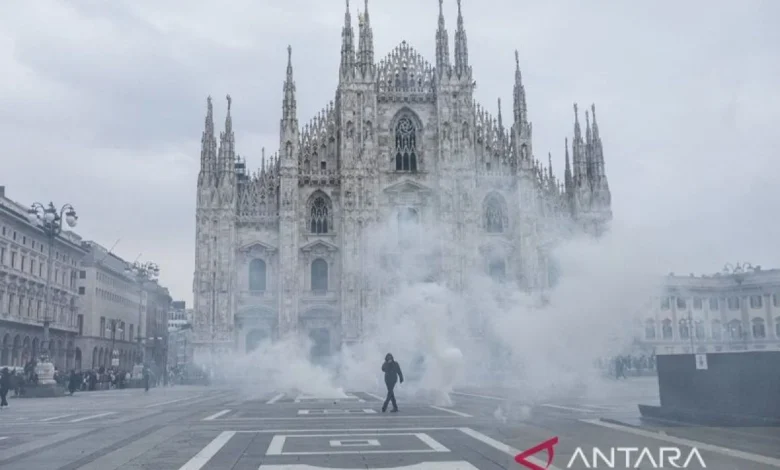
The unrest in Milan, particularly centered around the iconic Piazza del Duomo, reached a boiling point on Saturday, October 17, 2026. What began as a series of marches against inflationary pressures and the diminishing purchasing power of the average citizen quickly descended into chaos. Groups of masked individuals infiltrated the ranks of protesters, engaging in acts of vandalism, including the destruction of shopfronts, the looting of luxury boutiques, and the construction of makeshift barricades using street furniture, which were subsequently set ablaze. The deployment of riot police, utilizing tear gas and high-pressure water cannons, turned the city’s primary tourist hub into a theater of conflict, forcing an immediate evacuation of the area.
A Chronology of the Milanese Unrest
The escalation of violence in Milan followed a distinct pattern that mirrored similar occurrences in other major European cities. On the morning of October 17, initial gatherings were composed largely of students, labor union members, and citizens concerned about the rising cost of energy and food. However, by late afternoon, the composition of the crowds shifted. Reports from the Associated Press indicated that agitators began pelting law enforcement with stones, paving bricks, and incendiary devices.
By the end of the first day, at least 50 individuals had been taken into police custody, with several identified as minors. Medical facilities in Milan reported that at least 25 people required treatment for injuries sustained during the chaos, including ten police officers who had been targeted by the mobs.
The situation failed to stabilize overnight. On Sunday, October 18, Reuters reported a resurgence of violence as hundreds of youths regrouped near the Piazza del Duomo. The second day of unrest saw a continuation of property damage, with trash containers overturned and public infrastructure systematically dismantled to be used as weapons or obstacles against the police. Authorities processed more than 60 additional arrests during the Sunday operations, suggesting a highly organized or at least deeply entrenched resistance to law enforcement efforts to restore order.
Economic Drivers and Social Discontent
The primary catalyst for this unrest is the pervasive economic stagnation that has plagued Italy. Milan, despite its status as the nation’s premier financial, fashion, and business hub, has not been immune to the broader European economic downturn. The city’s cost of living, particularly in the housing and rental sectors, has surged significantly, far outstripping the stagnant wage growth of the middle and working classes.
For the younger demographic in Italy, the dream of metropolitan stability has increasingly become a struggle for survival. Data regarding the youth unemployment rate and the rising cost of basic commodities paints a grim picture. With the price of fuel, electricity, and staple food items rising in tandem with inflation, the average household has seen its disposable income vanish. This economic squeeze has acted as a pressure cooker, with public demonstrations serving as the only remaining outlet for a populace feeling abandoned by traditional political discourse.
Furthermore, the protests have transcended purely economic demands. Many demonstrators are calling for a fundamental shift in foreign policy, specifically regarding Italy’s involvement in ongoing geopolitical conflicts. The intersection of anti-war sentiment with economic desperation has created a hybrid protest movement, attracting a diverse range of participants who share a common sense of disenfranchisement. While some activists remain focused on peaceful advocacy, the presence of radicalized fringes has complicated the narrative, leading to a dangerous confusion between legitimate political dissent and criminal opportunistic violence.
The European Context: A Continental Wave
The timing of the riots in Milan, occurring in the shadow of massive, nationwide unrest in France, has prompted intense speculation regarding the interconnectedness of these events. France, during the same weekend, witnessed hundreds of thousands of people taking to the streets to protest educational reforms, public service cutbacks, and the rising cost of living.
The scale of the French protests far exceeded those in Italy, with reports indicating over 2,400 arrests and nearly 1,000 police officers sustaining injuries during the violence. The death of a demonstrator in Paris due to a cardiac event during the chaos further intensified public anger. Similar, albeit smaller, protests have been noted in Belgium, Portugal, and other parts of Italy, including Turin and Bologna.
While these movements share a common foundation—the rising cost of living—analysts remain cautious about labeling this a centralized or coordinated uprising. Instead, the current state of affairs appears to be a systemic, grassroots response to the limitations of current European fiscal and social policies. The inability of national governments to mitigate the effects of global inflationary trends has fostered a climate where social contracts are increasingly being challenged.
Government Response and Institutional Challenges
The administration of Prime Minister Giorgia Meloni has taken a firm stance against the violence. In a public address, the Prime Minister emphasized that while the right to protest is a cornerstone of Italian democracy, the destruction of public property and attacks on law enforcement are criminal acts that will not be tolerated. This rhetoric reflects a broader government strategy to categorize the rioters as distinct from the peaceful demonstrators.
Wali Kota (Mayor) of Milan, Giuseppe Sala, echoed these sentiments, acknowledging the validity of the citizens’ economic concerns while condemning the "unacceptable" violence that has paralyzed his city. The local administration is now tasked with a difficult balancing act: addressing the root causes of the economic grievances while simultaneously ensuring that the rule of law is maintained.
To address the brewing security crisis, the Italian government scheduled an emergency high-level meeting for Monday, October 19. The agenda included reviewing the mobilization of additional security forces and developing a long-term plan to prevent further escalation. The deployment of up to 500 soldiers to support the police in Milan is being considered as part of a broader "National Security Stabilization Plan," aimed at protecting key infrastructure and preventing further looting.
Implications and Future Outlook
The events in Milan and across Europe present a significant challenge for the European Union’s cohesion. If left unaddressed, the widening gap between the elite and the working class, exacerbated by the cost-of-living crisis, threatens to destabilize not just individual nations, but the political foundation of the continent.
The long-term implications are twofold. First, the political landscape in Italy and France may shift toward more radical ideologies as traditional parties struggle to provide solutions to the economic crises. Second, the reliance on police force to quell civil unrest may lead to a cycle of escalation, where state violence further radicalizes segments of the population.
For the Italian government, the path forward requires a multi-pronged approach. Immediate security measures are necessary to restore public order, but they must be followed by meaningful policy shifts. This includes, but is not limited to, comprehensive reviews of social safety nets, housing market regulations to ensure affordability, and targeted fiscal support for the most vulnerable demographics.
As the smoke clears in Milan, the task ahead for policymakers is to distinguish between the voices of those legitimately struggling to survive and the elements that seek to exploit social discord for the sake of destruction. The resilience of the Italian social fabric will be tested in the coming months as the government attempts to reconcile the demands of the street with the hard realities of the global economic climate. Whether this serves as a temporary period of instability or the beginning of a prolonged era of civil friction remains to be seen. The coming weeks will be critical in determining whether the democratic institutions of Europe can absorb the pressure of the cost-of-living crisis or if they will be further strained by the weight of public indignation.
Related posts: