Iran Media Affiliated with Tehran Government Releases Hit List of Thirteen Global Leaders Following the Death of Ayatollah Ali Khamenei

The geopolitical landscape of the Middle East has entered a period of unprecedented volatility following the publication of an infographic by Hamshahri, a prominent media outlet closely affiliated with the Tehran municipal government and the Iranian establishment. The publication features a "hit list" of 13 high-ranking international figures, including heads of state and top military officials from the United States, Israel, and several European nations. This list, described by the outlet as targets for "retaliation" or "revenge," comes in the wake of the reported death of Iran’s long-standing Supreme Leader, Ayatollah Ali Khamenei. The move marks a significant escalation in the psychological and information warfare between the Islamic Republic and its Western adversaries, signaling a potential shift in Tehran’s foreign policy under its new leadership.
The infographic, which has circulated widely on social media and regional news platforms, depicts the 13 individuals in orange jumpsuits—a visual trope often used in propaganda to symbolize prisoners or those awaiting execution. Several of the figures, most notably U.S. President Donald Trump and Israeli Prime Minister Benjamin Netanyahu, are shown with crosshairs superimposed over their images, accompanied by captions asserting that their "punishment" is a demand of the Iranian nation. While the Iranian government has not officially ratified this list as a formal state policy, the affiliation of Hamshahri with the political apparatus in Tehran suggests at least a degree of tacit approval or a strategic attempt to gauge international reactions.
The Composition of the Targeted List
The list published by Hamshahri reflects a broad spectrum of Western political and military leadership, focusing heavily on those perceived as the primary architects of the "Maximum Pressure" campaign against Iran and those involved in recent military escalations. The thirteen individuals named are:
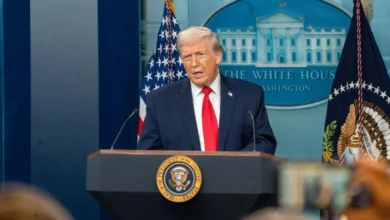
- Donald Trump: The President of the United States, whom Tehran holds responsible for the 2020 assassination of Qasem Soleimani and the subsequent withdrawal from the Joint Comprehensive Plan of Action (JCPOA).
- Benjamin Netanyahu: The Prime Minister of Israel, long considered Iran’s primary regional antagonist and the leader overseeing operations against Iranian interests in Syria and Lebanon.
- Israel Katz: The Israeli Minister of Defense, responsible for the tactical execution of military strikes against Iranian-backed proxies and nuclear infrastructure.
- Pete Hegseth: The United States Secretary of Defense, noted for his hardline stance on Iranian maritime aggression and regional influence.
- Marco Rubio: The United States Secretary of State, a vocal critic of the Iranian regime who has consistently advocated for stricter sanctions and diplomatic isolation of Tehran.
- Emmanuel Macron: The President of France, included likely due to France’s support for Israel and its role in enforcing European Union sanctions on Iran’s ballistic missile program.
- Keir Starmer: The Prime Minister of the United Kingdom, whose administration has maintained a firm stance against Iran’s regional destabilization efforts and its support for Russia in the Ukraine conflict.
- Friedrich Merz: Identified in the list as the Chancellor of Germany (reflecting potential political shifts or the media’s focus on Germany’s leading conservative figure), representing the European economic powerhouse’s alignment with U.S. security policies.
- Giorgia Meloni: The Prime Minister of Italy, who has sought to strengthen Mediterranean security and has been critical of Iran’s human rights record and proxy networks.
- Mike Huckabee: The United States Ambassador to Israel, viewed by Tehran as a symbol of the "unbreakable" bond between Washington and the Likud-led government in Jerusalem.
- Brad Cooper: The Commander of U.S. Naval Forces Central Command (CENTCOM), who oversees American maritime operations in the Persian Gulf and the Strait of Hormuz.
- Gideon Sa’ar: The Israeli Minister of Foreign Affairs, who has been instrumental in building international coalitions to counter Iranian diplomatic initiatives.
- Additional Security Officials: The list also targets key intelligence and military coordinators within the U.S. and Israeli security apparatuses.
Context: The Death of Ayatollah Ali Khamenei and the Rise of Mojtaba
The publication of this list is inextricably linked to the seismic shift in Iran’s domestic power structure following the death of Ayatollah Ali Khamenei. Reports indicate that Khamenei was killed during a highly sophisticated joint operation conducted by American and Israeli forces. This event has left a power vacuum that was rapidly filled by his son, Ayatollah Mojtaba Khamenei, who has now assumed the mantle of Supreme Leader.
In his inaugural address to the nation, Mojtaba Khamenei struck a defiant and militaristic tone. He emphasized that the "blood of the martyr" (referring to his father) would be the catalyst for a new era of Iranian resistance. While the new Supreme Leader did not explicitly name the 13 individuals mentioned in the Hamshahri list, his rhetoric regarding "divine vengeance" and the "unrelenting pursuit of those responsible" provided the ideological framework for the media’s subsequent publication. Analysts suggest that Mojtaba’s ascension may signal a move away from the more cautious diplomatic maneuvering of the past, favoring a more direct and confrontational approach to foreign policy.
Regional Chronology and Escalating Tensions
The current crisis did not emerge in a vacuum. It is the culmination of years of escalating friction in the Middle East, exacerbated by the following timeline of events:
- Heightened Maritime Conflict: Over the past year, the Strait of Hormuz has become a primary flashpoint. Iran has repeatedly threatened to close the waterway, which facilitates the passage of approximately 20% of the world’s total oil consumption. This led to nations like India banning their citizens from working on vessels transiting the strait due to the high risk of seizure or attack.
- The Joint Strike: The intelligence-led strike that resulted in the death of Ali Khamenei was the most significant blow to the Iranian leadership since the 1979 revolution. The operation was characterized by its precision, utilizing advanced cyber capabilities and kinetic force, which deeply embarrassed the Iranian security establishment.
- Proxy Mobilization: Following the strike, the "Axis of Resistance"—comprising Hezbollah in Lebanon, the Houthis in Yemen, and various militias in Iraq and Syria—vowed to launch coordinated attacks against Western assets.
- Diplomatic Breakdown: Communication channels between Tehran and Western capitals have largely collapsed, with Iran’s diplomats asserting that American pressure and European "complicity" have made negotiations impossible.
Analysis of the "Hit List" as Propaganda
Security experts and political analysts view the Hamshahri list more as a tool of domestic mobilization and psychological warfare than a literal blueprint for immediate assassinations. By depicting world leaders in prisoner uniforms, the Iranian media aims to project an image of strength and moral superiority to its domestic audience and regional proxies. It serves to "dehumanize" the opposition and provide a focal point for nationalistic fervor during a time of grief and transition.
Furthermore, the inclusion of European leaders like Macron, Starmer, and Meloni suggests a strategic attempt to drive a wedge between the United States and its European allies. By labeling them as targets, Tehran may be hoping to pressure European capitals into distancing themselves from Washington’s more aggressive policies to avoid being dragged into a direct conflict.
However, the risk of such propaganda cannot be dismissed. History has shown that such "hit lists" can inspire lone-wolf actors or radicalized factions within the Revolutionary Guard (IRGC) to take independent action. The 1989 fatwa against Salman Rushdie and the persistent threats against former U.S. officials like Mike Pompeo and John Bolton serve as historical precedents for Iran’s willingness to pursue its perceived enemies across international borders.
Global Implications and Economic Impact
The threat of Iranian retaliation has sent ripples through global markets and security agencies. The primary concern remains the security of international shipping lanes. If Iran attempts to act on these threats by targeting military commanders like Brad Cooper or disrupting CENTCOM operations, the global economy could face a severe energy crisis.
- Energy Security: Any disruption in the Persian Gulf would lead to an immediate spike in crude oil prices, potentially exceeding $120 per barrel within days. This would trigger inflationary pressures across Europe and North Asia.
- Increased Security Spending: Governments mentioned in the list have reportedly increased security protocols for their heads of state and senior ministers. Intelligence agencies in the U.S. and Europe are currently on high alert for potential "tit-for-tat" cyberattacks or plots targeting diplomatic missions.
- Regional Stability: The rhetoric from Tehran has forced regional players like Saudi Arabia and the United Arab Emirates to walk a tightrope, balancing their security ties with the U.S. against the need to avoid becoming collateral damage in an all-out Iran-West war.
Official Responses and International Reaction
While the White House and the Kremlin have yet to issue a formal joint statement, individual reactions have been swift. U.S. State Department officials characterized the list as "baseless propaganda from a regime that thrives on instability." In Israel, government spokespeople reaffirmed their commitment to "eliminating any threat to the Jewish state," noting that such threats only strengthen their resolve.
In Europe, the reaction has been one of concerned condemnation. A spokesperson for the British Prime Minister stated that "incitement to violence against democratically elected leaders is unacceptable and will be met with firm diplomatic consequences." Germany and France have summoned Iranian envoys to demand a clarification of whether the Hamshahri publication represents official state policy.
Conclusion: A New Chapter of Uncertainty
The publication of the "13 Targets" list by Iranian-affiliated media underscores the dangerous new phase of the Middle East conflict. With the transition of power to Mojtaba Khamenei, the Islamic Republic appears to be doubling down on its revolutionary identity, using the death of its former leader as a rallying cry for a broader confrontation with the West.
Whether this list remains a piece of provocative media theater or serves as a precursor to actual kinetic operations remains to be seen. What is clear, however, is that the traditional "rules of engagement" in the shadow war between Iran and its adversaries have been rewritten. As the international community watches Tehran’s next moves, the potential for a miscalculation that leads to a wider regional war has never been higher. The world remains on edge, awaiting the first concrete actions of the new Supreme Leader in a region where words often precede the thunder of conflict.
Related posts: