Indonesia Firmly Rejects Human Rights Allegations Raised by Pacific Island Nations at the United Nations General Assembly

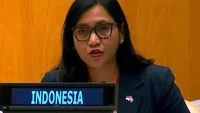
Indonesia has delivered a robust and definitive rejection of accusations concerning alleged human rights violations in the Papua region, which were brought to the floor of the United Nations by the delegations of Solomon Islands and Vanuatu. The diplomatic exchange unfolded during the high-level proceedings of the United Nations, where the Indonesian mission utilized its right of reply to dismantle claims made by the Pacific Island nations, emphasizing the country’s unwavering commitment to constitutional democracy, the rule of law, and domestic human rights accountability frameworks.
The contention arose as representatives from Vanuatu and the Solomon Islands addressed the global assembly, reviving long-standing international criticisms regarding the political, social, and security dynamics in Indonesia’s easternmost provinces of Papua and West Papua. In response, Indonesian diplomats forcefully rejected the politicization of human rights issues at international forums, asserting that the allegations do not reflect the ground realities, infrastructural development efforts, and legal protections afforded to indigenous populations in the region. Jakarta underscored that every credible allegation of misconduct or rights violation committed by state actors is thoroughly investigated and prosecuted through established, independent national institutions.
Background Context of the Papua Issue
The diplomatic friction surrounding Indonesia’s Papua region is not a recent phenomenon but rather the continuation of a complex geopolitical narrative spanning several decades. Papua and West Papua, occupying the western half of the island of New Guinea, were integrated into Indonesia following the controversial Act of Free Choice (Pepera) in 1969, a process overseen and later recognized by the United Nations under Resolution 2504. Since then, low-level separatist insurgencies led by the West Papua National Liberation Army (TPNPB) and political campaigns championed by exiled activists have persistently challenged Jakarta’s sovereignty.
In recent years, certain Pacific Island nations—most notably Vanuatu and, to varying degrees, the Solomon Islands—have frequently used international platforms such as the UN Human Rights Council and the UN General Assembly to champion the cause of Papuan self-determination. These nations often cite reports of internal displacement, restrictions on foreign media access, and alleged abuses by Indonesian security forces. Conversely, Jakarta maintains that these criticisms are often based on unverified information, magnified by separatist sympathizers, and strategically utilized to undermine Indonesia’s territorial integrity.
Chronology of Diplomatic Engagements at the UN
The diplomatic sparring at the UN General Assembly follows a predictable yet intensely contested annual rhythm. To understand the gravity of the recent session, it is essential to examine the historical trajectory of these exchanges:
- 1969: The Act of Free Choice takes place, leading to the formal integration of Papua into the Republic of Indonesia, a move formalized by the UN General Assembly.
- 2000s–2010s: Various local and international non-governmental organizations begin drawing international attention to security operations and resource exploitation in Papua, giving rise to organized regional advocacy.
- 2016–2019: Leaders from Vanuatu, the Solomon Islands, and other Pacific nations systematically use the UN General Assembly podium to raise concerns regarding alleged human rights violations in West Papua, prompting immediate and stern rebuttals from Indonesian diplomats exercising their right of reply.
- 2021–2023: Indonesia accelerates infrastructure development, healthcare expansion, and regional autonomy frameworks in Papua, dividing the region into multiple new provinces to improve public service delivery, while continuing to face targeted international lobbying from Pacific advocacy coalitions.
- Present: During the recent UN General Assembly proceedings, the recurring debate resurfaces as the Solomon Islands and Vanuatu reiterate their grievances, drawing a comprehensive and resolute defense from the Indonesian delegation outlining institutional accountability.
Indonesia’s Official Defense and Domestic Accountability Mechanisms
Addressing the global body, the Indonesian delegation categorically stated that any insinuation of systemic or state-sanctioned human rights abuses in Papua is fundamentally flawed. Jakarta pointed directly to the country’s robust domestic legal architecture, which includes independent oversight bodies specifically designed to investigate and redress grievances.
At the forefront of this accountability framework is the National Commission on Human Rights (Komnas HAM), an independent state institution operating with a mandate to investigate human rights violations, conduct public inquiries, and monitor government compliance with international human rights standards. Indonesia emphasized that Komnas HAM possesses unrestricted access to investigate incidents across the archipelago, including in the sensitive provinces of Papua and West Papua. When credible evidence of wrongdoing by security personnel is uncovered, cases are systematically referred to civilian or military courts to ensure judicial transparency and accountability.
Furthermore, Indonesia highlighted the establishment of specialized human rights courts, the ongoing implementation of the National Action Plan on Human Rights, and the proactive engagement of civil society organizations within the country. Jakarta argued that external actors attempting to lecture Indonesia on human rights often overlook the comprehensive legal remedies available domestically, as well as the active role played by local communities, religious leaders, and regional governments in resolving local disputes.
Socio-Economic Development and Regional Autonomy
Beyond legal and institutional mechanisms, Indonesia’s response at the UN heavily emphasized the transformative socio-economic policies implemented under the administration of successive governments to uplift the indigenous populations of Papua. Recognizing historical development gaps, Jakarta has prioritized massive infrastructure projects, including the Trans-Papua Highway, modernization of regional ports, and expansion of telecommunications networks designed to connect isolated communities and stimulate local economies.
To address governance and political representation concerns, the Indonesian government enacted the Special Autonomy Law for Papua, which grants regional administrations greater budgetary control, increased authority over local governance, and guaranteed representation for indigenous Papuans in regional parliaments. Moreover, the division of the original two Papua provinces into six distinct administrative regions—Papua, South Papua, Central Papua, Highland Papua, West Papua, and Southwest Papua—is intended to decentralize power, accelerate public service delivery, and ensure that budgetary allocations directly benefit grassroots communities.
Despite these initiatives, federal authorities acknowledge that significant challenges remain. Security operations continue in designated conflict zones where separatist armed groups have targeted civilians, infrastructure projects, and security personnel. Jakarta maintains that military and police deployments are strictly necessary to protect citizens, maintain public order, and neutralize armed insurgencies that threaten regional stability and economic development.
Fact-Based Analysis of Geopolitical Implications
The ongoing rhetorical battles at the United Nations carry significant geopolitical and diplomatic implications for Indonesia, the Pacific region, and broader international relations.
For Indonesia, managing the Papua issue on the global stage is a delicate balancing act of domestic sovereignty and international diplomacy. While Jakarta remains steadfast in defending its territorial integrity against foreign interference, it is acutely aware of the reputational risks associated with protracted security conflicts. Consequently, Indonesian foreign policy increasingly emphasizes constructive engagement with Pacific Island nations through bilateral economic cooperation, disaster relief assistance, and development partnerships under frameworks such as the Pacific Exposition. By fostering direct economic and cultural ties, Indonesia seeks to diminish the political leverage that anti-Jakarta advocacy groups hold within regional forums like the Pacific Islands Forum (PIF).
For the Solomon Islands and Vanuatu, raising the Papua issue serves both domestic political interests and broader ideological alignments regarding decolonization and indigenous rights. However, diplomats and geopolitical analysts note a distinct lack of consensus among Pacific Island nations themselves. Several key regional players favor a pragmatic approach of constructive dialogue with Jakarta, recognizing Indonesia’s status as a major economic power in Southeast Asia and a crucial partner in regional security, maritime trade, and climate change advocacy.
Ultimately, the latest exchange at the United Nations General Assembly illustrates that while international scrutiny over Papua will persist, Indonesia remains firmly anchored in its position. By continuously pointing to its independent national human rights institutions, constitutional safeguards, and massive developmental investments, Jakarta seeks to convince the international community that the future of Papua is best secured through domestic stability, economic prosperity, and adherence to the rule of law within the framework of the Republic of Indonesia.
Related posts: