Donald Trump Delivers Fiery UN General Assembly Address Targeting Iran and Cuba While Praising International Gaza Stabilization Efforts

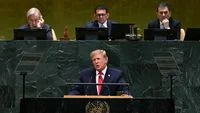
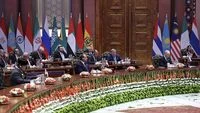
United States President Donald Trump took to the podium at the United Nations Headquarters in New York City to address the 81st session of the UN General Assembly. The high-stakes speech, lasting approximately 37 to 40 minutes, showcased a stark dichotomy in American foreign policy under the Trump administration. In an address that balanced nationalist bravado with severe geopolitical threats, the U.S. leader delivered scathing rebukes against longtime adversaries Iran and Cuba, while simultaneously extending gratitude to a coalition of international partners—including Indonesia—for committing personnel and financial resources toward the post-conflict reconstruction and stabilization of the Gaza Strip.
The annual UN General Assembly gathering, which brings together world leaders, diplomats, and international observers, serves as a global barometer for shifting diplomatic alliances. President Trump’s address deviated significantly from traditional diplomatic norms, blending unvarnished critique with direct appeals for international burden-sharing in Middle Eastern conflict resolution.
Chronology and Context of the General Assembly Address
The events leading up to the 81st UN General Assembly session were characterized by intense geopolitical volatility. Tensions in the Middle East had reached a boiling point following a protracted military escalation between the United States and Iran, a conflict that disrupted global energy markets and forced a reassessment of security postures across the region. Simultaneously, diplomatic channels concerning the humanitarian and structural crisis in the Gaza Strip had entered a critical phase, spearheaded by the establishment of the international Board of Peace (BoP) initiative.
President Trump arrived in New York under heavy security, facing a complex diplomatic landscape. Scheduled as one of the keynote speakers during the high-level general debate, his administration had spent the preceding weeks laying the groundwork for an aggressive defense of U.S. unilateralism, combined with a push for allied contributions to Middle Eastern stabilization frameworks.
The speech began with customary acknowledgments before quickly pivoting into a broad endorsement of American exceptionalism. However, the core of the address quickly transitioned into sharp geopolitical messaging, divided predictably between fierce condemnation of perceived rogue states and effusive praise for cooperative multilateral partners participating in U.S.-led stabilization missions.
Scathing Rebukes: Direct Threats to Iran and Cuba
President Trump utilized a significant portion of his address to isolate and berate nations that have historically opposed American hegemony, focusing primarily on Iran and the island nation of Cuba.
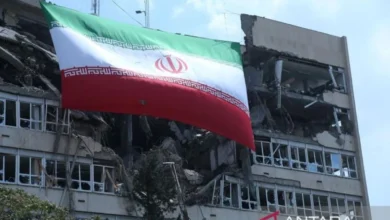
Addressing the ongoing hostilities between Washington and Tehran, Trump abandoned diplomatic pleasantries, openly contemplating the total military decimation of the Islamic Republic. In remarks that stunned sections of the diplomatic corps, the U.S. President questioned whether his administration should swiftly dismantle the Iranian government to permanently neutralize what he characterized as a persistent threat to global security and regional stability.
"Or shall I obliterate the Islamic Republic and do it quickly, without ever giving them the chance to kill and destroy people and nations again?" Trump stated from the podium. "Shall I plunge them into hell with no chance of survival and no hope of glory or future generations?"
Linking the military standoff with economic consequences, Trump argued that a unified international front would quickly eliminate what he termed fifty-one years of state-sponsored terror emanating from Tehran. He asserted that such an outcome would cause global petroleum prices to plummet well below the levels recorded at the onset of the current conflict.
Turning his attention to the Western Hemisphere, Trump took direct aim at the government in Havana. Labeling Cuba a failing state, he warned that the U.S. government remained fully prepared to exercise military options if deemed necessary to force political transition.
"My administration is also working to effect a fundamental change in the situation in Cuba," Trump declared, emphasizing that the island’s communist administration is currently weathering the most severe economic and political pressure in its modern history.
The combative nature of the remarks prompted an immediate physical response on the General Assembly floor, with the official Cuban delegation standing up and walking out of the hall in protest, a dramatic visual demonstration of the deepening diplomatic chasm between the two nations.
Commendations and the Gaza Stabilization Framework
In stark contrast to his fiery rhetoric against Tehran and Havana, President Trump adopted a conciliatory and appreciative tone when discussing the humanitarian and security architecture established for the Gaza Strip. Framing the post-conflict recovery of Gaza as a paramount international objective, Trump spotlighted the efforts of the Board of Peace (BoP), a body functioning under direct U.S. leadership.
Trump praised the roughly 30 nations that have formally aligned with the BoP initiative, labeling the coalition an indispensable group of international partners dedicated to pragmatic conflict resolution and structural restoration.
"I also want to thank those who have committed to deploying troops, police personnel, and providing training to help stabilize Gaza, including Indonesia, Morocco, Albania, Kosovo, Kazakhstan, Egypt, Jordan, and others," Trump stated.
The inclusion of Indonesia in the presidential address highlights Jakarta’s steadfast commitment to Palestinian statehood and international peacekeeping. Prior to the sudden escalation of hostilities between the U.S. and Iran, the government of Indonesia had pledged an ambitious deployment of up to 8,000 military and police personnel to participate in the international peacekeeping and stabilization mission in Gaza. However, defense analysts note that the unfolding kinetic military engagement between Washington and Tehran has forced Indonesian defense planners to temporarily suspend and re-evaluate the deployment timeline to ensure the safety of its personnel amid active combat zones.
In addition to troop contributions, Trump acknowledged the critical financial support flowing into the reconstruction efforts. He singled out wealthy Gulf nations and regional powers—specifically mentioning Qatar, Kuwait, Saudi Arabia, and Turkey—for pledging billions of dollars to rebuild civilian infrastructure, housing, and essential services shattered by prolonged conflict in the Palestinian enclave.
Supporting Data and Geopolitical Implications
The statements delivered at the United Nations carry profound implications for global trade, security architecture, and diplomatic alliances. Economically, Trump’s assertions regarding oil prices reflect Washington’s ongoing strategy to weaponize energy independence while attempting to choke off financial revenues supporting regional proxy networks. However, energy market analysts have expressed skepticism, noting that open-ended military conflicts involving major oil-producing regions inherently trigger market volatility, contradicting the administration’s claims of an inevitable downward price trajectory.
Militarily, the administration’s dual approach—threatening total annihilation of adversaries while outsourcing peacekeeping and reconstruction burdens to regional allies—points toward a modified doctrine of burden-sharing. By leveraging international bodies like the Board of Peace, the U.S. seeks to minimize its own boots-on-the-ground commitments for long-term nation-building while retaining strategic oversight.
Official Responses and International Reaction
Reactions from the international community were swift and polarized. Representatives of nations directly criticized by Trump condemned the remarks as a blatant violation of the United Nations Charter, which prohibits the threat or use of force against the territorial integrity or political independence of any state. Iranian state media dismissed Trump’s threats as psychological warfare destined to fail, while Cuban officials labeled the speech an act of imperialist aggression designed to justify illegal economic blockades and domestic interference.
Conversely, representatives from nations praised in the address—particularly Arab and Southeast Asian allies—walked a fine line of diplomatic pragmatism. While governments such as Indonesia remain firmly committed to humanitarian assistance and peacekeeping in Gaza, foreign policy experts in Jakarta emphasized that Indonesia’s foreign policy doctrine remains strictly independent and active, cautioning that alignment with U.S.-led reconstruction frameworks must not compromise Jakarta’s principled defense of Palestinian sovereignty.
The 81st UN General Assembly session thus concluded against a backdrop of deep ideological division. President Trump’s address underscored a world order increasingly strained by transactional diplomacy, where multi-billion-dollar pledges and troop deployments for humanitarian reconstruction are brokered alongside explicit threats of military devastation against geopolitical foes. As the international community attempts to navigate these choppy diplomatic waters, the feasibility of long-term stabilization in Gaza, coupled with the management of volatile flashpoints in Iran and Cuba, remains one of the most critical challenges facing contemporary global governance.