Beyond Bolu Meranti: A Comprehensive Guide to Medan’s Iconic Souvenirs and Culinary Heritage

When travelers think of bringing home a piece of Medan, the historic capital of North Sumatra, the ubiquitous Bolu Meranti often takes center stage. Renowned for its soft sponge cake rolled with various sweet fillings, this bakery item has long dominated the tourist souvenir market. However, confining a Medan culinary excursion strictly to rolled sponge cake overlooks a vast, vibrant ecosystem of traditional delicacies, indigenous agricultural products, and deeply rooted cultural artifacts that define the region’s identity.
North Sumatra’s culinary landscape is a rich tapestry shaped by centuries of cultural intersection, blending Malay, Batak, Chinese, Javanese, and South Asian influences. This synthesis has produced distinct flavors, aromas, and craftsmanship that stretch far beyond commercial bakeries. For travelers navigating the bustling markets of Medan—from Pajak Berigin to the legendary stalls of Jalan Ambon—the options for souvenirs, locally known as oleh-oleh, offer an authentic taste of Sumatra’s cultural diversity.
The Evolution of Medan’s Souvenir Economy and Cultural Tourism
In recent years, Medan has experienced a steady resurgence in domestic and regional tourism, further catalyzed by major national events such as the Pekan Olahraga Nasional (PON) and government-backed initiatives to promote Lake Toba as a designated Super Priority Tourism Destination. As tourist inflows increase, local authorities and culinary entrepreneurs have shifted their focus toward diversifying souvenir offerings.
Economic analysts note that culinary tourism accounts for a significant share of visitor spending in North Sumatra. While perishable goods like fresh pastries and tropical fruits remain popular, there is a growing market demand for shelf-stable items, specialized local commodities like single-origin coffees, and durable artisanal crafts. This evolution allows tourists to transport a comprehensive slice of North Sumatran heritage back to their home provinces, transforming simple purchases into vehicles of cultural storytelling.
1. Bika Ambon: The Paradoxical Icon of Medan
Despite its misleading moniker, Bika Ambon is arguably Medan’s most famous indigenous pastry. Characterized by its porous, honeycomb-like interior, springy texture, and rich aroma derived from kaffir lime leaves, lemongrass, and coconut milk, the cake is deeply woven into the city’s identity.
Historical accounts trace the popularity of Bika Ambon to Jalan Ambon in Medan during the early 20th century. Local culinary historians explain that an enterprising resident experimented with traditional baking techniques, creating a spongy variation of a traditional Malay cake. The product gained widespread traction near the Ambon street market, cementing the name despite its purely North Sumatran origins. Today, modern bakeries have expanded the flavor profile from the classic pandan and original variants to include cheese, chocolate, and durian, meeting contemporary consumer preferences while preserving the meticulous fermentation process required to achieve its signature texture.
2. Markisa Noerlen and the Legacy of Passion Fruit
Agriculture plays a pivotal role in North Sumatra’s economy, particularly in the cool, elevated terrains surrounding the Karo Highlands. Among the region’s prominent horticultural successes is the cultivation of passion fruit (markisa), which serves as the base for Medan’s celebrated local syrups.
Markisa Noerlen stands out as a pioneer in this sector. Established decades ago, the brand utilizes traditional, preservative-free production methods to extract the rich juice of fresh passion fruit, blending it with sugar to create a balanced syrup that oscillates between tart and sweet. Packaged in durable glass or plastic bottles, the syrup functions not only as a refreshing beverage base when mixed with ice water but also as a versatile culinary ingredient used in local desserts and marinades. Food industry experts highlight such value-added agricultural products as vital components in bolstering the income of regional farmers.
3. Kopi Sidikalang and the Highland Coffee Tradition
Indonesia holds a prestigious position in the global coffee trade, and North Sumatra contributes significantly to this reputation through its high-grade Arabica and Robusta beans. Among the most sought-after regional variants is Kopi Sidikalang, cultivated in the volcanic highlands of the Dairi Regency.
Grown at altitudes exceeding 1,000 meters above sea level, Sidikalang coffee benefits from rich, nutrient-dense volcanic soil and a cool climate. The beans are widely recognized for their heavy body, low acidity, and distinct chocolatey-earthy undertones with a hint of spice. Available in both roasted whole beans and finely ground powder, Kopi Sidikalang caters to the burgeoning specialty coffee market. Coffee connoisseurs and specialty retailers frequently source these beans, viewing them as an essential representation of Sumatra’s storied coffee heritage.
4. Teri Medan: The Salty Staple of Coastal Waters
For those inclined toward savory provisions, Teri Medan (Medan anchovies) represents an indispensable pantry item. Harvested from the coastal waters of the Malacca Strait, these tiny, translucent fish are traditionally sun-dried on wooden racks along the shore.
Unlike larger anchovy varieties, Teri Medan are prized for their delicate size, crisp texture, and clean, savory flavor profile. They are commonly sold in a dry, salted format, making them exceptionally stable for long-distance travel and extended storage. Culinary practitioners frequently incorporate Teri Medan into sambal (chili paste), stir-fried peanuts and crisp shallots (Medan’s sambal teri kacang), or as a nutrient-dense flavor enhancer for daily meals. Tourism boards, including Indonesia Travel, consistently spotlight these dried fish as a quintessential baseline purchase for culinary tourists visiting North Sumatra.
5. Tropical Fruit Preserves: Manisan Jambu
Beyond liquid syrups and baked goods, Medan’s vibrant fruit markets yield an array of preserved horticultural products, most notably manisan jambu (guava preserves). Utilizing locally harvested crystal guavas, producers submerge the sliced fruit in a precise brine of sugar, water, and subtle citrus or chili infusions.
The resulting product achieves a harmonious balance of crispness, sweetness, and tanginess, offering a refreshing departure from dense baked goods. Food safety and packaging advancements have allowed local micro, small, and medium enterprises (MSMEs) to vacuum-seal these fruit preserves, ensuring they remain fresh throughout domestic and international transit.
6. Pancake Durian and the King of Fruits
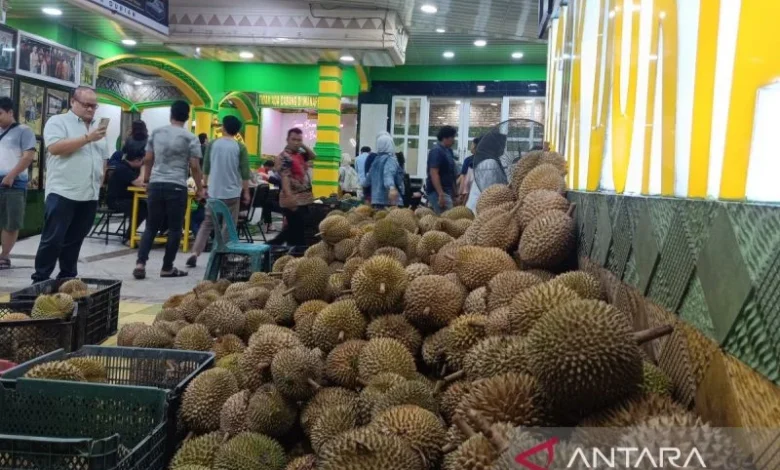
No gastronomic exploration of Medan is complete without confronting the cultural phenomenon of the durian. Often referred to as the "King of Fruits," the region’s durian is celebrated for its rich, custard-like texture and complex bittersweet flavor profile.
Recognizing the logistical challenges of transporting whole, pungent durians—which are routinely banned on commercial flights and public transport—local entrepreneurs engineered the "pancake durian." This innovative creation wraps pure, seedless durian pulp and fresh whipped cream inside a thin, pliable, dyed crêpe skin.
Pioneered in the city’s local markets, the dessert skyrocketed in popularity alongside establishments like Durian Ucok, a legendary institution that serves thousands of enthusiasts daily. During large-scale regional events, such as national athletic competitions hosted in the province, demand for durian-based products surges exponentially. Producers have since refined cold-chain packaging methods, utilizing thermal insulated boxes and ice packs to enable tourists to transport frozen pancake durian safely across archipelago-wide flights.
7. Ulos: The Woven Masterpiece of Batak Heritage
For travelers seeking non-perishable mementos rooted in historical craftsmanship, the traditional Ulos textile offers profound cultural value. Hand-woven by women of the Batak ethnic groups across North Sumatra, Ulos is much more than a piece of fabric; it is a sacred cultural artifact symbolizing status, affection, and spiritual protection.
Traditionally crafted using manual backstrap looms with cotton thread, Ulos features intricate geometric patterns dominated by deep reds, blacks, and whites, accented with metallic gold or silver threads. While historically reserved for life-cycle ceremonies—such as births, weddings, and funerals—modern artisans have adapted the textile into contemporary fashion accessories, table runners, and framed wall art. Anthropologists and cultural preservationists emphasize that purchasing authentic Ulos directly supports indigenous weaving communities, ensuring that centuries-old textile traditions endure in an industrialized global economy.
8. Culinary Condiments: Sambal and Regional Spices
The bold palate of North Sumatran cuisine relies heavily on potent spices, herbs, and chili pastes. Recognizing this, local food processors have commercialized traditional condiments, packaging authentic Medan-style sambal, green chili pastes (sambal ijo), and rich curry spice blends into travel-friendly bottles and vacuum pouches.
These shelf-stable products allow expatriates and domestic travelers to replicate complex local dishes—such as Soto Medan or Beef Rendang—within their home kitchens. The commercialization of these regional condiments reflects a broader trend within Indonesia’s food sector: bridging the gap between traditional heritage recipes and modern consumer convenience.
Broader Implications and Economic Outlook
The diversification of Medan’s souvenir sector carries substantial socio-economic implications for the province. By expanding beyond a single monolithic product like Bolu Meranti, the local tourism economy distributes revenue more evenly across distinct agricultural, manufacturing, and artisanal sectors.
Small and medium enterprises (SMEs) form the backbone of this ecosystem. Government bodies and tourism agencies have increasingly stepped in to provide digital marketing training, standardized packaging support, and food safety certifications to local producers. These measures aim to elevate product quality to international standards, ensuring that Medan’s culinary and cultural exports can successfully complete in broader regional markets.
Ultimately, navigating Medan’s vibrant souvenir markets transcends the simple act of retail acquisition. It represents an immersive engagement with the multicultural fabric of North Sumatra—a region where geography, history, and culinary artistry converge. Whether a traveler departs with a box of aromatic Bika Ambon, a vacuum-sealed pack of crispy anchovies, a bag of volcanic-grown Sidikalang coffee, or a meticulously hand-woven Ulos cloth, they carry forward a tangible narrative of Indonesia’s rich heritage.
Related posts: