Arsenal Suffer First Defeat of the Season Following Comprehensive Three-Goal Defeat Away to Brighton And Hove Albion

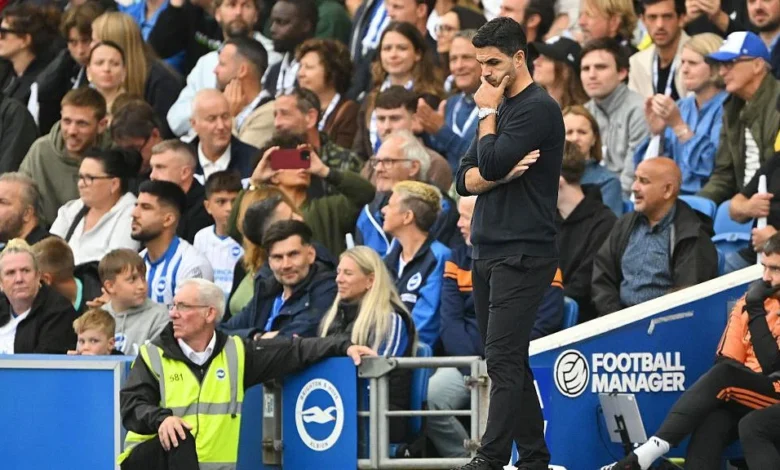
The early-season momentum that had defined Arsenal Football Club’s campaign came to a crashing halt on a Saturday afternoon at the Amex Stadium, where Mikel Arteta’s side were thoroughly outplayed in a 3-0 defeat by Brighton & Hove Albion. Entering this fixture on the back of a flawless seven-game winning streak across all competitions, the North London outfit looked unrecognizable from the resilient, tactically disciplined unit that had dominated the opening weeks of the Premier League season.
From the opening whistle to the final blow of the referee’s whistle, Brighton imposed their will upon the visitors, controlling the tempo, winning the physical battles, and exposing defensive frailties that had largely gone unpunished earlier in the autumn. For Arsenal, the afternoon serves as a sobering reality check as the division pauses for the October international break, handing the coaching staff ample time to dissect a performance that fell drastically short of the standards required to sustain a title challenge.
Chronology and Match Progression
The tone of the contest was established early, with Brighton refusing to afford Arsenal the time and space typically utilized to dictate possession. The home side’s aggressive pressing structure immediately pinned the Gunners deep into their own half, forcing uncharacteristic turnovers and disrupting the visitors’ build-up play.
The breakthrough arrived in the 31st minute through German midfielder Pascal Gross. Capitalizing on a pocket of space afforded to him outside the penalty area, Gross unleashed a venomous, curling strike that bypassed a crowded penalty box and left Arsenal goalkeeper David Raya grasping at thin air. The goal galvanized the home supporters and further rattled an already unsettled Arsenal defensive line.
Just as Arsenal looked desperate to reach the half-time interval without sustaining further damage, Brighton struck a second psychological blow. In the closing moments of the first half, newcomer Charalampos Kostoulas found himself with time and space to let fly from distance. His cleanly struck effort arrowed past the despairing dive of Raya, doubling the hosts’ advantage and sending Brighton into the dressing room with a commanding two-goal cushion.
Hoping for a tactical shift and a renewed sense of urgency, Arsenal emerged for the second half with visible intent, but their efforts were continually stifled by a brilliantly organized Brighton rearguard. Any lingering hopes of a miraculous comeback were extinguished in the 56th minute. A well-delivered corner kick floated into the danger area found Chema Andres rising above his marker. The towering central defender met the cross with a powerful header, steering the ball past the goal line to make it 3-0.
The concession from a set-piece situation carried a heavy layer of irony for the visitors. Arsenal had built much of their domestic success the previous season on their defensive and offensive prowess from dead-ball situations, frequently utilizing towering headers and intricate corner routines to break stubborn opponents down. On this afternoon, however, they were thoroughly dismantled at their own specialty.
Statistical Breakdown and Tactical Analysis
A comprehensive post-match statistical review paints a stark picture of Brighton’s dominance across the pitch. The Seagulls registered a total of 17 goal attempts throughout the 90 minutes, compared to a meager 11 shots mustered by Arsenal. More tellingly, Brighton’s intensity was reflected in the defensive metrics, where they out-performed the visitors in almost every physical duel.
The home side racked up 18 successful tackles compared to Arsenal’s 13, cleared the danger 20 times to the Gunners’ 14, and successfully intercepted the ball 11 times while restricting Arsenal to just six. This statistical superiority underscored Mikel Arteta’s post-match assessment that his team simply lost the physical battle, failing to match Brighton’s work rate, aggression, and commitment to winning second balls.
Brighton’s tactical setup effectively neutralized Arsenal’s primary creative outlets. By compressing the pitch and cutting off passing lanes into central midfield, the hosts forced Arsenal into uncharacteristic lateral passing sequences. When the Gunners attempted to play out from the back under pressure, Brighton’s forward line capitalized on hesitations, winning possession in dangerous areas and launching rapid counter-attacks.
Managerial Reactions and Post-Match Statements
Speaking to the media in his post-match press conference and subsequent interviews with broadcast partners, Arsenal manager Mikel Arteta did not attempt to mask his disappointment, readily conceding that his side deserved nothing from the fixture.
"Brighton deserved to win this match," Arteta stated unequivocally to BBC Radio 5 Live. "We did not execute the basic fundamentals of the game correctly for a sufficient duration, particularly in the first half of the match. We failed to win enough individual duels and second balls, which immediately left our defensive structure exposed and stretched."
Arteta elaborated on the systemic issues that plagued his side, pointing directly to their inability to cope with sustained pressure. "We made too many unforced errors and failed to implement our fundamental principles when facing a side that is exceptionally proficient at executing a high press. That dynamic kept us trapped under constant pressure, and we simply could not break out of it in the manner we are accustomed to doing."
While clearly frustrated with his team’s execution, the Spanish tactician was quick to credit Brighton’s tactical masterclass and the relentless energy displayed by Fabian Hürzeler’s squad.
"We must give full credit to Brighton, particularly regarding their style of play, their collective discipline, and their immense commitment in every single phase of the game," Arteta added. "Our performance was unquestionably beneath our internal standards, as well as the overarching standards of the Premier League. When you squander opportunities and fail to win your battles in this league, securing a victory becomes an impossibility. I extend my congratulations to them."
Broader Context and Season Implications
This fixture marked Arsenal’s final competitive outing before the October international break. Prior to this stumble at the Amex Stadium, the Gunners had enjoyed a pristine start to the domestic campaign, stringing together victories that had established them near the summit of the Premier League table and fueled growing optimism regarding their championship aspirations.
Despite the heavy nature of the defeat, the loss represents just the first blemish in an eight-game stretch this term. However, historical precedent in English football suggests that slip-ups against well-drilled mid-table opponents can ultimately prove decisive when the title race reaches its nail-biting conclusion in the spring.
For Arsenal, the immediate priority will be recovery, reflection, and tactical recalibration. The squad will disperse temporarily for international commitments before reconquering at the Sobha Realty Training Centre to prepare for their next fixture. The Gunners will return to action on October 10, hosting newly promoted or revitalized opposition in the form of Leeds United at the Emirates Stadium.
That fixture will offer an immediate litmus test of Arsenal’s psychological resilience. How Arteta’s squad responds to their first major adversity of the season will reveal much about their maturity and readiness to maintain a sustained challenge for the Premier League crown. As the dust settles on a sobering afternoon on the south coast, the message within the Arsenal camp is clear: the standards must rise immediately if last season’s near-misses are to be converted into silverware this May.
Related posts: