Devastating Wildfires in Mount Bromo and Kawah Ijen Deliver Severe Blow to East Java Tourism Sector Despite Hotel Resilience

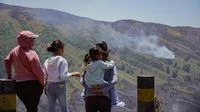
The tourism landscape of East Java experienced a severe contraction in September 2026, driven by a wave of destructive forest and land fires—locally known as karhutla—that forced the temporary closure of the region’s premier natural attractions, Mount Bromo and the Ijen Crater Nature Tourism Park (TWA Kawah Ijen). While international and domestic visitor arrivals plummeted significantly due to these closures, the broader hospitality sector exhibited surprising resilience, bolstered by corporate events and regional festivals that cushioned the economic blow.
According to data released by the Central Statistics Agency (BPS) for East Java, foreign tourist arrivals to the province dropped to 38,602 visits in September 2026. This figure represents a 5.90 percent decline compared to the previous month. A similar downward trend was observed in the domestic tourism sector, where the movement of Indonesian travelers (wisatawan nusantara) recorded approximately 15.72 million trips, marking a 4.41 percent monthly decrease.
Herum Fajarwati, Acting Head of the East Java BPS, explicitly attributed the sharp slump in visitor volume to the emergency closures of the two major highland destinations. Because Mount Bromo and Kawah Ijen traditionally serve as the primary magnets for both foreign and domestic travelers to the province, their sudden unavailability triggered an immediate, measurable contraction in regional tourism metrics.
Chronology of Closures and Fire Incidents
The crisis unfolded as repeated wildfires ravaged critical conservation zones across East Java throughout the peak dry season months of August, September, and October 2026. The iconic Mount Bromo, situated within the Bromo Tengger Semeru National Park (TNBTS), suffered multiple fire outbreaks over this extended period. Meanwhile, the sulphur-mining and turquoise-lake paradise of Kawah Ijen was hit by intense blazes in September.
To safeguard public safety and prevent further environmental destruction, authorities enforced strict temporary closures. Kawah Ijen was completely shut down to all visitors for a prolonged three-week period, from September 4 to September 27, 2026. Shortly thereafter, the Mount Bromo tourism corridor was restricted from September 12 to September 18, 2026.
For an economy heavily reliant on ecological tourism, the concurrent loss of access to these prime destinations created a severe bottleneck in the hospitality and transportation supply chains, affecting local jeep drivers, homestay operators, tour guides, and culinary vendors.
Hotel Occupancy Defies Tourism Slump
Curiously, while nature-based tourism bore the brunt of the crisis, East Java’s hotel industry managed to avert a deep downturn. Star-rated hotel occupancy rates across the province actually edged upward, registering a slight increase of 0.23 points to reach 48.63 percent in September 2026 compared to August figures.
Industry analysts noted that the hotel sector was effectively insulated by a surge in non-leisure demand. The robust scheduling of Meeting, Incentive, Convention, and Exhibition (MICE) gatherings, alongside large-scale cultural and commercial festivals hosted in provincial urban hubs such as Surabaya, Malang, and Batu, generated steady booking volumes. Corporate travelers and event attendees successfully offset the steep loss of leisure tourists who had canceled trips due to the national park closures.
Scale of the Environmental Disaster
Although the most acute phase of the fires has subsided and emergency closures have been lifted, the ecological footprint of the 2026 wildfire season remains staggering. Data compiled by the East Java Regional Disaster Management Agency (BPBD Jatim) reveals that the total land area impacted by karhutla reached a massive 11,895.35 hectares.
Gatot Soebroto, Chief Executive of BPBD East Java, reported that between January and October 2026, no fewer than 187 individual wildfire incidents were recorded across 27 regencies and cities within the province. The geographic distribution of these fires highlights the extreme vulnerability of East Java’s highland ecosystems.
"The total affected area of karhutla in East Java this year has already reached 11,895.35 hectares from 187 incidents across 27 regions," Gatot stated.
Vulnerable Geography and Root Causes
East Java’s high-risk fire zones are overwhelmingly concentrated in mountainous regions characterized by expansive savannahs, steep topographies, and dry vegetation during the dry monsoon transition. Key hotspots identified by disaster mitigation authorities include the Bromo Tengger Semeru National Park, Mount Lawu along the border with Central Java, the Mount Arjuno-Welirang complex within the Raden Soerjo Grand Forest Park (Tahura), as well as the remote expanses of Mount Argopuro and Mount Ijen.
Investigative assessments into the origins of these fires point to a complex interplay of anthropogenic and natural catalysts. Human activities—ranging from accidental carelessness, unattended campfires, and discarded cigarette butts to illegal land-clearing practices—frequently ignite the dry brush. Simultaneously, prolonged seasonal droughts combined with natural friction among dry branches create conditions where sparks can rapidly escalate into uncontrollable conflagrations.
Mitigation, Monitoring, and Future Outlook
In the wake of the extensive destruction, provincial authorities have shifted from reactive firefighting to vigilant long-term monitoring and preventive enforcement. Although active fires have been largely extinguished across major conservation zones, BPBD Jatim, in coordination with forestry ministries, military units, local volunteers, and conservation agencies, maintains a state of high alert.
Gatot emphasized that multi-stakeholder surveillance remains fully operational to detect and neutralize emerging flare-ups before they can spread. This proactive defense posture incorporates satellite-based hotspot monitoring, the deployment of ground-based disaster response task forces, and standby arrangements for emergency water-bombing aerial operations using helicopters when ground access proves impossible.
Economic Implications and Strategic Lessons for Regional Tourism
The events of September 2026 offer critical lessons for regional policymakers and tourism stakeholders in East Java. The heavy economic reliance on a limited number of blockbuster natural attractions—namely Bromo and Ijen—underscores the systemic vulnerability of the provincial tourism economy to environmental shocks. When climate-driven hazards like karhutla force closures, the absence of diversified alternative destinations results in immediate revenue contractions.
Conversely, the stabilizing role played by the MICE sector and urban tourism highlights the strategic importance of market diversification. Industry observers suggest that future resilience planning must involve promoting secondary destinations, enforcing stricter environmental fire-safety protocols around national parks, and investing heavily in community-based early fire-detection systems.
As East Java continues its ecological recovery and works to restore the burnt savannahs of its revered volcanic highlands, the provincial government faces the ongoing challenge of balancing open tourist access with rigorous environmental stewardship. Ensuring that visitors can return safely without endangering fragile ecosystems will remain paramount as the region prepares for subsequent dry seasons.
Related posts: