For the vast majority of the world’s eight billion inhabitants, international travel is inextricably linked to a small, rectangular booklet known as a passport. This document, filled with biometric data, visas, and entry stamps, serves as the ultimate proof of identity and citizenship. Without it, crossing a border is legally impossible for everyone from ordinary tourists to high-ranking corporate executives and most government officials. However, within the complex web of international diplomacy and sovereign law, there exist three specific individuals who are entirely exempt from this universal requirement. These individuals—the King of the United Kingdom, the Emperor of Japan, and the Empress of Japan—possess a unique legal status that allows them to traverse the globe without ever presenting a passport to an immigration officer.
This exemption is not merely a perk of high office or a gesture of international courtesy; it is rooted in the fundamental legal definitions of sovereignty and the historical evolution of the nation-state. In most countries, a passport is a request from the head of state or the government to foreign authorities to allow the bearer to pass freely and to provide them with necessary protection. When the traveler is the sovereign person in whose name those documents are issued, the requirement for a physical passport becomes a logical and legal redundancy.
The British Monarchy and the Royal Prerogative
The first individual on this exclusive list is King Charles III of the United Kingdom. Since his accession to the throne following the passing of Queen Elizabeth II in September 2022, the King has joined the ranks of the world’s most elite travelers. The reason for his passport-free status lies in the very text printed on every British passport.
On the inside cover of a United Kingdom passport, the following declaration appears: "His Britannic Majesty’s Secretary of State requests and requires in the Name of His Majesty all those whom it may concern to allow the bearer to pass freely without let or hindrance, and to afford the bearer such assistance and protection as may be necessary." Because the passport is issued in the name of the King, it is legally unnecessary for the King to issue a document to himself. In the eyes of British constitutional law, the King is the source of the authority that validates the passport; therefore, his physical presence is considered sufficient proof of his identity and status.
This tradition was maintained throughout the record-breaking 70-year reign of Queen Elizabeth II. During her time on the throne, the Queen visited over 100 countries, covering a distance equivalent to circling the earth 42 times, all without ever owning a passport. While she did not carry the document, the logistics of her travel were managed with extreme precision. Before any overseas visit, the Royal Household would coordinate with the host country’s government to ensure that the Queen’s arrival was recognized as a state visit, where formal diplomatic protocols superseded standard immigration checks.
It is important to note that this privilege is strictly reserved for the reigning monarch. Other members of the British Royal Family, including Queen Camilla and the Prince of Wales, do not share this exemption. While they travel on "diplomatic passports"—special documents that provide certain legal immunities and streamlined processing—they are still required to carry and present these booklets when entering foreign jurisdictions. This distinction highlights that the exemption is a function of sovereign authority rather than royal blood.
The Chrysanthemum Throne: Japan’s Imperial Exceptions
The remaining two individuals who enjoy passport-free travel are Emperor Naruhito and Empress Masako of Japan. The legal basis for their exemption is slightly different from the British model but is equally grounded in the concept of national symbolism and high-level diplomatic protocol.
In Japan, the Emperor is defined by the Constitution as "the symbol of the State and of the unity of the People." Because of this unique status, the Japanese government determined decades ago that it would be inappropriate to subject the Emperor and his consort to the administrative procedures required of ordinary citizens. On May 10, 1971, the Ministry of Foreign Affairs (MOFA) issued a formal directive stating that it would be highly improper for the Emperor and Empress to undergo standard immigration or visa processes.
Unlike the British system, where the exemption is limited strictly to the monarch, the Japanese protocol extends this privilege to the Empress. This is because the Emperor and Empress are viewed as a singular symbolic unit representing the nation during state visits. When Emperor Naruhito and Empress Masako travel abroad, the Ministry of Foreign Affairs provides advance notification to the destination country. Instead of a passport, a formal diplomatic document is issued by the ministry and presented to the host authorities upon arrival to facilitate their entry.
As with the British Royal Family, this privilege does not extend to the wider Imperial House. The Crown Prince, the Crown Princess, and other imperial relatives must carry diplomatic passports. These documents are distinct from the standard dark blue or maroon passports held by Japanese citizens, but they remain administrative requirements for travel.
The Logistics of Sovereign Travel
While these three individuals do not carry passports, their travel is far from informal. The process of moving a head of state across borders involves months, and sometimes years, of planning by diplomatic corps and security agencies.
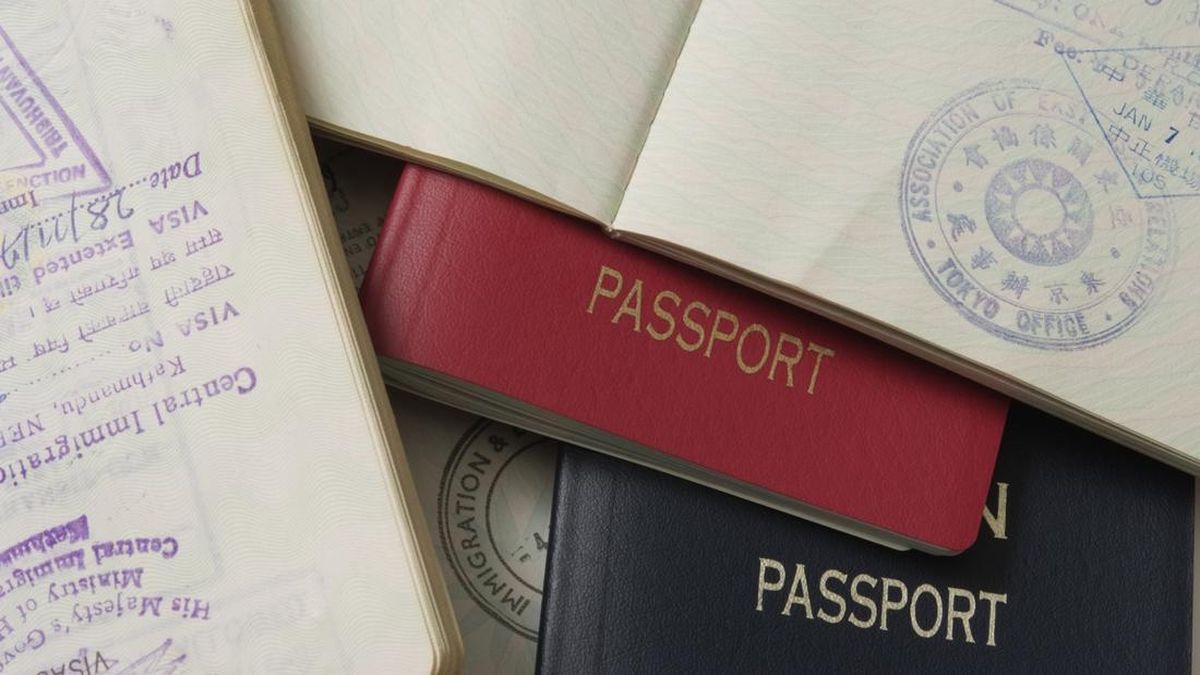
When King Charles III or Emperor Naruhito plans a visit to a foreign nation, the "passport" is replaced by a "Diplomatic Note" or a "Note Verbale." This is a formal communication between the sending country’s embassy and the host country’s Ministry of Foreign Affairs. This note serves as the official record of the visit and establishes the legal framework under which the sovereign will enter the country.
Upon arrival, the sovereign does not stand in a queue at an immigration desk. Instead, they are typically met at the aircraft or the border by high-ranking officials and a guard of honor. The formal recognition of their status by the host government acts as the "entry permit." This process is governed by the principles of international comity—a set of long-standing practices where nations recognize each other’s sovereignty and grant mutual courtesies.
Sovereign Immunity and International Law
The exemption from passport requirements is closely tied to the concept of sovereign immunity. Under international law, particularly the principles codified in the Vienna Convention on Diplomatic Relations (1961), heads of state are granted a high degree of immunity from the jurisdiction of foreign courts. This immunity ensures that they cannot be arrested, detained, or subjected to legal proceedings while performing their duties abroad.
The lack of a passport is a physical manifestation of this immunity. Since a passport is a document that subjects an individual to the laws and regulations of the issuing and receiving states’ immigration authorities, the absence of one reinforces the idea that the sovereign is the embodiment of the state itself, rather than a subject of administrative law.
However, this status also carries significant responsibility. The travel of the King or the Emperor is always a matter of state policy. They do not travel "incognito" for private vacations in the same way a private citizen might. Even private travels by these individuals are coordinated with the utmost security and diplomatic awareness, as any incident involving a passport-exempt sovereign would trigger a major international crisis.
Comparison with Other Global Leaders
It is a common misconception that all heads of state travel without passports. In fact, the vast majority of world leaders, including the President of the United States, the President of France, and the Pope, do carry passports.
For example, the President of the United States travels with a "Diplomatic Passport." While the President certainly does not wait in line at customs and is afforded every possible diplomatic courtesy, the physical document still exists and is used to record their movements. Similarly, the Pope, as the head of the Holy See, holds Vatican Passport No. 1. Although he is a sovereign monarch of the Vatican City State, the modern administrative requirements of the Holy See include the issuance of passports to its citizens and its head.
The distinction for the British and Japanese monarchs remains a rare vestige of traditional sovereignty. In these two specific cases, the legal theory that "the King can do no wrong" or that the "Emperor is the State" has been preserved in the context of modern travel regulations.
Implications for Modern Security and Diplomacy
In a post-9/11 world, where border security has become increasingly digitized and stringent, the existence of passport-exempt travelers presents a unique anomaly. Modern border systems rely on Biometric Exit-Entry Systems (BEES) and Advanced Passenger Information (API). When a sovereign travels, these systems must be manually bypassed or overridden by the host country’s immigration authorities.
This requires a high level of trust and coordination between nations. The fact that this tradition continues in the 21st century is a testament to the enduring power of diplomatic protocol. It also reflects the reality that for these three individuals, their "face" is their passport. Their identities are among the most recognizable on the planet, making the risk of identity fraud—the primary concern of passport control—virtually non-existent.
Conclusion: The Symbolic Weight of the Passport-Free Traveler
The exemption of King Charles III, Emperor Naruhito, and Empress Masako from the requirement of carrying a passport is more than a historical quirk; it is a profound statement on the nature of national identity and sovereignty. In an era where individuals are increasingly defined by digital footprints and government-issued ID numbers, these three figures remain the only people on Earth who are legally "above" the documentation that defines the rest of humanity.
Their ability to move across borders without a passport serves as a living reminder of the origins of the nation-state, where the authority to travel was a gift granted by a sovereign. While the rest of the world relies on the strength of their respective passports—as measured by indices like the Henley Passport Index—the King and the Imperial couple exist in a category of their own, where their very presence is the ultimate travel document. As international relations continue to evolve, this rare privilege remains one of the most exclusive and fascinating aspects of global diplomacy.
Related posts: