Indonesia Targets Doubling National Palm Oil Productivity to Four Tons Per Hectare Through Intensive Land Management

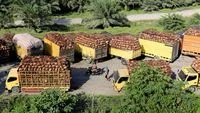
Jakarta, CNN Indonesia — The Indonesian government has officially announced an ambitious strategic initiative aimed at doubling the national productivity of oil palm plantations from the current average of approximately two tons per hectare to four tons per hectare. This sweeping agricultural overhaul will be executed primarily through targeted land intensification strategies, optimizing existing estates rather than expanding into new spatial frontiers.
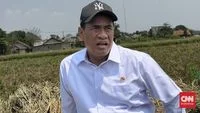
The announcement was detailed by the Deputy Coordinating Minister for Food, Hanif Faisol Nurofiq, during a strategic briefing held at the Office of the Coordinating Minister for Food in Jakarta on Friday, November 6. The policy framework forms a foundational pillar in Indonesia’s broader vision to secure long-term national food security, enhance domestic energy independence, and fulfill aggressive renewable fuel mandates without violating stringent environmental preservation commitments established by the administration of President Prabowo Subianto.
Background Context and Current State of the Industry
Indonesia currently stands as the world’s largest producer and exporter of crude palm oil (CPO), playing a pivotal role in the global vegetable oil supply chain. The nation boasts a massive agricultural footprint, with approximately 17 million hectares of oil palm plantations distributed across Sumatra, Kalimantan, Sulawesi, and parts of Papua.
Despite the sheer scale of this landmass, the national average yield remains suboptimal. Industry analysts and government regulators have long pointed out that while corporate-owned plantations frequently achieve high yields, millions of hectares managed by smallholders suffer from aging trees, poor agricultural practices, lack of access to quality seeds, and insufficient fertilizer application. Consequently, the national average output hovers stubbornly around two tons of processed oil per hectare annually.
Speaking at his office, Deputy Minister Hanif emphasized that this vast disparity between current output and potential yield represents a massive untapped economic reserve for the country. "We have 17 million hectares of oil palm plantations, where productivity is currently at around two tons per hectare, which can certainly be raised to four tons," Hanif stated explicitly to reporters during the briefing.
According to Hanif, elevating per-hectare productivity without expanding the physical acreage is an absolute necessity. This optimization is designed to directly support the rapid development of green energy feedstock, specifically the government’s flagship mandatory biodiesel programs, such as the B40 and future B50 initiatives, which require massive, stable supplies of palm oil derivatives.
Intensification Versus Expansion: A Strategic Pivot
The policy to double palm oil productivity relies entirely on agricultural intensification rather than land expansion. Intensification involves a suite of comprehensive interventions, including the massive distribution of superior, certified high-yield seeds (such as PPKS varieties), replanting aged and unproductive trees through the Palm Oil Smallholder Replanting (SRDP) scheme, optimizing fertilization, and improving water management systems.
"There are still many efforts for that, for intensification," Hanif explained, highlighting that the government sees substantial room for growth within the borders of currently permitted estates. By focusing on science-backed agronomy, the administration aims to extract significantly higher yields from every square meter of land already under cultivation, thereby mitigating environmental pressures and curbing criticisms regarding agricultural land-use change.
This strategy marks a continuation and refinement of sustainable agricultural policies designed to decouple commodity growth from deforestation. By intensifying production, Indonesia can theoretically meet escalating global and domestic demands for food, oleochemicals, and biofuels while keeping its total plantation footprint capped at or near current levels.
Broadening the Agricultural Horizon: The Tene and Ethanol Equation
Beyond oil palm, the government’s comprehensive agricultural and bio-energy roadmap also encompasses the expansion and optimization of other strategic commodities, most notably sugarcane (tebu), which is earmarked to serve as the primary raw material for the national bio-ethanol development plan.
However, unlike the oil palm sector—which already possesses a vast, established infrastructure and 17 million hectares of existing plantations—the sugarcane sector faces a different set of logistical and structural hurdles. Hanif noted that developing the sugarcane industry to support large-scale national bio-ethanol production requires significant additions to the total cultivated land area.
Because sugarcane requires different climatic conditions, soil types, and vastly different supply chain frameworks compared to oil palm, the physical expansion for this commodity cannot rely solely on intensification. Consequently, the development of new sugarcane estates necessitates rigorous, cross-ministerial technical coordination.
The government is currently deeply engaged in evaluating the utilization of degraded, idle, or underutilized lands to support the sugarcane and bio-ethanol expansion program. By targeting marginal lands—such as former mining sites or degraded brushlands—the administration hopes to avoid competition with food crop agriculture while simultaneously rehabilitating unproductive landscapes.
Environmental Safeguards and Presidential Directives
A cornerstone of the current administration’s agricultural policy is the strict adherence to environmental sustainability and forest conservation. During the briefing, Deputy Minister Hanif explicitly reiterated the direct instructions issued by President Prabowo Subianto regarding land utilization.
President Prabowo has issued a strict directive mandating that any future agricultural development, industrial expansion, or feedstock zone establishment must strictly avoid the conversion of natural forests. This executive stance underlines Indonesia’s international climate commitments and aims to satisfy rigorous due diligence standards imposed by major export markets, such as the European Union Deforestation Regulation (EUDR).
In strict compliance with these presidential orders, relevant ministries and technical agencies are currently executing comprehensive land mapping, spatial verification, and soil suitability audits. No final locations for new bio-energy feedstock zones will be gazetted or developed until these multi-layered environmental and legal verifications are fully completed.
Broader Implications and Economic Outlook
The government’s dual-pronged strategy—doubling oil palm yields through rigorous intensification and carefully mapping degraded lands for sugarcane and bio-ethanol—carries profound economic and geopolitical implications for Indonesia.
- Economic Efficiency and Smallholder Empowerment: By raising yields from two tons to four tons per hectare, smallholder farmers stand to experience a dramatic increase in household income without incurring the debts or logistical nightmares associated with land acquisition. Higher productivity lowers the cost of production per ton, enhancing the global competitiveness of Indonesian palm oil.
- Energy Security and Fossil Fuel Reduction: Accelerating the supply of both palm-based biodiesel and sugarcane-based bio-ethanol directly supports Indonesia’s state budget by reducing reliance on costly imported crude oil and refined petroleum products. This transition reinforces macroeconomic stability and shields the domestic economy from global geopolitical shocks in energy markets.
- Climate Compliance and Market Access: By explicitly forsaking natural forest conversion in favor of productivity gains and degraded land utilization, Indonesia strengthens its negotiating posture in international climate forums. This policy directly addresses long-standing environmental concerns raised by international trade partners, potentially easing access to lucrative Western markets for Indonesian agri-products.
As the Ministry of Agriculture, the Coordinating Ministry for Food, and supporting technical bodies continue to refine the operational frameworks for both the four-ton palm oil target and the sugarcane bio-ethanol mapping initiative, the coming months will be critical for smallholders, corporate plantation owners, and environmental watchdogs alike. The success of this policy will depend heavily on the seamless execution of extension services, targeted funding disbursement for replanting, and uncompromising transparency in land verification processes.
Related posts: