Tactical Rest for Cristiano Ronaldo as Portugal Edges Past Norway in UEFA Nations League Thriller

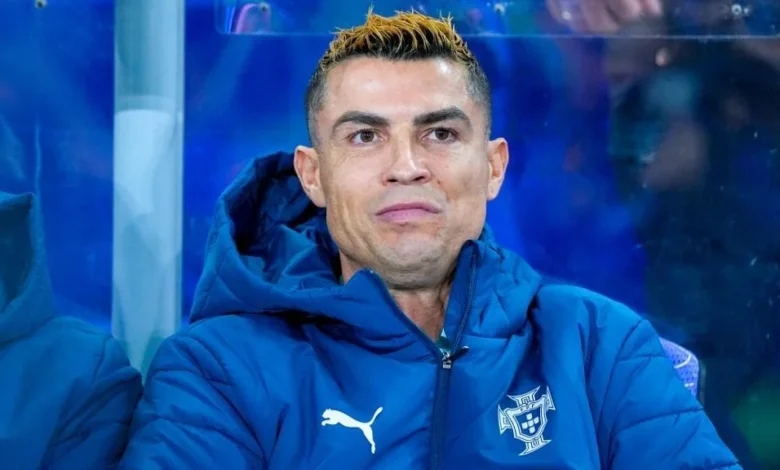
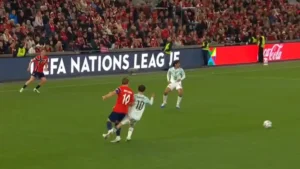
The UEFA Nations League group stage matches often produce tactical surprises, but few decisions generate as much global discussion as the omission of a nation’s talismanic captain. In a crucial Group D encounter held at the Ullevaal Stadium in Oslo, Portugal secured a hard-fought 2-1 victory over hosts Norway. However, the pre-match headlines and post-match analysis were dominated by a single major tactical choice made by Selecao das Quinas manager Jorge Jesus: leaving Cristiano Ronaldo on the bench for the entirety of the ninety minutes.
The match, played on a crisp Monday evening in late September 2026, pitted two of Europe’s most formidable footballing nations against one another. Yet, the anticipated marquee individual duel between veteran icon Cristiano Norway’s lethal striker Erling Haaland failed to materialize on the pitch. While Haaland started and made his presence felt for the home side, Ronaldo watched the proceedings from the technical area, marking a rare milestone in the legendary forward’s illustrious international career.
Jorge Jesus’s bold gamble ultimately paid dividends on the scoreboard, maintaining Portugal’s strong campaign in the competition. Nevertheless, the decision to bench a player of Ronaldo’s stature—especially given his enduring influence on the national team—prompted intense scrutiny from analysts, supporters, and media personnel alike.
Chronology of the Encounter at Ullevaal Stadium
The buildup to the matchday second fixture of Group D in the UEFA Nations League was defined by high anticipation across Scandinavia and the Iberian Peninsula. Both teams entered the pitch with intentions of asserting dominance in the group standings. However, the official team sheets released an hour before kickoff sent ripples through the footballing world. For the first time in nearly two decades of competitive international football under normal fitness circumstances, Cristiano Ronaldo’s name was absent from Portugal’s starting lineup.
Manager Jorge Jesus opted for a dynamic and youthful attacking pairing, thrusting Gonçalo Ramos into the starting XI alongside João Félix. This strategic shift altered the physical profile of Portugal’s press and overall build-up play.
The tactical adjustment bore fruit relatively early in the first half. João Félix, thriving in the spaces created by the fluid movement of his attacking partners, opened the scoring for the visitors with a well-executed finish, silencing the passionate home crowd in Oslo and giving Portugal a deserved 1-0 lead heading into the halftime interval.
Norway, guided by their tactical imperatives and spurred on by the home supporters, responded swiftly after the resumption of play. Early in the second half, Erling Haaland found the back of the net, capitalizing on a momentary lapse in the Portuguese defensive structure to equalize and breathe new life into the Norwegian campaign.
Undeterred by the setback, Jorge Jesus’s side recalibrated. Gonçalo Ramos, entrusted with the focal point of the attack in Ronaldo’s absence, restored Portugal’s advantage with a clinical strike. Ramos thought he had doubled his tally and secured a comfortable cushion in the 59th minute when he slotted home a second goal. However, a lengthy and tense intervention by the Video Assistant Referee (VAR) ultimately resulted in the goal being chalked off due to a marginal offside infringement.
Despite the narrow scoreline and mounting pressure from a resurgent Norwegian side in the closing stages, Jesus resisted the temptation to introduce Ronaldo from the bench. The final whistle confirmed a vital 2-1 away victory for Portugal, cementing their tactical efficacy on the night while preserving the physical wellbeing of their veteran captain.
The Rationale Behind the Bench: Jorge Jesus Explains
In the wake of the victory, Jorge Jesus faced immediate questioning from traveling journalists regarding his decision to leave the legendary number seven among the substitutes. Speaking to prominent Portuguese sports outlet A Bola, the manager provided a clear, physiological, and strategic explanation rooted in sports science and squad management.
Jesus highlighted the heavy demands of the international calendar, particularly the short recovery window between matches. Ronaldo had featured prominently just days prior in a bruising encounter against Wales, logging nearly 70 minutes of intense high-level competition at the Estádio José Alvalade. According to the coaching staff’s internal metrics and physical assessments, expecting a 41-year-old athlete to sustain maximum output across consecutive high-intensity starts within a three-day span posed an unacceptable risk of injury or performance fatigue.
"Today is the third day," Jesus explained to the press corps. "In Alvalade, Cris played almost 70 minutes, and I felt that today he could not play two matches consecutively [as a starter]."
The manager was quick to emphasize that Ronaldo remains an indispensable pillar of the national team’s overarching strategy. Rather than signaling a phasing-out of the veteran forward, the decision was framed as a calculated measure of workload management designed to maximize his utility across a demanding block of fixtures.
"We want Ronaldo in these four matches, with more or less minutes played, but we want him on the pitch," Jesus asserted. This nuanced approach demonstrates a modern coaching philosophy that balances historical deference to a generational icon with the empirical demands of modern sports science.
A Historic Precedent: Breaking an 18-Year Streak
The decision to keep Ronaldo on the bench for the entirety of an official international fixture carries profound historical weight. Prior to the match in Oslo, Ronaldo had established an extraordinary baseline of durability and indispensability for the Portuguese national team.
Statistical records indicate that this fixture marked the first time in 18 years that Ronaldo watched his teammates from the substitutes’ bench without entering the field of play during a competitive international match. The last occurrence of a fully unused substitute appearance in a competitive setting dates back to the UEFA Euro 2008 group stage fixture against Switzerland, a match in which Portugal had already secured qualification from their group, prompting then-coach Luiz Felipe Scolari to heavily rotate his squad.
Over the intervening nearly two decades, through multiple managerial eras, tactical evolutions, and tournament cycles, Ronaldo’s presence on the pitch—whether starting or appearing as a decisive substitute—was an immutable constant of Portuguese football. That this streak was interrupted in Oslo speaks both to the unique physical management required at this stage of his career and to the growing tactical flexibility within the Portuguese setup under Jorge Jesus.
Supporters and the Global Reaction
The social media landscape and global sports networks erupted with commentary as the team sheets were unveiled. While analysts debated the tactical merits of starting Ramos and Félix over the legendary goalscorer, fan reactions oscillated between disappointment at missing the Haaland-Ronaldo duel and philosophical appreciation of the moment.
Viral commentary on platforms like X (formerly Twitter) captured the surreal nature of seeing Ronaldo seated on the bench in full training kit, actively engaged in tactical discussions with the coaching staff. One widely shared post encapsulated the sentiment of many observers, suggesting that the veteran forward’s demeanor on the bench offered a glimpse into a potential future career in football management.
At the same time, the failure of the anticipated head-to-head showdown between Ronaldo and Erling Haaland disappointed neutral fans worldwide. Both players represent distinct eras of elite goalscoring dominance, and a direct on-field clash in a competitive international fixture would have added another chapter to contemporary football folklore. Nevertheless, the pragmatic outcome of the match ensured that the sporting narrative remained firmly focused on Portugal’s collective resilience rather than individual stardom.
Broader Implications for Portugal’s Campaign
The victory in Oslo carries significant weight for Portugal’s prospects in the ongoing UEFA Nations League cycle. Securing three points away from home against a disciplined and physically imposing Norwegian side reinforces the team’s depth and adaptability.
Jorge Jesus’s willingness to make high-profile alterations to his starting XI demonstrates a pragmatic tactical flexibility that could prove vital in later stages of major tournaments. By successfully utilizing alternative attacking combinations featuring Gonçalo Ramos and João Felix, Portugal signals to their continental rivals that their offensive potency is not entirely dependent on any single individual, regardless of his historical stature.
At the same time, the careful management of Cristiano Ronaldo’s playing minutes underscores a sustainable blueprint for the twilight of his international career. As Portugal looks ahead to subsequent matchdays and qualification hurdles, balancing the emotional and commercial gravity of their captain with the physiological reality of fixture congestion will remain a central challenge for the technical staff.
Ultimately, the night in Oslo will be remembered not merely as a hard-earned 2-1 away victory, but as a transitional watershed moment—an evening where Portugal proved they could win away from home without their iconic leader on the pitch, while simultaneously laying the groundwork for how his legendary international journey will be managed in the chapters yet to come.
Related posts: