National Sports Day: Commemorating Indonesia’s Athletic Heritage and the Path Toward a Healthier Nation

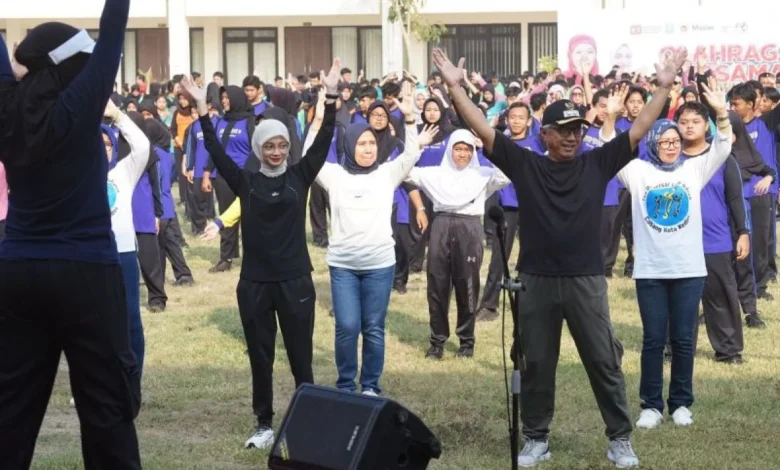
Every September 9, Indonesia observes National Sports Day, known locally as Hari Olahraga Nasional (Haornas). This annual commemoration serves as a significant intersection between the country’s historical struggle for sovereignty and its modern-day aspirations for public health, athletic excellence, and national character building. While the date is deeply rooted in the post-independence era of the late 1940s, its contemporary relevance has expanded to encompass the digital age, the promotion of a sports-oriented lifestyle, and the economic benefits derived from the national sports industry.
The Genesis of a Sporting Identity: The 1948 PON Legacy
The origin of National Sports Day is inextricably linked to the inaugural Pekan Olahraga Nasional (PON), or the National Sports Week, held in Solo, Central Java, from September 9 to 12, 1948. At that time, Indonesia was a nascent nation grappling with the immense challenges of post-colonial stability and the ongoing struggle for international recognition.
The decision to host the first PON was not merely a recreational endeavor; it was a profound political statement. In 1948, the Republic of Indonesia sought to participate in the XIV Olympic Games in London. However, the international community, still navigating the complexities of Indonesia’s status, presented significant administrative hurdles. Faced with the risk of being excluded from the global stage, Indonesian leaders opted to showcase the nation’s independence, unity, and organizational capability internally. By hosting the PON in Solo, the Indonesian government signaled that it possessed the infrastructure, social cohesion, and institutional capacity to manage national-scale events independently. The opening day of these inaugural games, September 9, was eventually cemented in the national consciousness as the foundational date for the annual commemoration of sports.
Evolution of the Commemoration: From Symbolic Gesture to Legislative Mandate
While the spirit of sportsmanship was nurtured throughout the 1950s and 1960s, the formalization of September 9 as a national day did not occur until decades later. In 1983, during the inauguration of the renovated Sriwedari Stadium in Surakarta, President Soeharto officially proclaimed September 9 as National Sports Day.
This proclamation was designed to serve as a catalyst for a national movement—a concerted effort by the state to elevate the status of sports from a niche hobby to a vital component of public policy. Two years later, this political initiative was codified into law through Presidential Decree (Keppres) Number 67 of 1985. This legal framework was instrumental in institutionalizing sports development, ensuring that the government provided sustained funding, administrative support, and infrastructure planning across the archipelago.
By the time the nation reached 2026, the commemoration of Haornas had matured into its 43rd iteration. Over these four decades, the focus of the day has shifted from purely elite-level competition to the "sport-for-all" movement, emphasizing that the health of a nation is directly correlated to the physical activity levels of its citizenry.
Socio-Economic Implications and the Modern Sports Industry
In recent years, the Ministry of Youth and Sports (Kemenpora) has emphasized that sports are no longer just about winning medals on a podium. The ministry’s current strategic framework highlights the integration of sports into the national economy. This is particularly evident in the rise of "sport tourism," where major events—such as the upcoming PON—are utilized as magnets for regional development.
For instance, the planning for future PON events, such as the 2028 edition in Sumba Timur, reflects a shift in strategy. By designating host regions as "sport tourism" hubs, the government aims to stimulate local economies, improve infrastructure, and create jobs. This aligns with the broader goal of making sports a viable industry that generates tangible economic benefits alongside health outcomes.
However, the path toward such development requires substantial investment. Recent reports from the Ministry of Youth and Sports indicate that the government is seeking approximately IDR 1.5 trillion to build modern academies and central training facilities. These facilities are intended to bridge the gap between amateur talent and elite professional performance. Analysts note that while this is a significant expenditure, the long-term ROI (Return on Investment) in terms of public health savings and the professionalization of the sports industry justifies the capital injection.
The Role of Sports in Public Health and Character Building
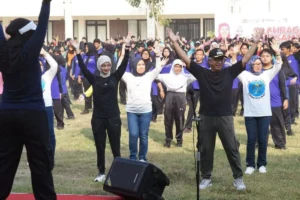
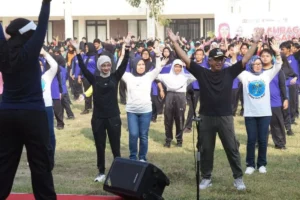
Beyond the economics of elite athletics, Haornas serves as a yearly reminder of the necessity of physical activity for a population facing the challenges of modernization. According to data from the World Health Organization (WHO) and local health surveys, sedentary lifestyles have become a growing concern in urbanized Indonesia. National Sports Day functions as a policy lever to encourage local governments and schools to prioritize physical education and public fitness programs.
The educational aspect of sports is equally emphasized. The Ministry of Youth and Sports maintains that organized sports are essential for instilling virtues such as discipline, resilience, teamwork, and integrity. In an era where digital distractions are pervasive, the promotion of sports is seen as a vital strategy for character building among the youth.
Chronology of Indonesian Sports Development
To understand the trajectory of Indonesian sports, it is helpful to look at the historical timeline:
- 1948: The first PON is held in Solo, marking the birth of independent Indonesian sports.
- 1983: President Soeharto officially proclaims September 9 as National Sports Day at the Sriwedari Stadium.
- 1985: Presidential Decree (Keppres) No. 67/1985 is issued, legally mandating the annual observance.
- 2000s–2010s: Increased focus on international sporting events, culminating in Indonesia hosting the 2018 Asian Games.
- 2020s: A strategic pivot toward "Sport Tourism" and the modernization of athletic infrastructure, with significant investments proposed for national training centers.
- 2026: The 43rd National Sports Day, highlighting the integration of technology, professional academies, and community-based health initiatives.
Official Perspectives and Future Directions
Reflecting on the progress of the national sporting agenda, officials from the Ministry of Youth and Sports have frequently highlighted the "holistic approach." In recent statements, the Minister of Youth and Sports stressed that the development of the sporting ecosystem creates a "virtuous cycle." When local communities are engaged in sports, the overall health index of the nation improves, reducing the burden on the healthcare system. Simultaneously, a more active population provides a broader talent pool for elite athletes, which in turn leads to better international rankings and increased national pride.
The integration of "Sport Pantai" (beach sports) into the national calendar—such as the upcoming event in Ancol—serves as an example of how the government is diversifying the types of sports available to the public. By moving away from traditional field sports and incorporating aquatic and coastal activities, the nation is maximizing its geographical potential as an archipelagic state.
Analysis: Challenges and Opportunities
Despite the celebratory nature of Haornas, the path forward is not without challenges. Critics often point to the uneven distribution of sporting infrastructure between Java and the outer islands. While major cities like Jakarta and Solo have seen significant investment, rural and remote regions often struggle with a lack of basic facilities.
Furthermore, the transition from an amateur-based system to a fully professional sports economy requires not just government funding, but also private sector involvement. Encouraging corporate sponsorship and private-public partnerships (PPP) in sports management will be the next major hurdle for the Indonesian government.
However, the outlook remains positive. The growing popularity of mass-participation events, such as marathons and community cycling clubs, indicates that the "culture of sports" is indeed taking root among the younger generation. The 2026 commemoration of Haornas is expected to build on this momentum, focusing on initiatives that promote inclusivity, ensuring that sports remain accessible to citizens regardless of their socioeconomic status or geographic location.
Conclusion: A Legacy for Future Generations
National Sports Day is more than a date on the calendar; it is a repository of Indonesia’s national identity. From its origins in the grit and determination of the 1948 PON, to the modern, data-driven approach of the 2026 administration, the day serves as a mirror for the nation’s progress.
As the country looks toward the future, the lessons of Haornas remain clear: the strength of a nation is measured not only by its political and economic stability but also by the vitality, discipline, and unity of its people. By fostering a culture that views physical activity as a fundamental right and a key to national progress, Indonesia continues to honor the legacy of those who first gathered in Solo nearly eight decades ago, ensuring that the spirit of competition and health continues to thrive for generations to come. Every athletic endeavor, whether by a professional athlete or a citizen in a local park, contributes to the ongoing narrative of a nation that is, above all, resilient and determined to move forward.
Related posts: